Mythology of Tomorrow
Curated by Hugh Leeman
- Adam Chin
- Ahna Girshick
- Anna Zhang
- Christy Chan
- James Shefik
- Jeffrey Ventrella
- Jim Campbell
- Jonathan Bachrach
- Memo Akten
- Ruokan He
- Scott Snibbe
- Stephen Milborrow
- Steve Lomprey
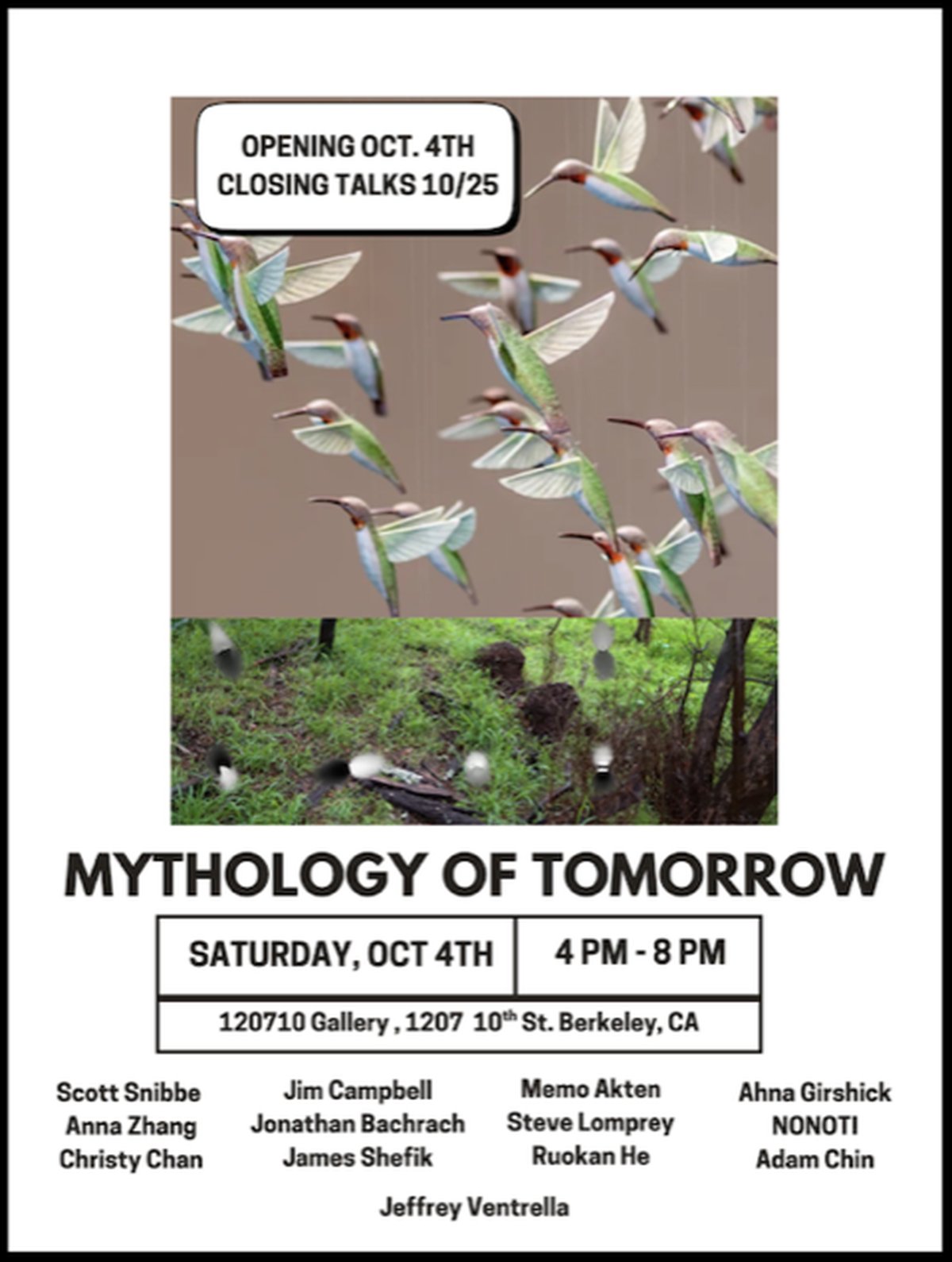
Mythology, for millennia, has acted as an ancient technology, weaving itself into the cultural imagination, allowing humans to create meaning and social cohesion through stories; these stories, however, like the civilizations they support, all journey towards obsolescence. Today, we are witnessing such an obsolescence that has historically led to a crumbling of institutions and ideologies. As society moves through this process toward the unknown, we encounter the potential to evolve. Author and expert in mythology Joseph Campbell noted that all societies must undergo a transformative hero's journey to make new meaning through the hero's return with the so-called artifacts of the journey. Here, those artifacts manifest in art made with new media call us to reckon with the disorientation of the collapse of identities, systems, and worldviews, while other artworks illuminate acts of atonement, adaptation, and renewal, offering sparks to our imagination so that we may collectively envision the mythology of tomorrow.
Works
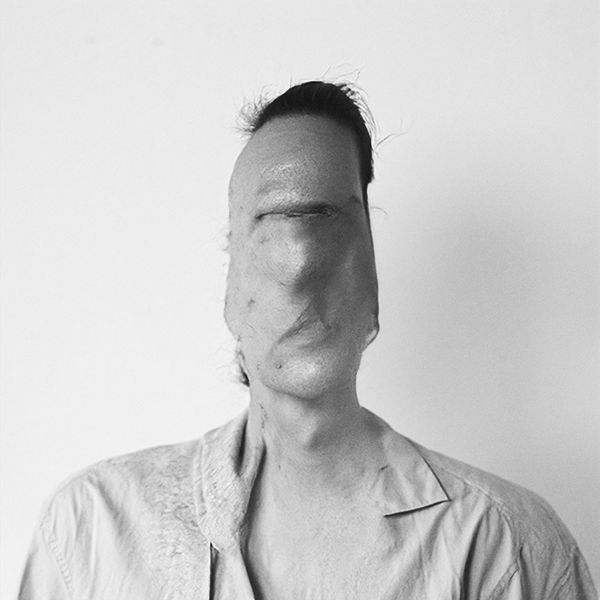
Adam Chin
Christian, 2025
Selenium toned gelatin silver print
9 × 9 in
Price on Request
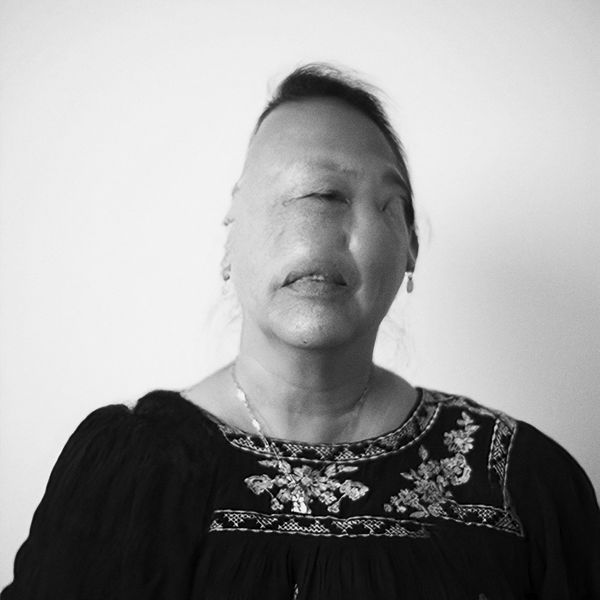
Adam Chin
Irene, 2025
Selenium toned gelatin silver print
15 × 15 in
Price on Request
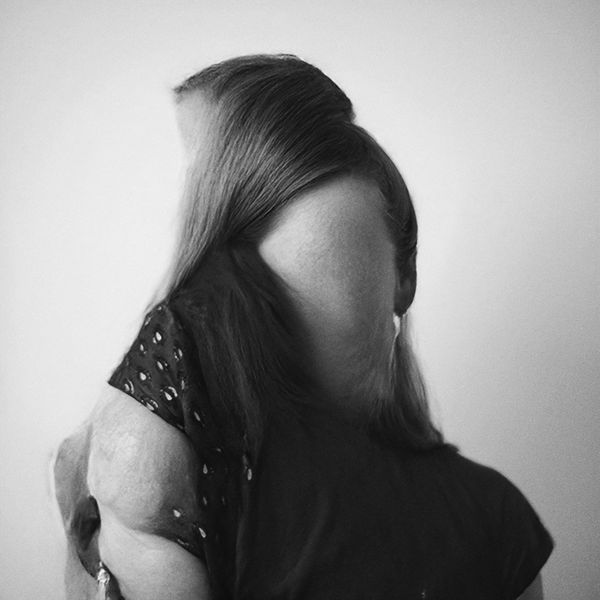
Adam Chin
Stacy, 2025
Selenium toned gelatin silver print
9 × 9 in
Price on Request
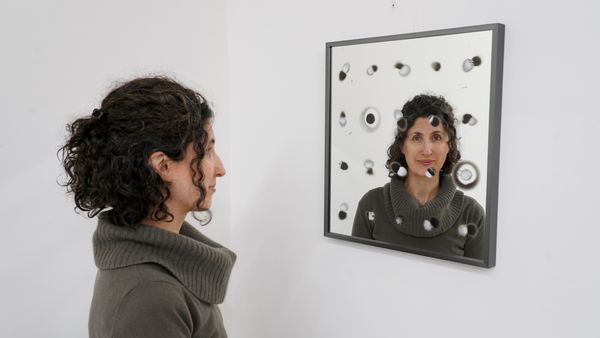
Ahna Girshick
Bias Reflector, II, 2025
UV-cured archival ink on glass mirror, custom machine learning software
19 × 17 in
Price on Request
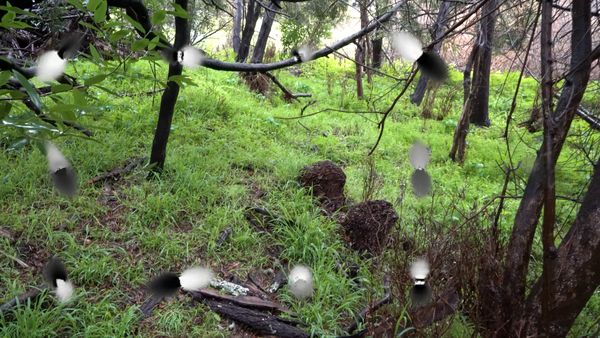
Ahna Girshick
Machine Seeing Belgum Trail Woods, 2025
4K video, 9:53 min loop, custom machine learning software, sound
Price on Request
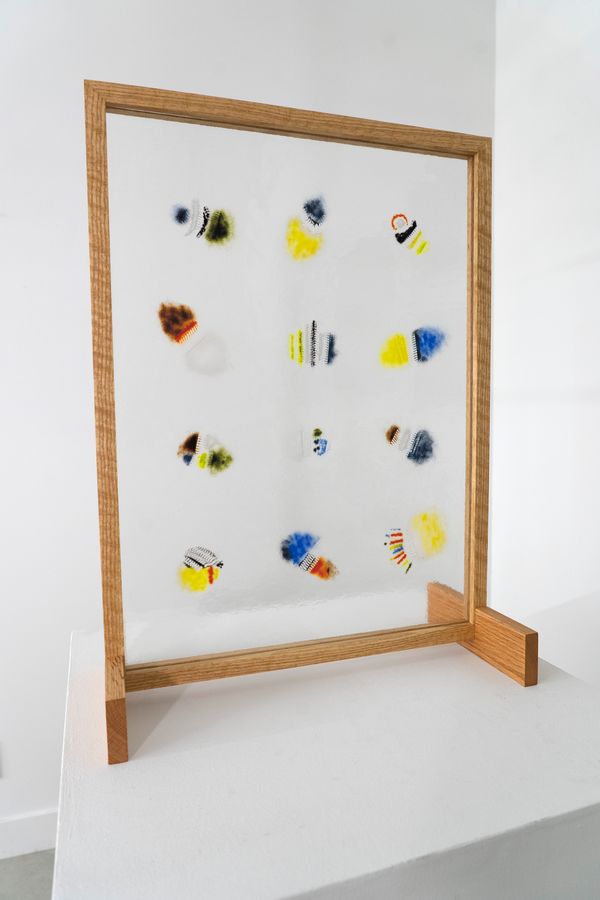
Ahna Girshick
See Through Machine, X, 2025
Kiln-fused glass, custom machine learning software, custom wood framing with removable feet
24 × 18 in
$3,200
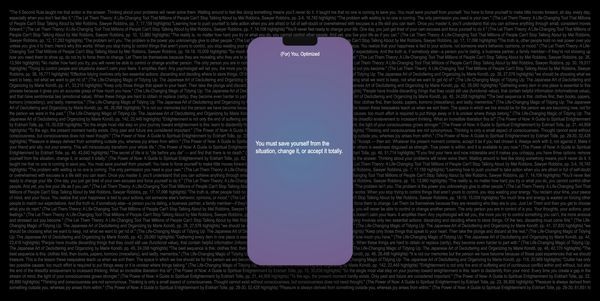
Anna Zhang
(For) You, Optimized, 2025
Custom software
Price on Request
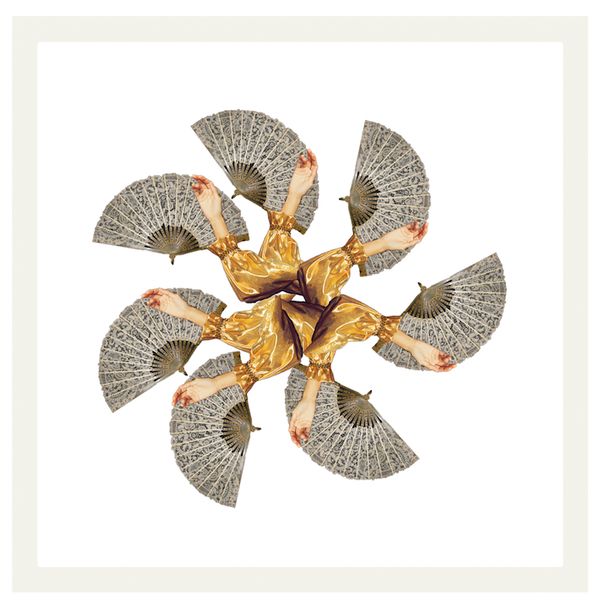
Christy Chan
Whose Comfort? (Series, #2), 2022
Digital Collage on Paper
27.5 × 27.5 in
$3,500
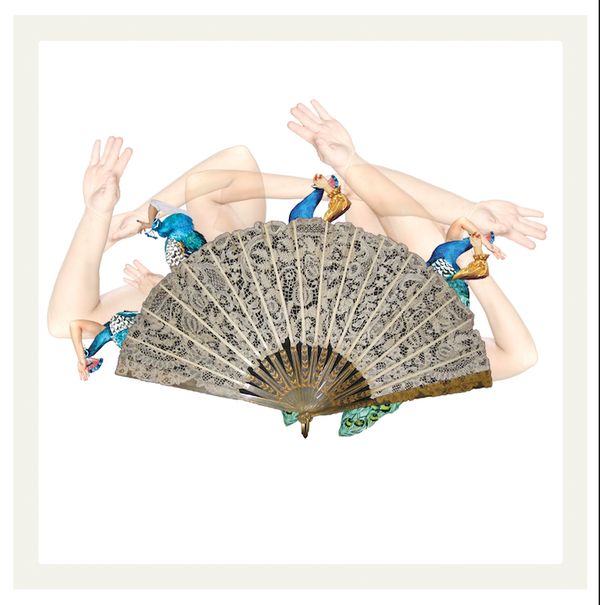
Christy Chan
Whose Comfort? (Series, #4), 2022
Digital Collage on Paper
27.5 × 27.5 in
$3,500
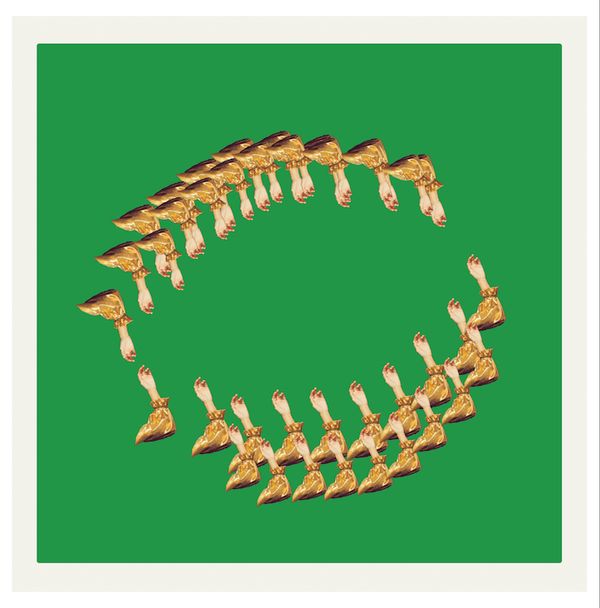
Christy Chan
Whose Comfort? (Series, #5), 2022
Digital Collage on Paper
27.5 × 27.5 in
$3,500
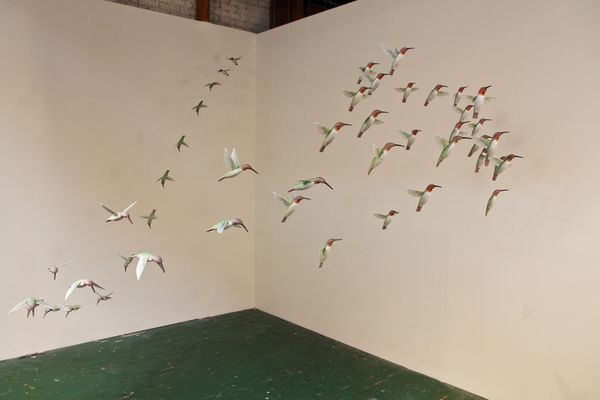
James Shefik
"I've Not Had Enough of You", 2025
Sculptural installation of hummingbirds cast in plastic
144 × 156 × 120 in
Price on Request
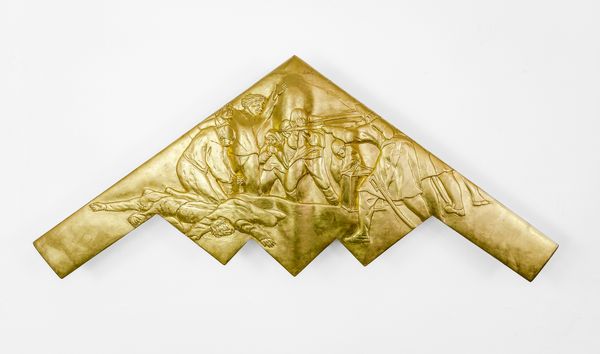
James Shefik
Goya B-2, 2025
Gilded bas-relief sculpture
42 × 20 × 4 in
Price on Request
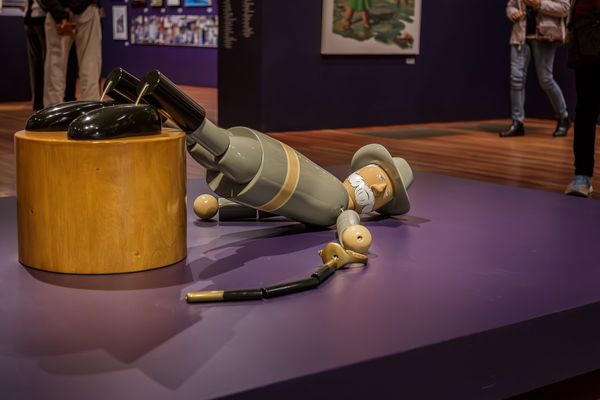
James Shefik
Hollow, 2025
Mixed media sculpture
$0 — sold
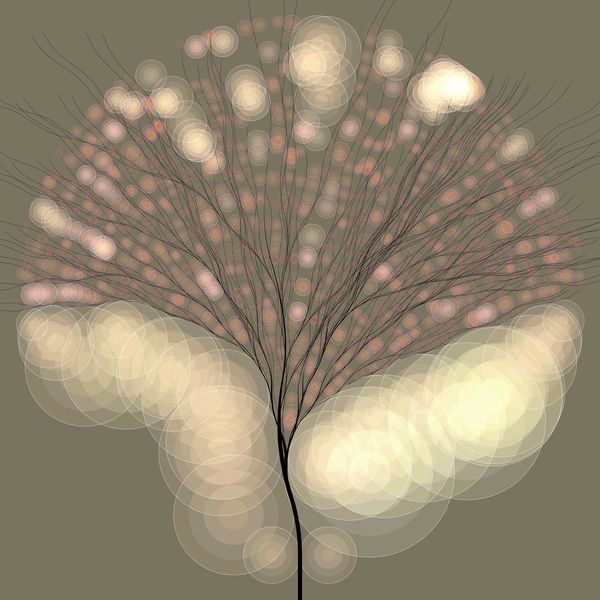
Jeffrey Ventrella
Poetry Tree, 2025
algorithmic design - printed on canvas
40 × 40 in
Price on Request
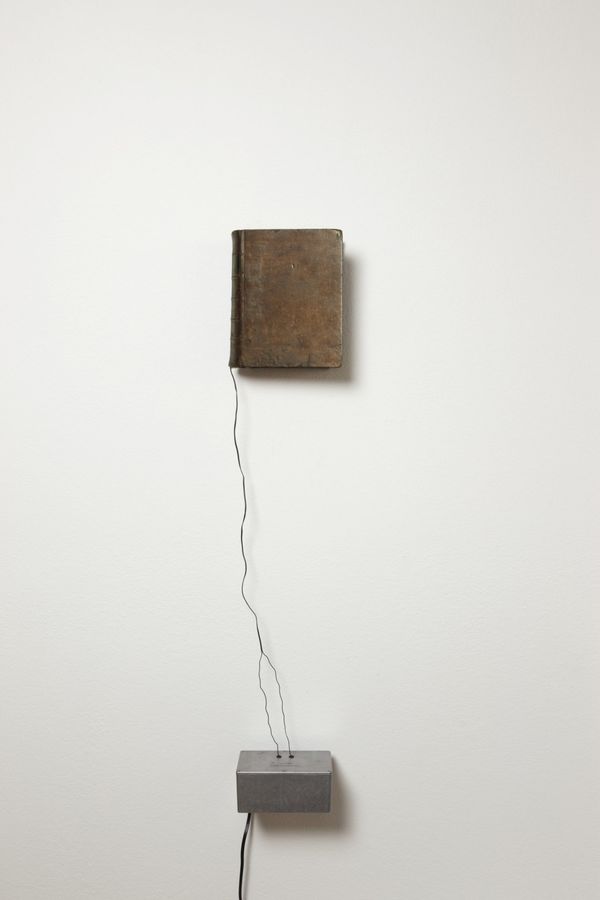
Jim Campbell
I Have Never Read the Bible, 1995
dictionary, speaker, custom electronics
10 × 71 × 6 in
Not For Sale — sold
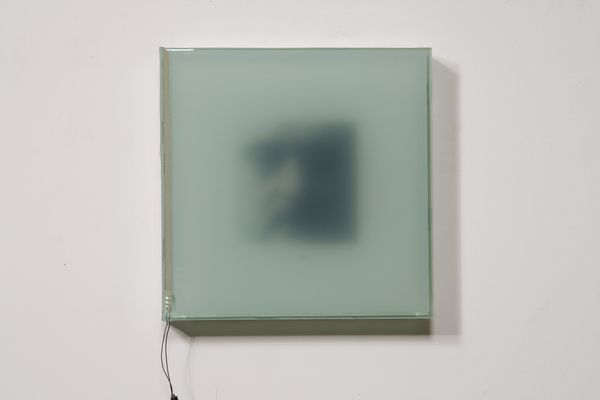
Jim Campbell
Portrait of my Father (modified with the rhythm from Photo of my Mother), 1995
photograph, glass, liquid crystal layer, custom electronics
12 × 71 × 6 in
Price on Request — sold
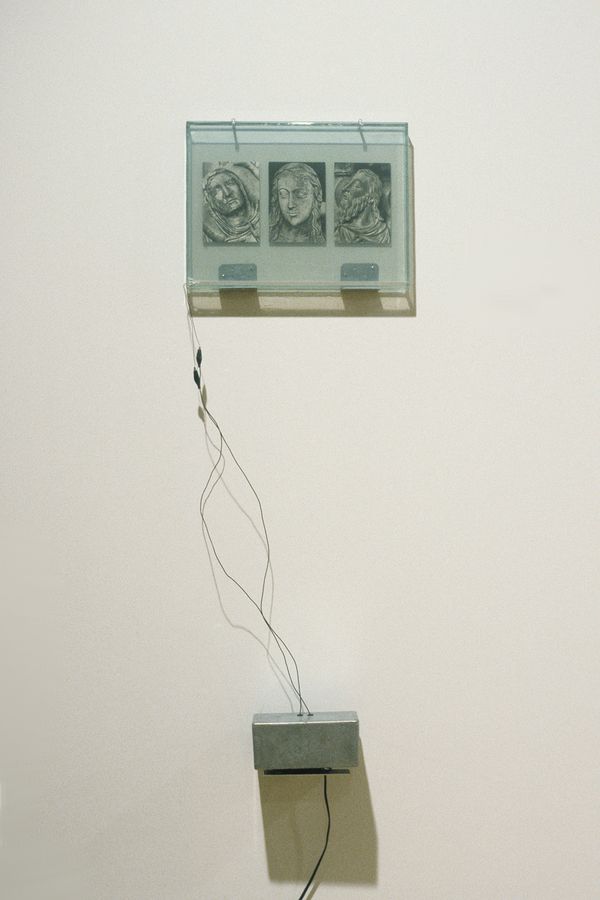
Jim Campbell
Postcards from Chartres, 1998
postcards, glass, liquid crystal layer, custom electronics
18 × 71 × 6 in
Not For Sale
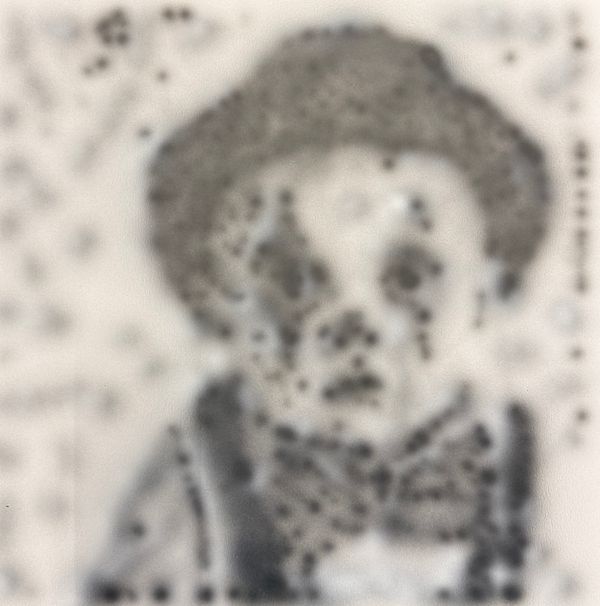
Jonathan Bachrach
Sad Baby Clown #2, 2025
paper, black and white india inks, air brush CNC machine custom built for artist by William Tremblay, sony alpha iv, laptop, and custom software by artist.
23 × 23 in
$800
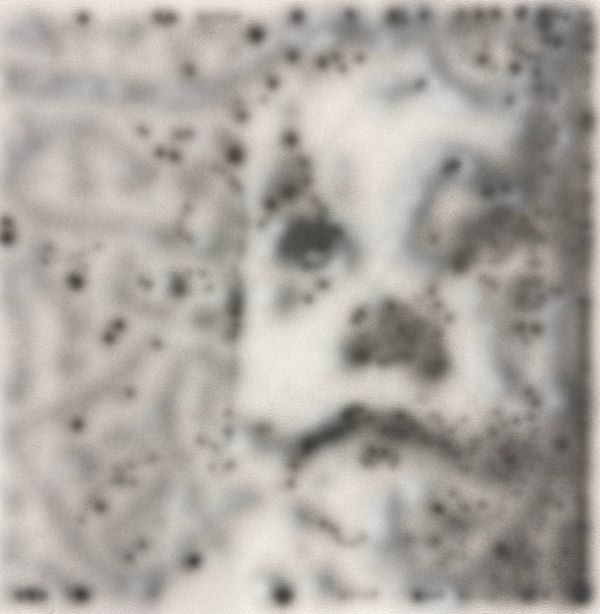
Jonathan Bachrach
Sad Baby Clown #7, 2025
paper, black and white india inks, air brush CNC machine custom built for artist by William Tremblay, sony alpha iv, laptop, and custom software by artist.
23 × 23 in
$800
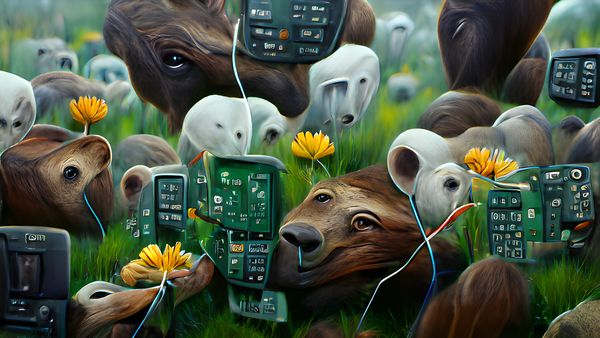
Memo Akten
All Watched Over By Machines Of Loving Grace, 2021
3840×2160 30fps video; stereo audio; 1:58 seamless loop; Technique: custom software using Artificial Intelligence, Deep Learning, Generative Adversarial Networks, Transformers, CLIP, VQGAN
Price on Request
![Filling the Sea…[ ]](https://120710-web-assets.s3.us-west-1.amazonaws.com/media/CACHE/images/piece_images/jw/80095ce446ae4f0071dfffb0d74f34ad.jpg)
Ruokan He
Filling the Sea…[ ], 2025
mixed media installation, computer screen, software
Price on Request
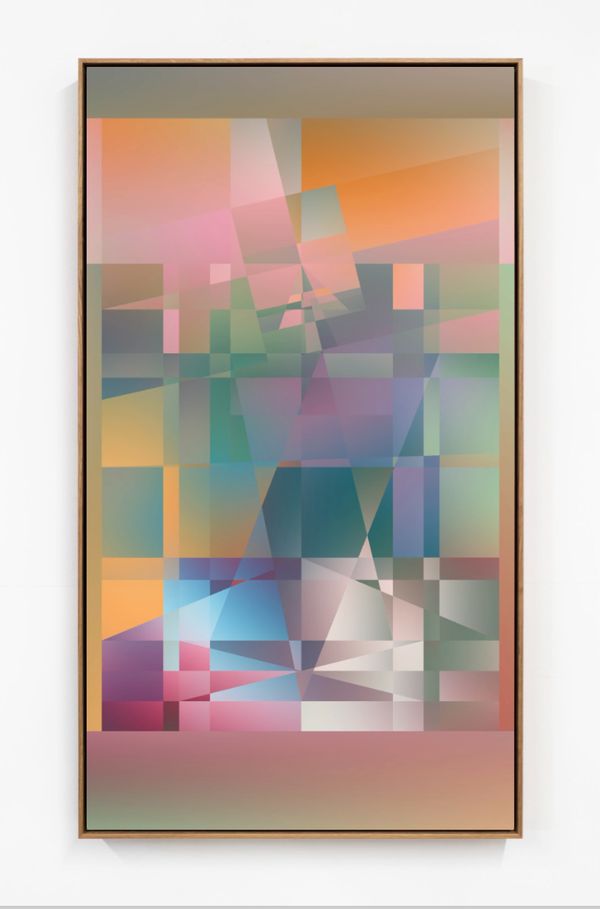
Scott Snibbe
Protector of the World, 2025
Custom software, computer, screen, oak frame
25 × 44 × 4 in
Price on Request
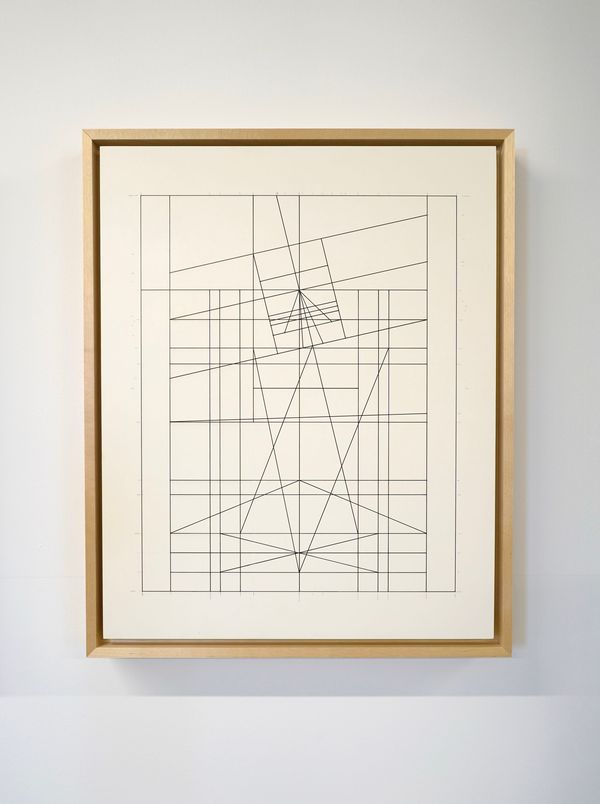
Scott Snibbe
Protector of the World, 2024
Ink drawing on clay board
16 × 20 × 1 in
$3,500
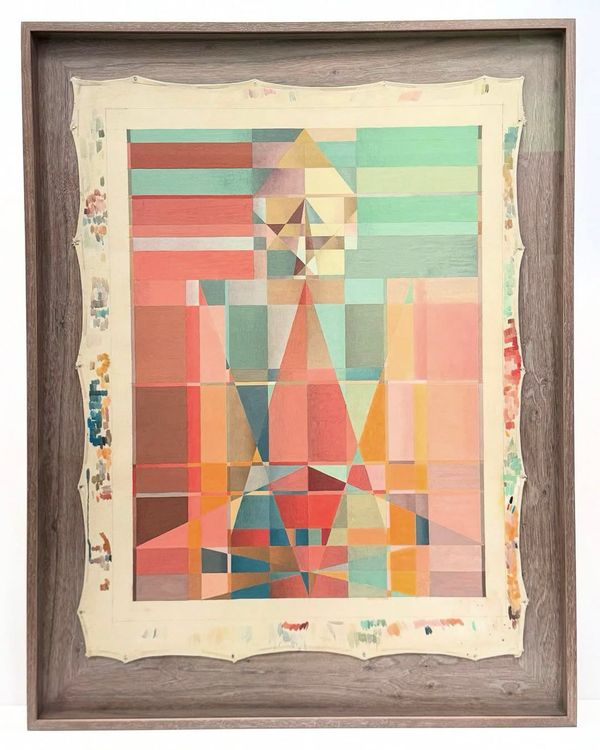
Scott Snibbe
The One Gone Beyond (Nondual), 2024
Ground natural mineral pigments and vegetable/insect dyes and animal glue sizing on canvas, custom frame
26 × 30 × 2 in
$18,000
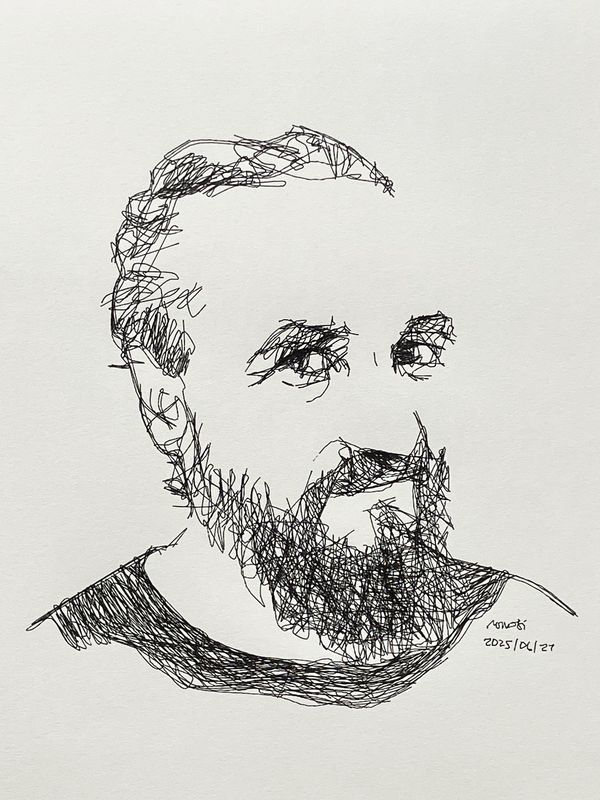
Stephen Milborrow
Machine generated portrait from a live model, 2025
Pen on paper
14 × 11 in
Not For Sale
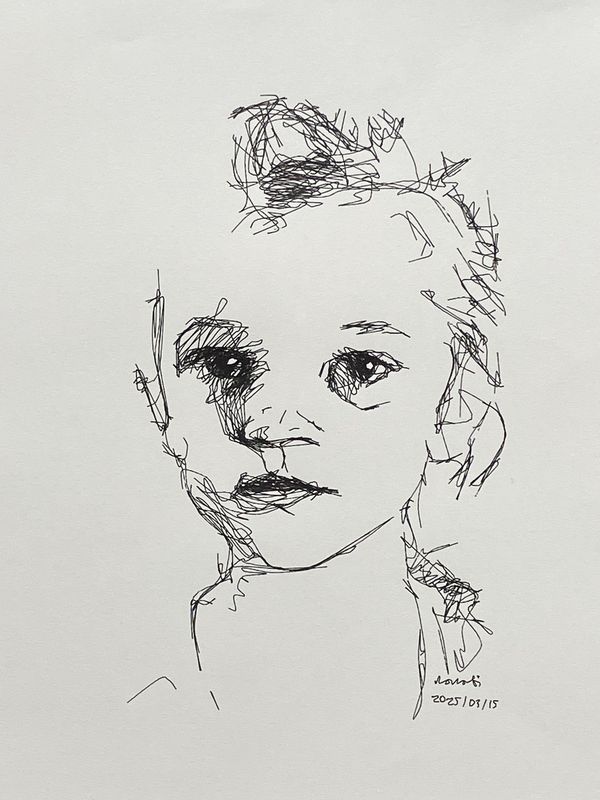
Stephen Milborrow
Machine generated portrait from a live model, 2025
Pen on paper
14 × 11 in
Not For Sale
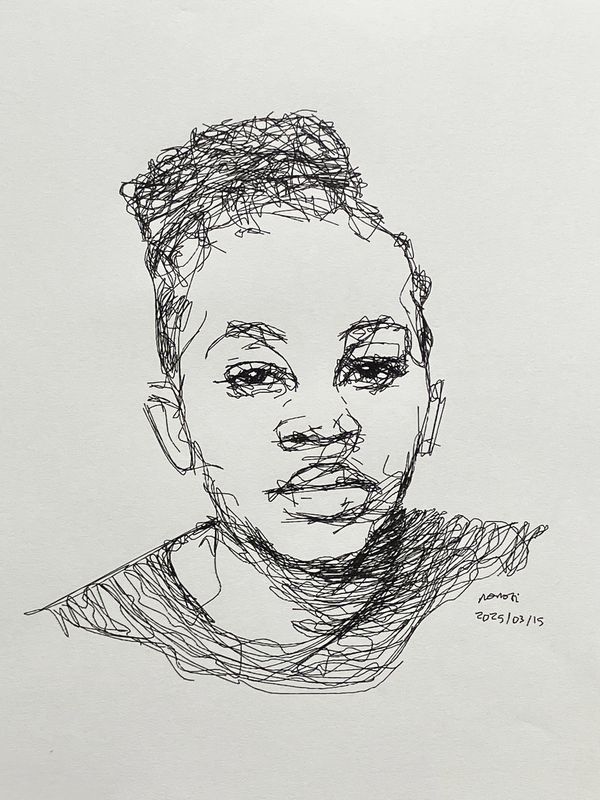
Stephen Milborrow
Machine generated portrait from a live model, 2025
Pen on paper
14 × 11 in
Not For Sale
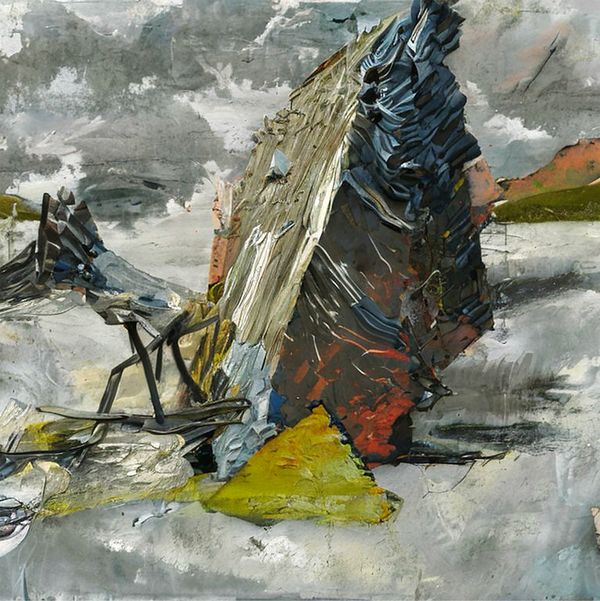
Steve Lomprey
LIVING ROCK, 2025
Digital painting over carved relief on MDF and Birch plywood.
48 × 48 × 1 in
$6,500
Artists
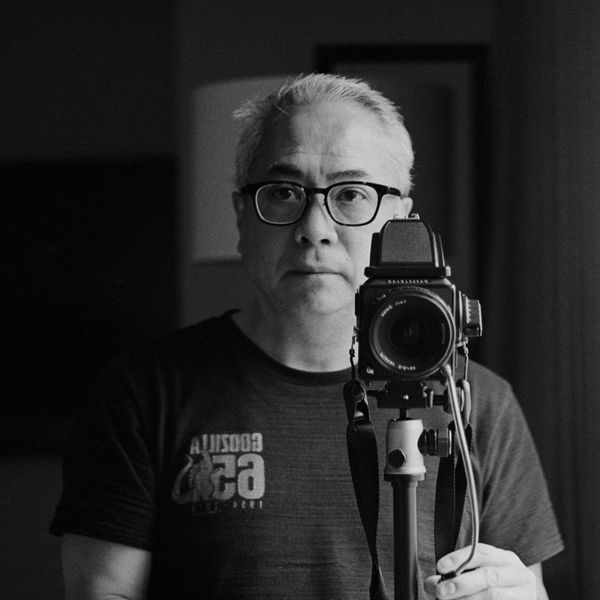
Adam Chin @adamchin100
Adam Chin is a fine art photographer who spent a career as a computer graphics artist for TV and film. He was one of the original employees of Pacific Data Images, a pioneering computer graphics studio which later became part of Dreamworks Animation. Adam did computer graphics lighting on the Shrek, Madagascar, How to Train Your Dragon, and Kung Fu Panda series of animated feature films. Adam practices using Machine Learning neural networks trained on databases of real photography to render images. By augmenting traditional photography with neural networks, he is exploring the concept of how much information is contained in a given photograph. In 2020, he was named one of the Photolucida Critical Mass Top 50 photo portfolio award winners, and in 2022 he won the 30 Over 50: In Context award from the Center for Fine Art Photography. In 2025 he won the top prize in Expand and Contract: AI and Alternative Processes from the Los Angeles Center of Photography. Adam also manages the photographic archive of his late uncle, Benjamen Chinn, who photographed San Francisco’s Chinatown and Paris in the late 1940’s and early 50’s.
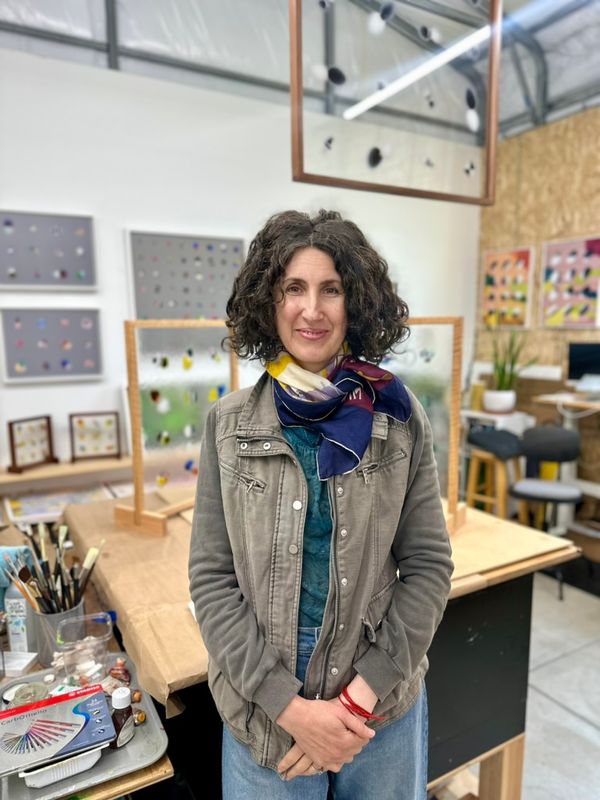
Ahna Girshick @ahna_girshick
Ahna Girshick is an interdisciplinary artist and research scientist who investigates the idea of a primal universal visual language that connects humans, machines and nature. She holds a PhD from UC Berkeley in Vision Science, and was a postdoctoral fellow at NYU. In 2010-13, she created interactive musical data visualizations in collaboration with Philip Glass and Scott Snibbe that have been exhibited at the Museum of Modern Art (NY), The Contemporary Jewish Museum (SF), and The Barbican Centre (London). More recently, her experiments in perception have exhibited through Southern Exposure (SF), Ely Center for Contemporary Art (New Haven), 120710 (Berkeley), and University of California School of Law (San Francisco), and in the White Columns registry (NY). She lectures in UC Berkeley’s Cognitive Science program on shared illusions in human and machine perception, and has recently given public talks at The Commonwealth Club of California and The Internet Archive’s Intersection of Art and Technology salon.
Statement: At the core of our perceptual experiences lies the search for pre-determined visual patterns — archetypal forms learned by both human or artificial brains — which both optimize and bias perception. I imagine the experience of looking through the eyes of an AI and wonder about intermediate interior states never seen by humans. Using algorithms, paint, photography and installations, I use overlays of synthetic neurons to ask the viewer to reflect on the internal opaque processes of both AIs and humans. To look through one of my “Windows of Perception” is to experience the initial moment of AI visual perception — the scanning for simple edges and forms — machine-learned forms that reference visual bias in its primal form. Each transparent window is painted with the initial visual filters in AI vision, revealing AI’s otherwise opaque technical processes and reflecting on their interconnection with human vision. “Cabinets of curiosities” emerged in the 16th century as means to systematically organize and preserve an era’s scientific learnings. In my “Convolutions” series I collect the technological specimens of our time: Synthetic neurons that have attuned themselves to the visual fragments found in millions of Internet photos. Landscape imagery is the original “training dataset” for human vision and, indirectly, training input for AIs as they seek to mimic human vision. In my “Machine Seeing Tree” photos I contemplate how machines see the natural environment through overlaying synthetic neurons, reminiscent of bullet holes — constant reminders of the ubiquitous AI-processing of our lives’ pixels.
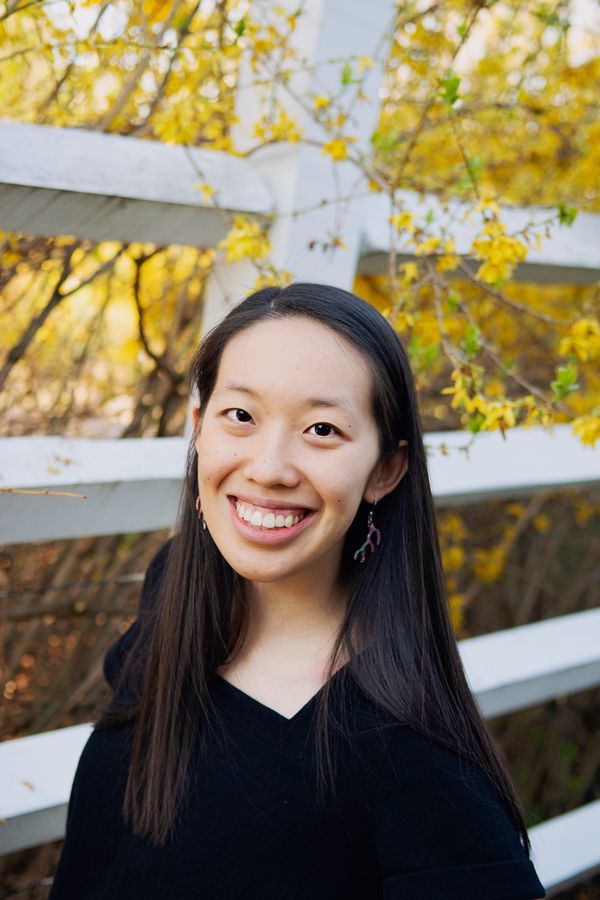
Anna Zhang @annazhang.studio
Anna Zhang is an artist and creative technologist based in San Francisco, whose practice centers on imaging and reimagining our relationships with technology. Her work has been featured in the Royal Photographic Journal, Real Life, the New Media Caucus, Buzzfeed, and Forbes, and has been exhibited at the National Museum of American History and Gray Area. She is a recipient of the Judson-Morrissey Excellence in New Media Award, has been recognized on the Forbes 30 Under 30 list, and is a member of NEW INC.
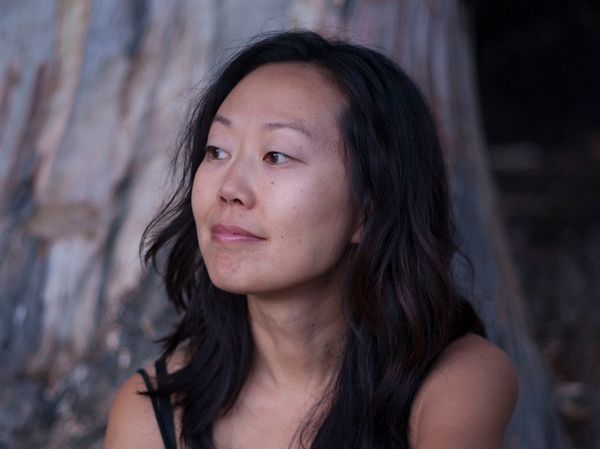
Christy Chan @christychanart
Christy Chan works across video, installation, narrative film, object design, community engagement and public art. Informed by her early years in the rural South, her work uses both direct and subtle approaches to deconstruct and question the social codes and everyday power structures that normalize racialized violence in the United States. Her work has been featured in exhibitions at the Yerba Buena Center for the Arts and Mills Art Museum in the San Francisco Bay Area; Film Independent in Los Angeles; Wassaic Project x NY Council of the Arts in New York; Utah Museum of Contemporary Art in Salt Lake City; Bemis Center for Contemporary Art in Omaha; and on NPR, among others. Chan is the recipient of a Guggenheim Fellowship, Creative Capital Award, Fleishhacker Eureka Award and Kenneth Rainin Fellowship. She is the founder of Dear America, a guerrilla public art project that projects the artworks of AAPI artists onto high-rise buildings throughout the Bay Area in response to anti-Asian racism. Her independent film “Somewhere To Be” will be screening beginning in Fall 2025. She lives in Richmond, CA.
Statement: I create art in order to question the everyday power structures and social codes that normalize racialized violence in the United States. Using a combination of video, installation, object and textile design, performance and participatory art interventions, my projects often deploy absurdist humor or personal risk to make the invisible visible. During the Obama presidency, I wanted to expose the fact that the KKK was resurging. The Long Distance Call (2015) was a live reenactment of conversations between myself and "Miss. Anne," a fifth generation KKK seamstress in Alabama. During the original phone calls in 2012, I hid my racial identity and pretended to be a white American in order to convince Miss. Anne to custom-fabricate Klan robes for my projects. I later used the robes to film my actors in As Seen on TV (2015) and other videos that critiqued the normalcy of white supremacy. In 2021, in response to Covid-related, anti-Asian violence, I launched Dear America, a mobile, guerrilla public art project that projected art works by myself and other Asian American artists on the walls of high rise buildings throughout the Bay Area, sometimes up to 25 stories tall, as a solidarity response. As someone who grew up in the South, I often think about how the illusion of “beauty” and keeping things “nice” is an excuse to preserve patterns of violence. Fainting couches were racially exclusive furniture items used by Southern women in corsets, and the act of losing consciousness and retreating from life was historically idealized as privilege and beauty. In 2022, after my hometown became the first county in the U.S. to ban DEI in schools, I wanted to transform this furniture object into a platform for the public to question America’s history of racial privilege. I re-upholstered an 1890s fainting couch with my custom textile, a grene collage of birds with female human arms in strange corseted gestures. In a reversal of the couch’s original use, I then invited participants of all backgrounds to rest on it and contribute their thoughts on the current political moment to a video quilt. In a time when many Americans feel burnt out by conversations on white supremacy, I believe that making art is a powerful way to encourage dialogue and open conversations.
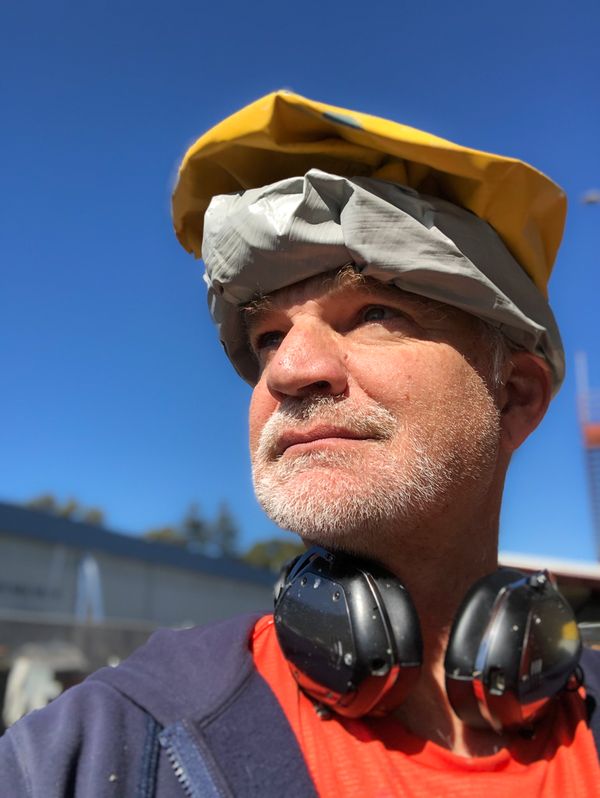
James Shefik @James_shefik_sculpture
Conceptual, multidisciplinary artist James Shefik lives in Oakland. Along with making art in his studio, he is a scenic artist and scenic foreman on movie and television sets (Sense8, Thirteen Reasons Why, Steve Jobs, Big Eyes, Milk, and The Matrix to name a few). Primarily a sculptor, Shefik creates artwork that reveals his strong concern for the environment, for the government’s tyranny of purposeful invasion of our privacy, and social political absurdity that often accompanies concentrations of power. His hummingbird installation “I’ve Not Had Enough of You” was created in 2013. It referenced a military project of surveillance conceived of during the Iraqi war in 2006. Flying hummingbirds were equipped with cameras in the era before smartphones for surveillance. I created 99 hummingbird drones, one of which transmits a delayed video signal to a monitor in the installation space.
Statement: I am naturally a sensitive, curious, pessimist. Human behavior fascinates me, and while we have many positive traits, my work tends to highlight our shortcomings, with a predominant focus on concentrations of power and absurdity. The resulting pieces tend to blur the lines between contemporary art, beauty and the political use of power, to fabricate new ways to see the world around us. I do this with common everyday objects (cars, matches, hummingbirds, chairs) , in varying dimensions, media and numbers. The object's finish is kept minimal, realistic yet obsessively detailed to hold a viewers interest and attention long enough to see multiple layers of meaning. Another aspect of the laborious quality of each piece is a rebuttal to the digital instant gratification, short attention span landscape that pervades the early 21st century.
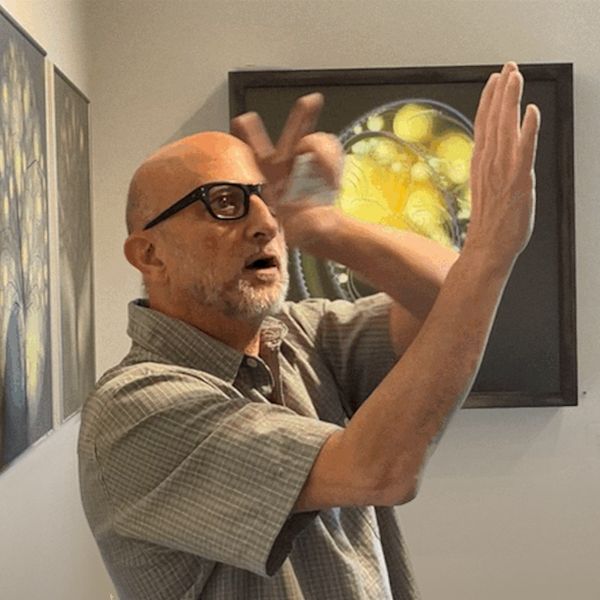
Jeffrey Ventrella @jeffreyventrella
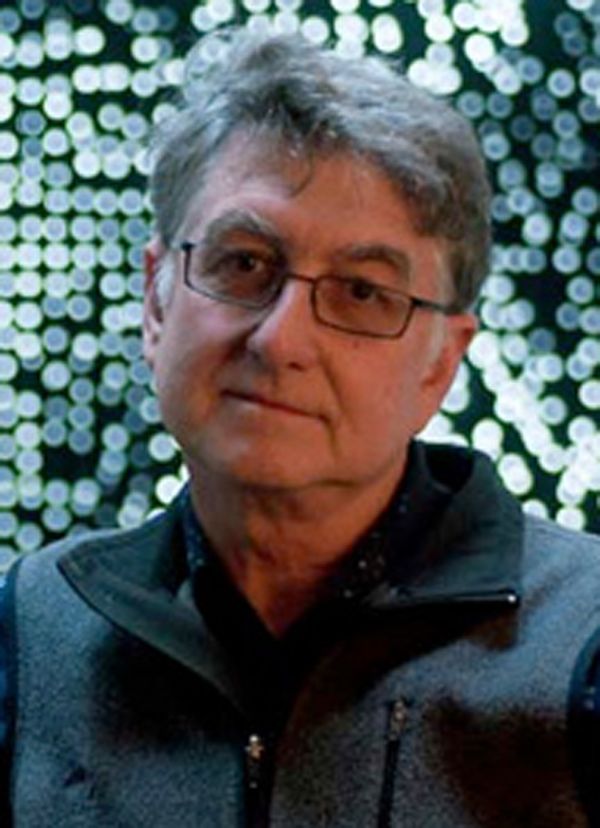
Jim Campbell @JimCampbellStudio
Jim Campbell, trained in Mathematics and Engineering at MIT, worked in Silicon Valley and earned nearly 20 patents before turning to art. In 1988 he began creating interactive video works using custom electronics before digital video was viable, later shifting to perceptual, low-resolution imagery around 2000. His pioneering fusion of technology and visual art is in major museum collections including MoMA, the Whitney, SF MoMA, LACMA, the Smithsonian, and the Metropolitan Museum of Art. Campbell’s work explores the borderlines of recognition, transforming abstract data into moving, emotionally resonant forms. Since 1992 he has created more than a dozen public artworks. He has received many grants and awards including a Rockefeller Grant in Multimedia, three Langlois Foundation Grants, and a Guggenheim Fellowship.
Statement: These 3 works are from a series, in which each work is based upon a digitally recorded memory of an event. Some of these electronic records represent a personal memory and others represent a collective memory. These electronic memories are manipulated and then used to transform an associated object mounted on the wall. Avoiding the usual notions of what a memory is, none of the original memories is an image or a sound. These works explore the characteristic of hiddenness common to both human and computer memory. Memories are hidden and to be represented have to be transformed. Some of the memories may be fictional, not real, but generated. The boxes are labelled with the memory contained within. In current terminology, I guess you could call them data visualizations or auralizations.
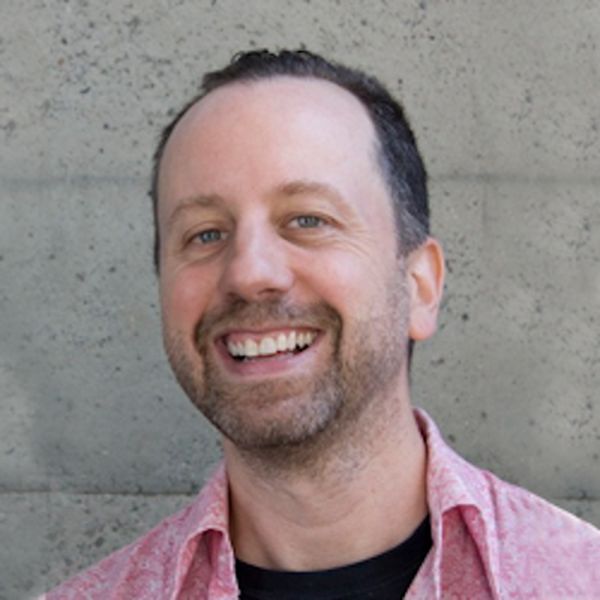
Jonathan Bachrach @bachrach.arts
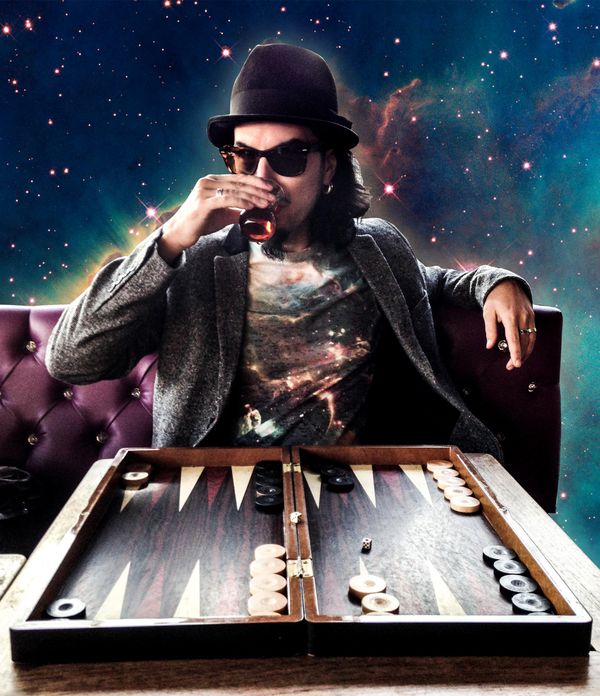
Memo Akten @memo_akten
Memo Akten is a multi-disciplinary artist, researcher, and computer scientist working with emerging technologies to create Speculative Simulations and Data Dramatizations that probe the intricacies of human-machine entanglements, examining the cultural, social, and ecological impacts of our contemporary techno-lifestyles. For more than a decade, he has worked with AI, Big Data, and our Collective Consciousness as scraped and shaped by the internet, to reflect on the human condition. His highly collaborative practice spans moving images, sound, poetry, dance, light, performances, installations, and online interventions, where he explores the intersections and tensions between technology and ecology, science and spirituality, modernity and ritual, self and collective intelligence. His work is ultimately driven by a profound curiosity into the nature of reality, the nature of life, and the nature of the mind. He has won numerous awards, including the prestigious Prix Ars Electronica Golden Nica. His work has been exhibited internationally at venues including the Venice Biennale, Barbican, Grand Palais, Mori Art Museum, and Tretyakov Gallery, and is held in prominent collections such as Borusan Contemporary, Vanhaerents Art Collection, and the Guy & Myriam Ullens Foundation. His practice has been widely featured in major publications including Wired, Art in America, NY Times, Guardian, and cited in numerous books. He has presented his research at leading academic conferences such as NeurIPS and SIGGRAPH, and his PhD thesis was recognized by the leading art & science journal Leonardo for its ‘special relevance’. He has collaborated with public figures such as Lenny Kravitz, U2, Depeche Mode and Richard Dawkins; and brands including Google, Apple, Twitter, and Sony. He is Assistant Professor at UC San Diego and co-founder of Superradiance Lab where they investigate consciousness, intelligence, and planetary systems through research-based art that bridges embodied experience with emerging technologies.
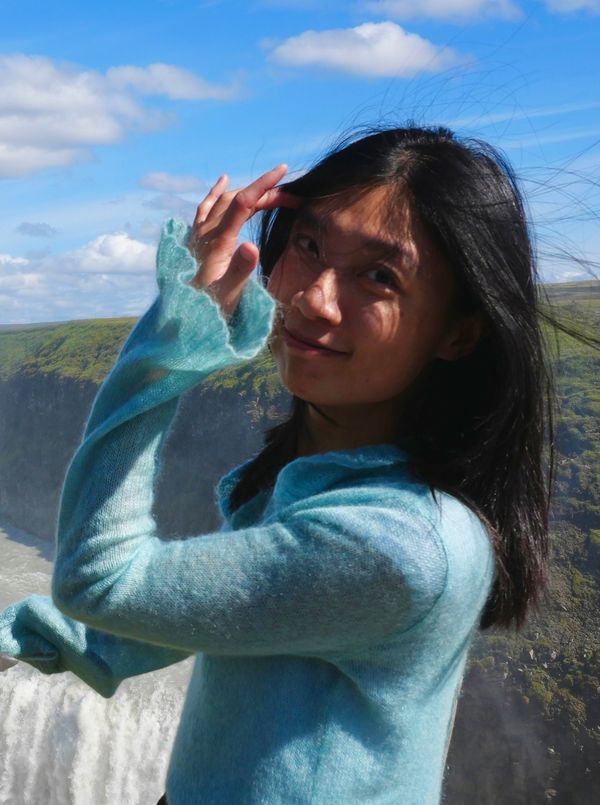
Ruokan He @hurricane.art8
Ruokan He is a creator, designer and musician. She weaves music, future technology and mixed-reality into immersive experiences that blurs the boundaries of reality and imagination, organic and digital, harmony and dissonance. Ruokan He draws inspiration from the ocean and the environment, in creating experience about connections. She was an AI artist at the Stochastic lab, has received a Telly Award, showcased her work at Palo Alto Code Art festival and her game at the Indiecade Festival, collaborated with dancers in interactive shows, and performed at various venues since 2015.
Statement: My work explores the interplay between sound, technology, and perception. my work blurs the boundaries between reality and imagination, the organic and the digital. I create immersive experiences that explore harmony and dissonance, often inspired by the ocean and the environment. At the core of my practice is a search for connection—between people, systems, and shifting worlds.
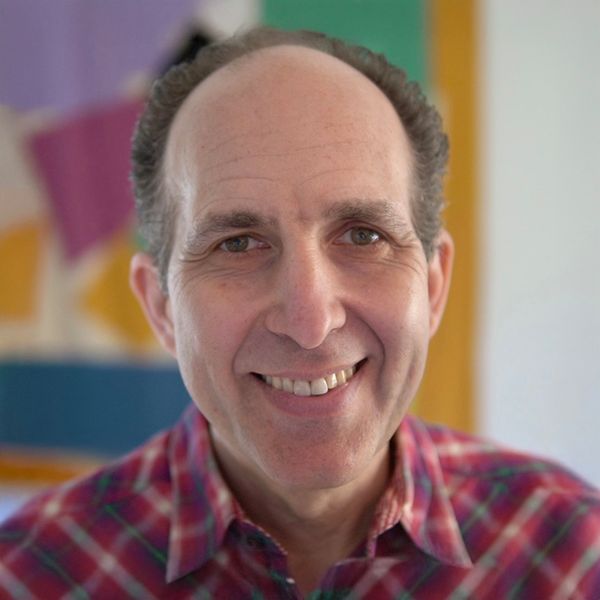
Scott Snibbe @ssnibbe
Scott Snibbe is a new media artist, author, and meditation teacher whose work dissolves the illusion of separateness—between self and other, art and audience, body and nature. His pioneering interactive art, held in the collections of New York MoMA and the Whitney Museum of American Art, has been exhibited worldwide in museums, public spaces, concert tours, and immersive installations. He has collaborated with Björk, Philip Glass, Beck, and James Cameron, creating innovative intersections of art, music, and technology. Snibbe has received the Webby and Ars Electronica awards and grants from the National Science Foundation, the Ford Foundation, the National Endowment for the Arts, and the Rockefeller Foundation. He holds over thirty patents and has served as an advisor to The Institute for the Future and The Sundance Institute. He has held teaching and research positions at UC Berkeley, NYU’s Courant Institute of Mathematics, San Francisco Art Institute, and California Institute for the Arts. As a leading figure in digital interactivity, Snibbe produced several groundbreaking art apps, including Gravilux, a number one app in Apple’s app store named “Best App of the Year”; and the world’s first “app album,” Björk: Biophilia. He was an early developer of Adobe After Effects and spent years at Paul Allen’s Interval Research Corporation researching interactive music, video, computer vision, and haptics. A longtime student and teacher of Tibetan Buddhism, Snibbe is the executive director of the nonprofit Skeptic’s Path to Enlightenment and hosts its widely followed meditation podcast. In 2024, he released his first book, How to Train a Happy Mind, featuring a foreword by the Dalai Lama. His work bridges ancient wisdom with cutting-edge technology, shaping new forms of engagement with consciousness, ritual, and community.
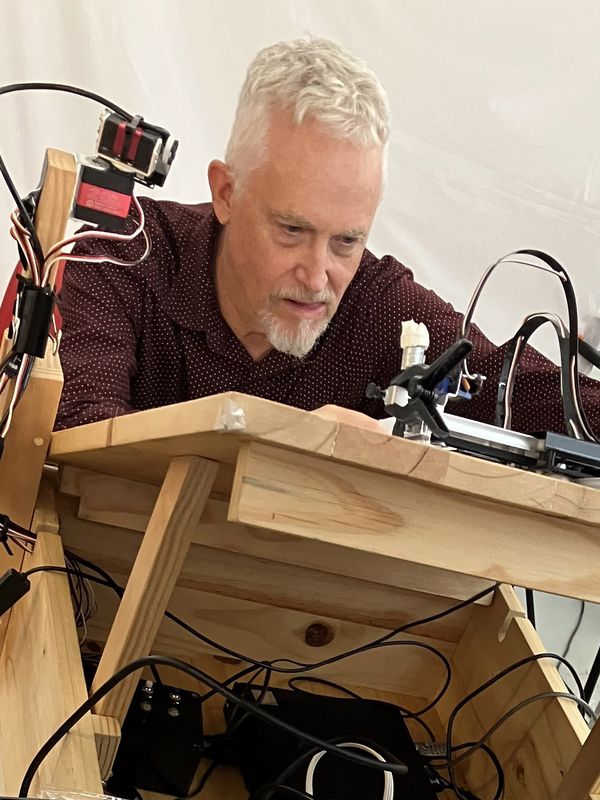
Stephen Milborrow @nonoti.machine
Statement: The Portrait Drawing Machine draws pen-on-paper portraits, much like a human artist. The machine works through a process of repeated observation and correction, allowing it to respond in real time to changes in the subject's pose and expression. The intention is to create expressive, unique portraits that capture the history of movement and transformation on paper.
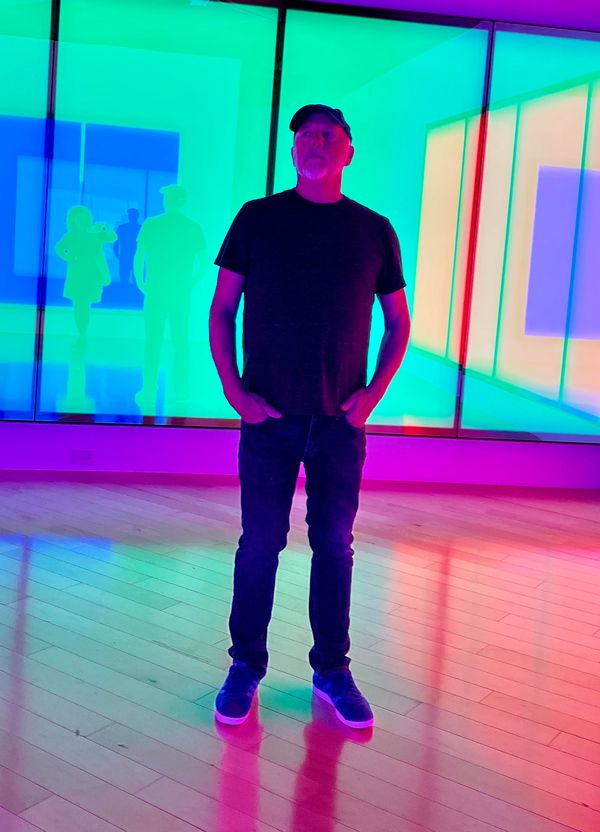
Steve Lomprey @stevelomprey
Steve Lomprey is a multimedia artist. He founded Carbon Based Projects in order to serve and expand innovative and culturally impactful creative work across many different platforms. From developing TV Series projects to creating new experimental art platforms and everything in between. He is currently developing a TV series called REAL FICTIONS. Steve is also the Founder/CEO of The New Narrative Project. The New Narrative Project is a prototype media platform designed to map, present, and define new contexts for thinking. The essential goal is to create experiences that communicate points of view that are rarely articulated and that may seem startling in comparison to what is normally presented through conventional media channels. What this work will broadly introduce is an overview effect that recontextualizes our place in the world by reimagining our collective possibilities. Steve has a painting studio in Montclair, CA where he produces mixed media abstractions. His work has sold to commercial and residential clients, and has exhibited his work at the SFMOMA Artists Gallery, The SF Fine Art Fair for Modern and Contemporary Art as well as the Los Angeles Art Show in Los Angeles, CA
Statement: LIVING ROCK is the first prototype painting from my ALIEN LANDSCAPE SERIES. General Statement: How will using AI to generate paintings effect the way they are going to be interpreted and perceived as we go into the future? Are the legacy models of history, biography, and critique still applicable and relevant in terms of circumscribing the language surrounding these new domains? There is also the pure digital materiality of language models that produce images, in the sense that they effectuate a fundamental unit and basis for production. In the past it was canvas, pigment, brushes, and wood. Now we have the non-physical materiality of digital tools. This first series of paintings are examples of the most direct and unaltered outputs. New visual languages of non-human or human collaborations will thrust us into novel visual and philosophical territories. This show is a way to make manifest some of the nascent possibilities of a life changing emergent technology.
Curator
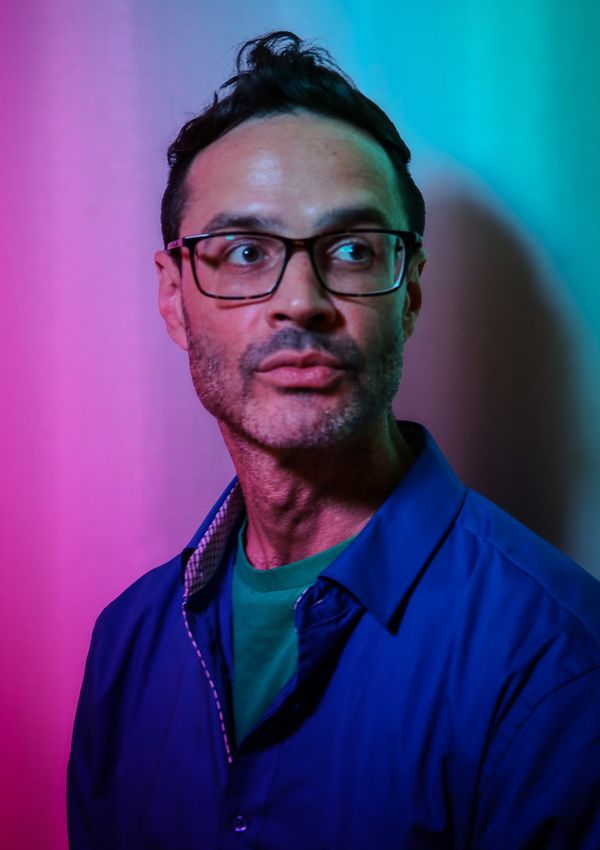
Hugh Leeman
 https://www.120710.art
120710.art 1207 Tenth Street
Berkeley, CA 94710