One Molecule Said Yes to Another (And Life Was Born)
Curated by Stephanie Zhang
- Anna Matsumoto
- Bhumikorn Kongtaveelert
- Darren Zhu
- Eydn Spector Delgass
- Ian Margo
- Jude Wolf
- Kelsey Chen
- Mai Kao
- Miguel Novelo
- Samuel Minev-Benzecry
- Siddharth Doshi
- Stephanie Zhang
- Wendi Yan
- X.S. Hou
- Zoë Kyn Rehnborg
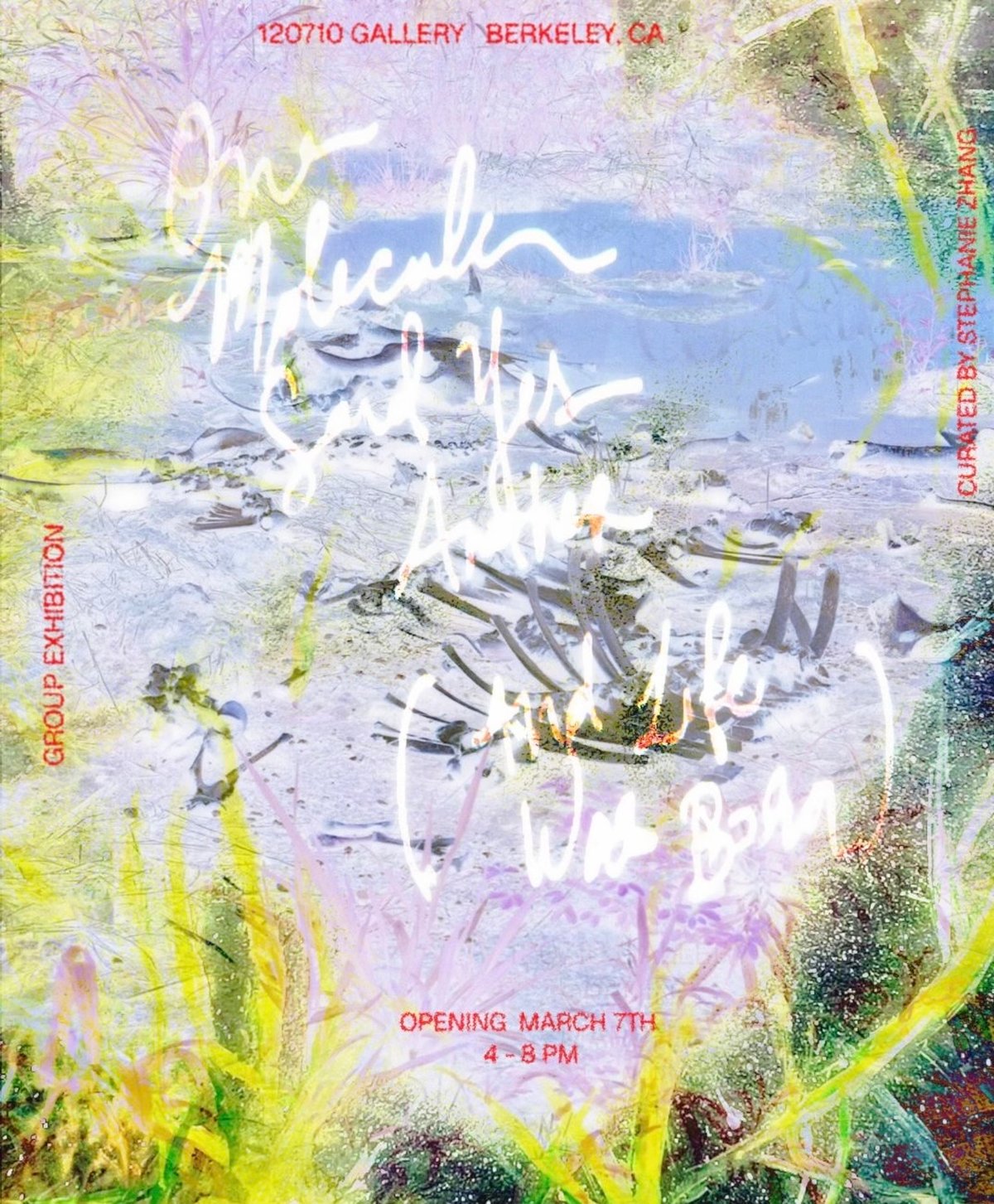
This exhibition traces the unstable boundaries between the divine and the fleshy, the sacred and the raw. Through works that deconstruct and mutate natural bodies into unfamiliar forms, it asks what calls us toward our primordial origins: the alive, the pulsating, the grotesque. Life — whether human, microbial, cellular—is broken down, repurposed, and born anew. Bodies become sites of alchemical transformation: dissected, preserved, electrified, yet beneath this material fragmentation lies a persistent longing for connection, for the umbilical, for the moist nothing from which all things emerged. Swamps, spines, salt marshes, and cuttlefish are oracles of a world in flux. These works do not simply document a world unraveling; they gesture toward new ways of sensing and assembling life from its remnants, divining what futures might still be born from what remains.
Works
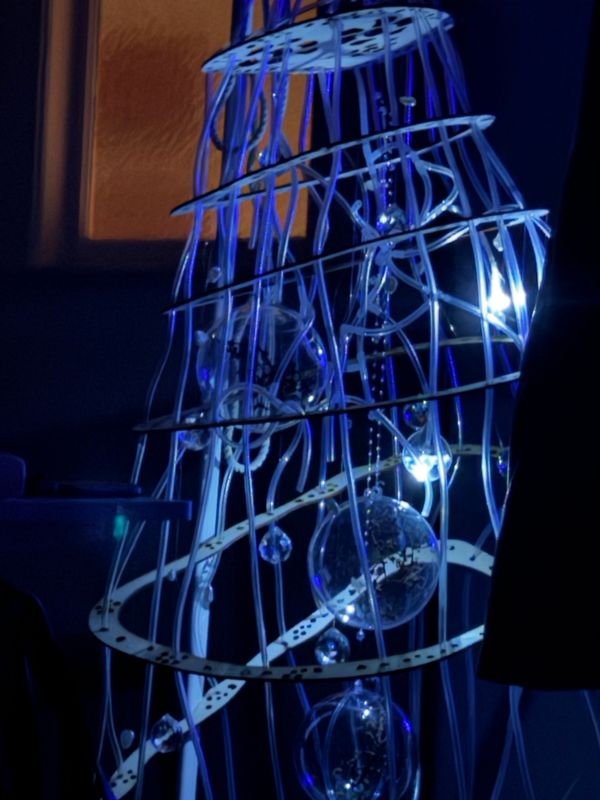
Anna Matsumoto
Breathwork, 2026
wood, rubber tube, motor, grape vines
Price on Request
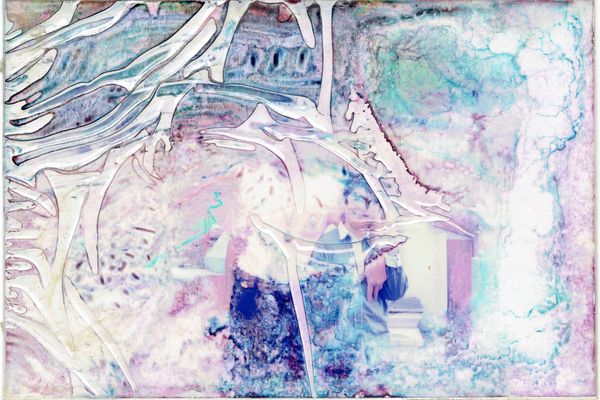
Bhumikorn Kongtaveelert
Scans from flooded archives (อ. ท่าตะโก จ. นครสวรรค์), 2011–2024
Price on Request
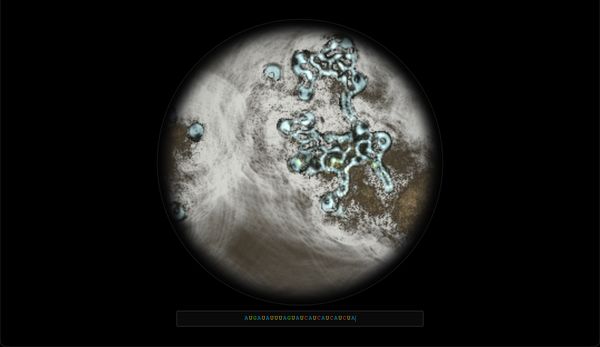
Darren Zhu
Primordium, 2026
Interactive video
Price on Request
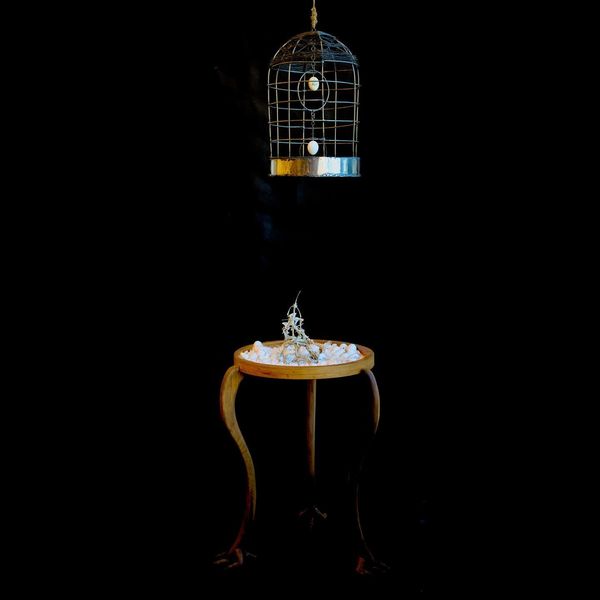
Eydn Spector Delgass
Bila Tserkva / Shvartse Tumeh, 2026
Wood, Metal, Egg, Bone
4 × 4 × 7 in
Price on Request
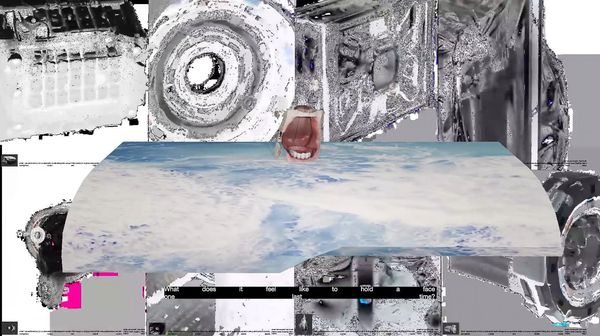
Ian Margo
fieldware, 2025
digital video
Price on Request — sold
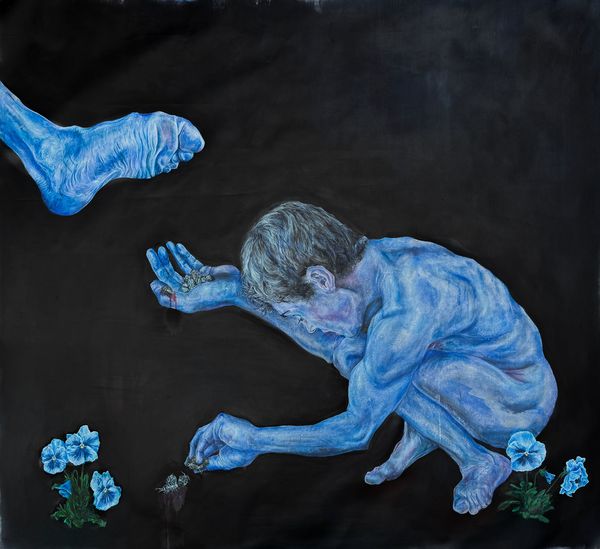
Jude Wolf
one with the rolly polly gods, 2025
oil on unstretched canvas
65 × 61 in
Price on Request
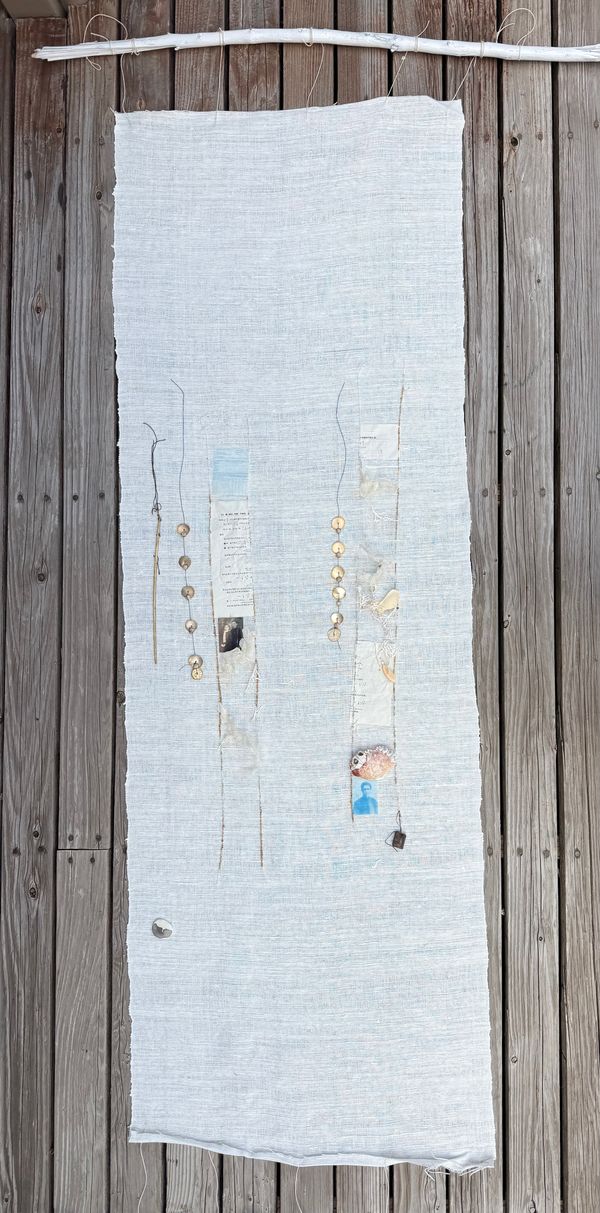
Kelsey Chen
spring couplet in eve's tongue, twice sunken, 2026
Assorted animal materials (coral, jellyfish, crab, barnacle, bone), silver, bodhi tree seed beads, and photo on cotton string, projection and archaeological matter on linen.
Price on Request
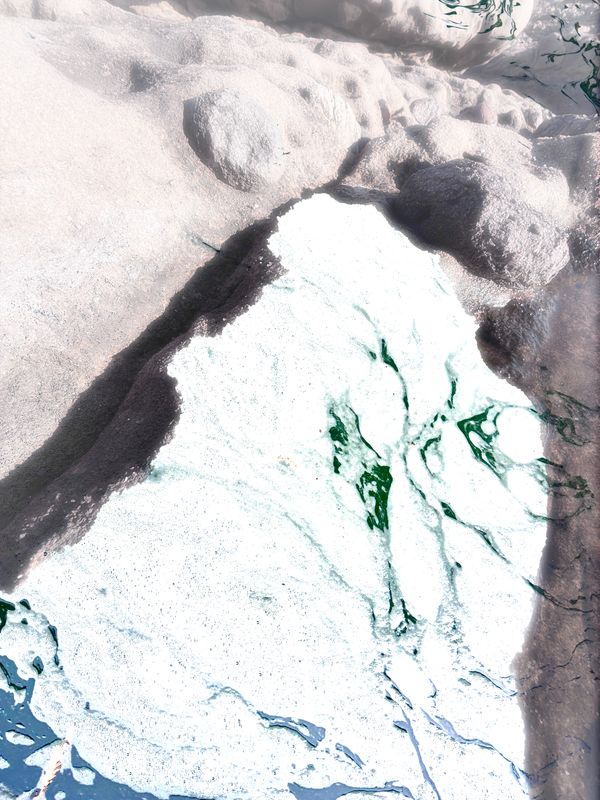
Mai Kao
Foyer, 2025
Sound
Price on Request
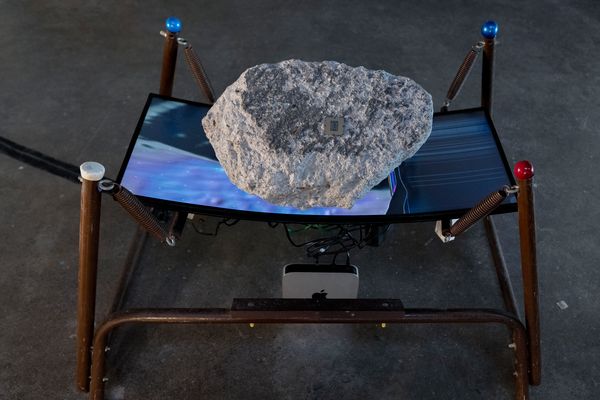
Miguel Novelo
Gravity Computer, 2026
Materials resourced from Recology AIR San Francisco: Rock, CPU, horse spring toy, mac mini, custom software, Ethernet cables, webcam, mouse balls.
3 × 2 in
Price on Request
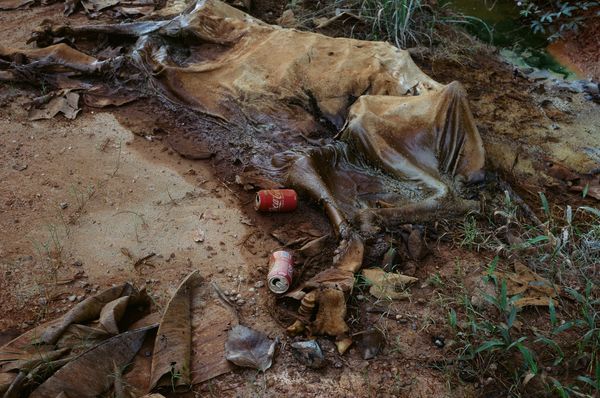
Samuel Minev-Benzecry
PARDES, 2026
Color positive slides, projection
Not For Sale
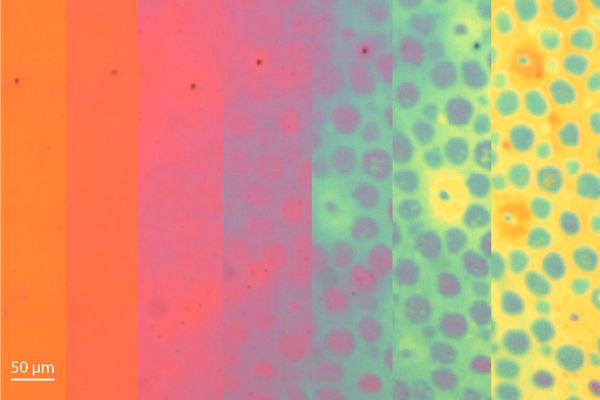
Siddharth Doshi, Stephanie Zhang
Synthetic Cesia, 2026
Optical cavities made by layering thin films of the soft, shape changing polymer, PEDOT:PSS, and thin films of gold.
Price on Request
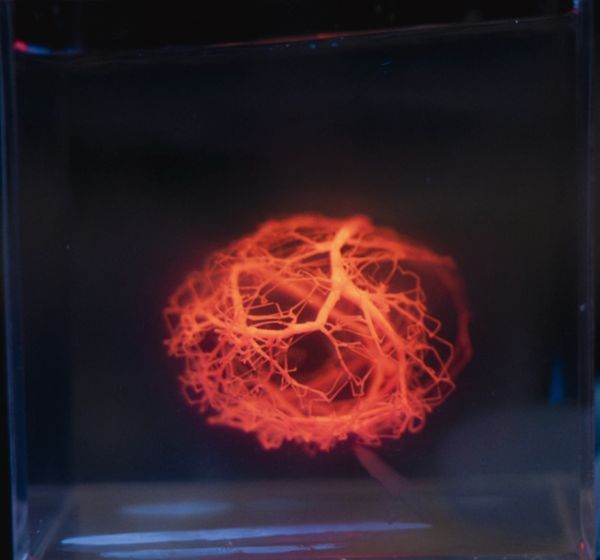
Stephanie Zhang
emergent vessel i, 2025
Vascularization of human heart organ via 3D bioprinting of carbopol-based bioink
5 × 5 × 5 in
Not For Sale
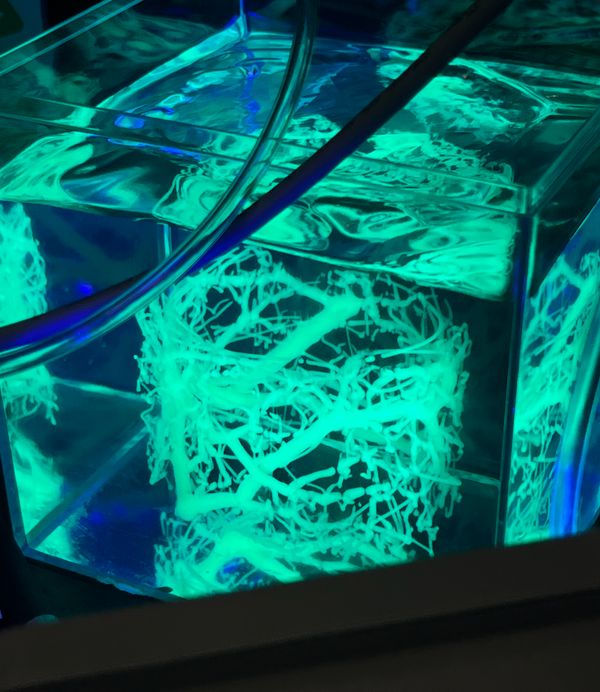
Stephanie Zhang
emergent vessel iii, 2026
Vascularization via 3D bioprinting of carbopol-based bioink
5 × 5 × 5 in
Price on Request
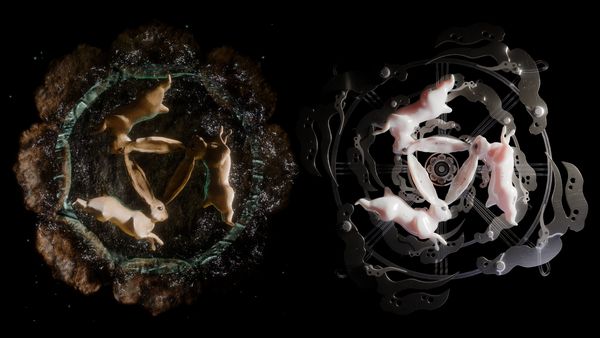
Wendi Yan
Eternal Revolutions of Techne, 2024
Video
Price on Request
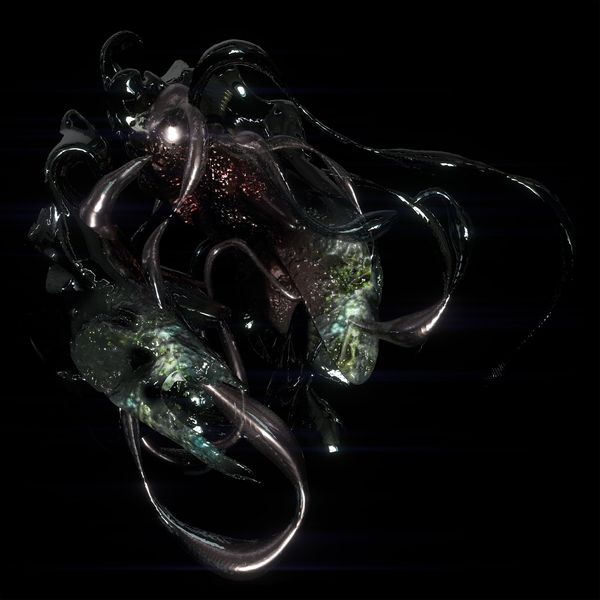
Wendi Yan
Metaz0a, 2021
Digital Image
Price on Request
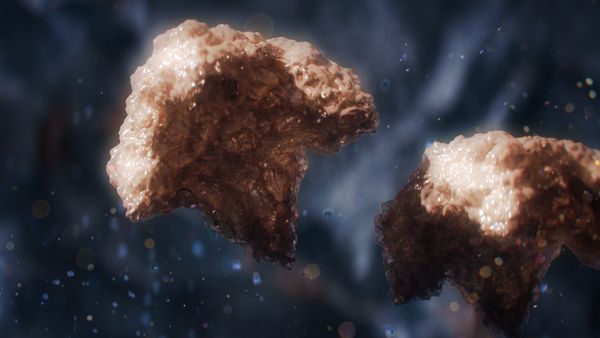
Wendi Yan
Micronaut Odyssey, 2024
Video
Price on Request
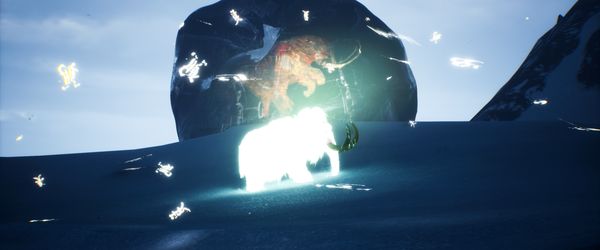
Wendi Yan
Tale of the Mammoth Goddess, 2024
Video
Price on Request
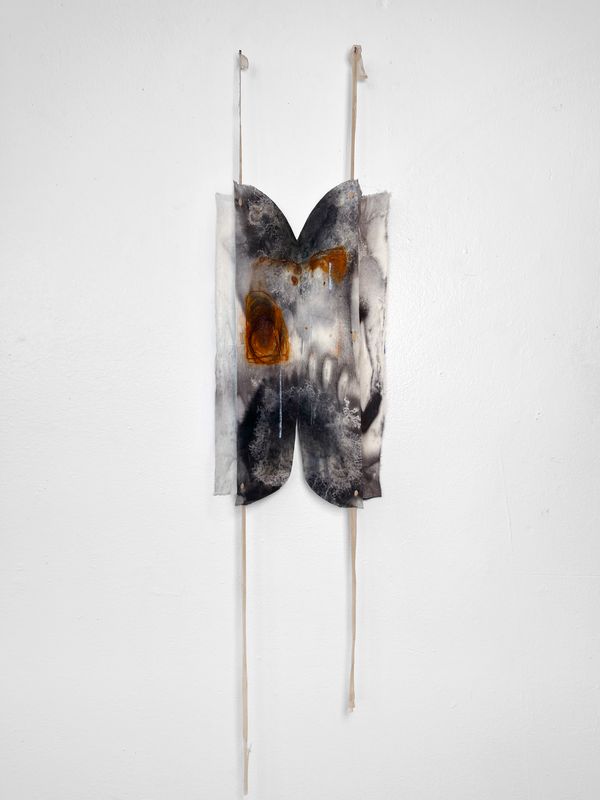
X.S. Hou
contact script: earthly pipes spoken through steel, 2025
Physarum polycephalum slime mold grown on silk, oil pastel, found steel and nylon
15 × 8 × 1 in
Price on Request
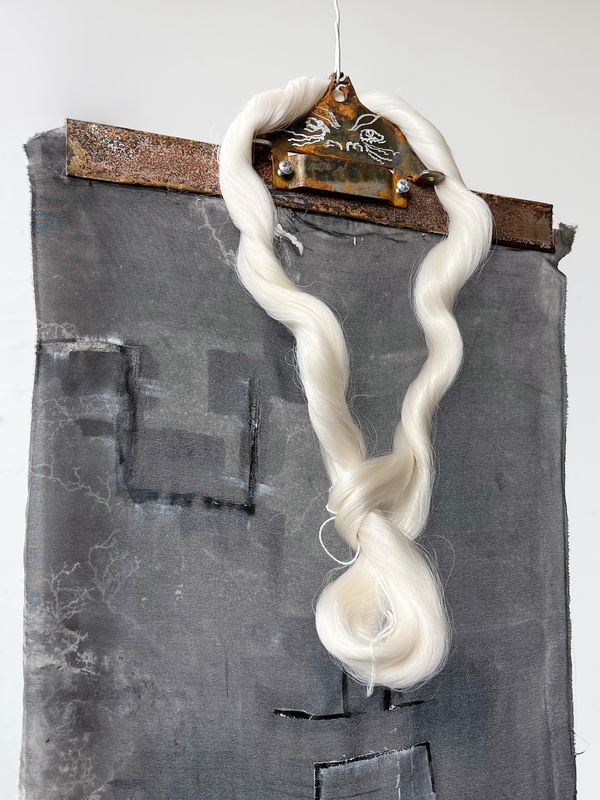
X.S. Hou
contact script: threshold held by hinges, 2025
Physarum polycephalum slime mold grown on silk, ink, tacks, found steel (hinges),
8 × 40 × 1 in
Price on Request
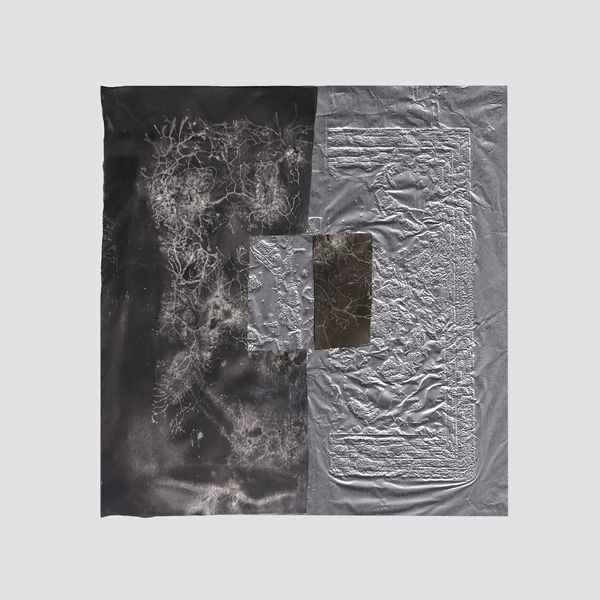
X.S. Hou
logic chip, 2025
Physarus polycephalum slime mold grown on silk, etched aluminum
9 × 9 in
Price on Request
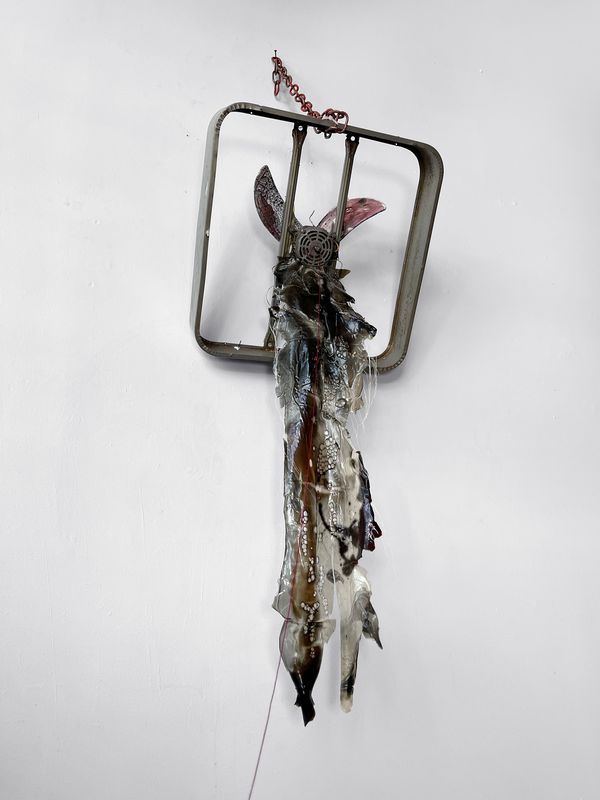
X.S. Hou
tongue (speaking decay), 2025
found metal, found debris (fan blade, vaping device), thread, bioplastic, natural dyes
60 × 40 × 10 in
Price on Request
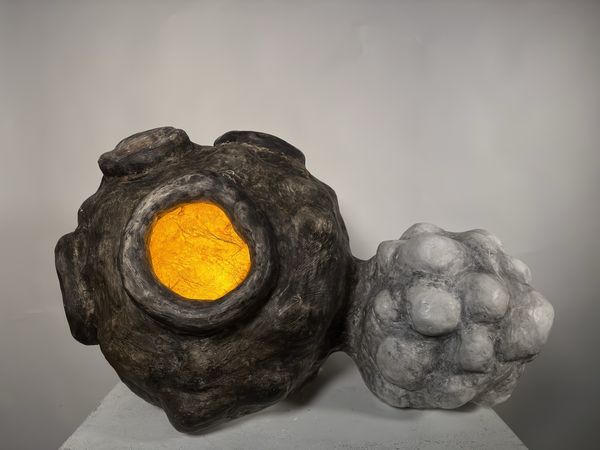
Zoë Kyn Rehnborg
Bud Scars, 2025
scoby, plaster, wax, wood stain
3 × 2 × 2 in
Price on Request
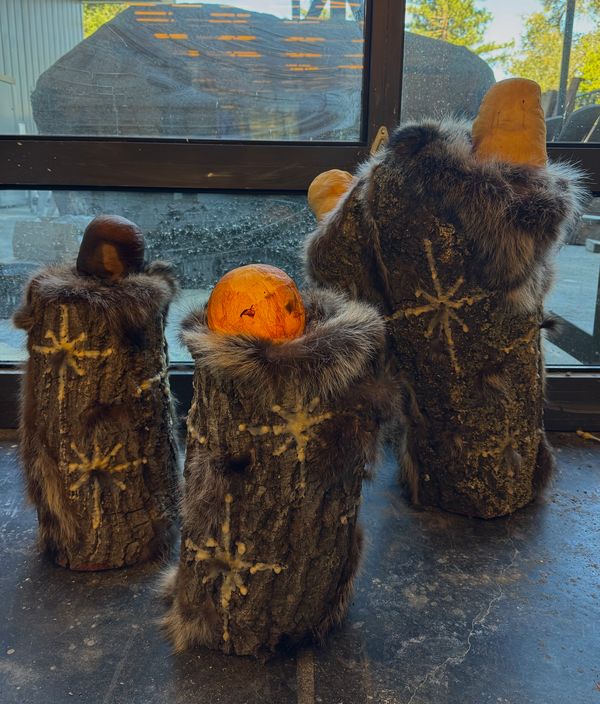
Zoë Kyn Rehnborg
Chimeras, 2026
douglas fir, mycelium plugs, beeswax, raccoon, scoby, LED
3 × 1 × 1.5 in
Price on Request
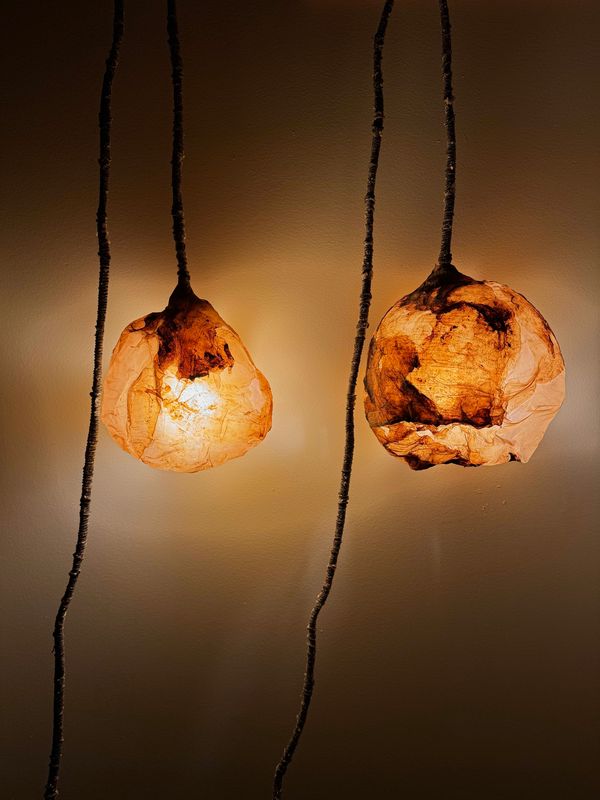
Zoë Kyn Rehnborg
Tethers, 2026
scoby, wax, twine, LED bulb
1 × 1 × 20 in
Not For Sale
Artists
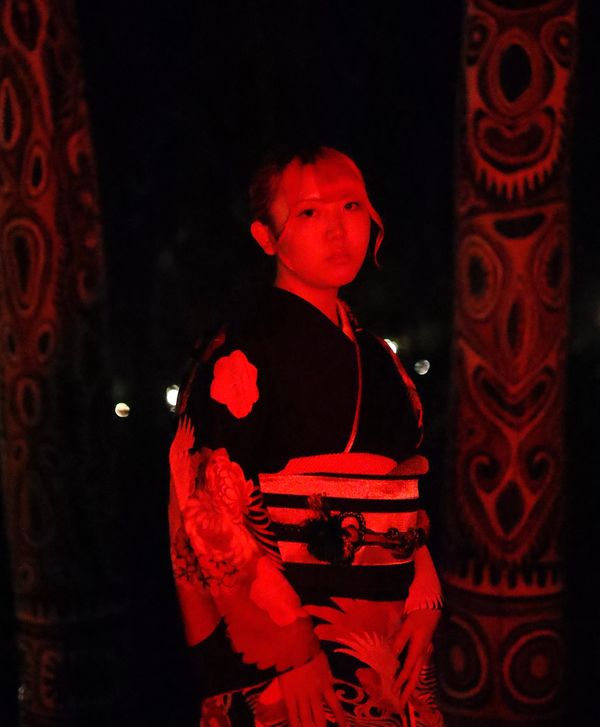
Anna Matsumoto @anna_matsumoto_
Anna Matsumoto is a computer scientist and interaction designer integrating haptic touch into audio-visual technology to unlock richer sensory experiences.
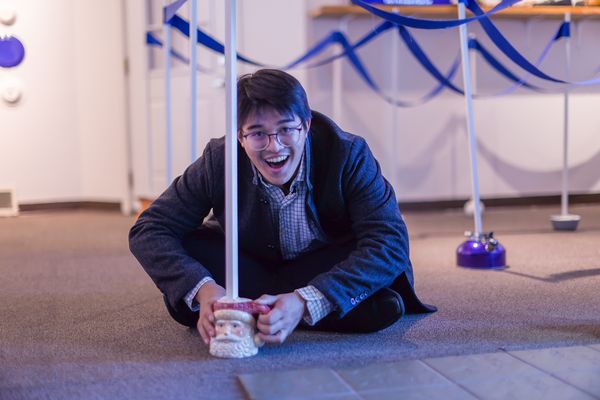
Bhumikorn Kongtaveelert @bahuu.k
Bhumikorn “Bhu” Kongtaveelert (b. 2003, Nakhonsawan, Thailand; he/him) is an installation artist and researcher working with immersive, multi-channel moving-image installations projected onto “screen-sculptures”: soft, often translucent surfaces stretched across rigid frames. His practice explores collective memory and more-than-human agencies embedded in water, natural hazards, global supply chains, and family history, primarily through oral history.
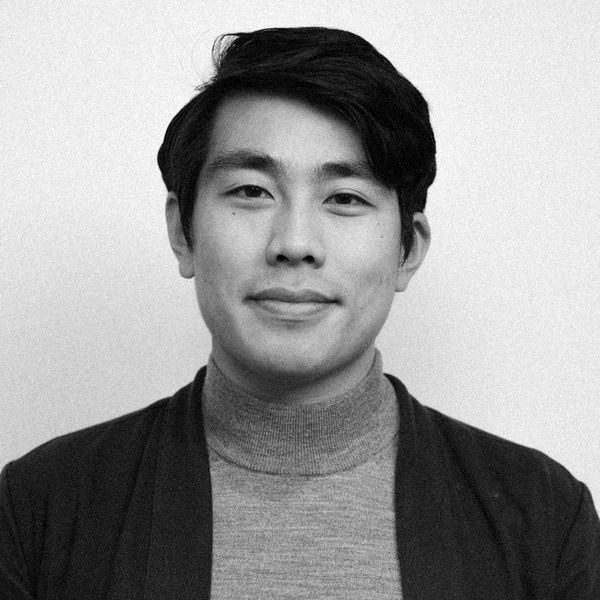
Darren Zhu @darrenzhu
Darren Zhu is a synthetic biologist and metascientist based in San Francisco. He explores the epistemic and aesthetic implications of emerging technologies, particularly as they pertain to scientific discovery and creativity. Through a mix of video essay, interactive installation, and experimental documentary, his creative work plays at the boundary of the natural versus artificial and scientific versus speculative. Darren was a member of Antikythera at the Berggruen Institute, a Creative Science member of NEW INC at the New Museum, and resident at MESH Studio in the Digital Architectures Lab. His work has been supported by the Thiel Foundation, Gates Foundation, Ethereum Foundation, and Protocol Labs. Currently, he is the founder of a new consumer biotech startup, Culture.
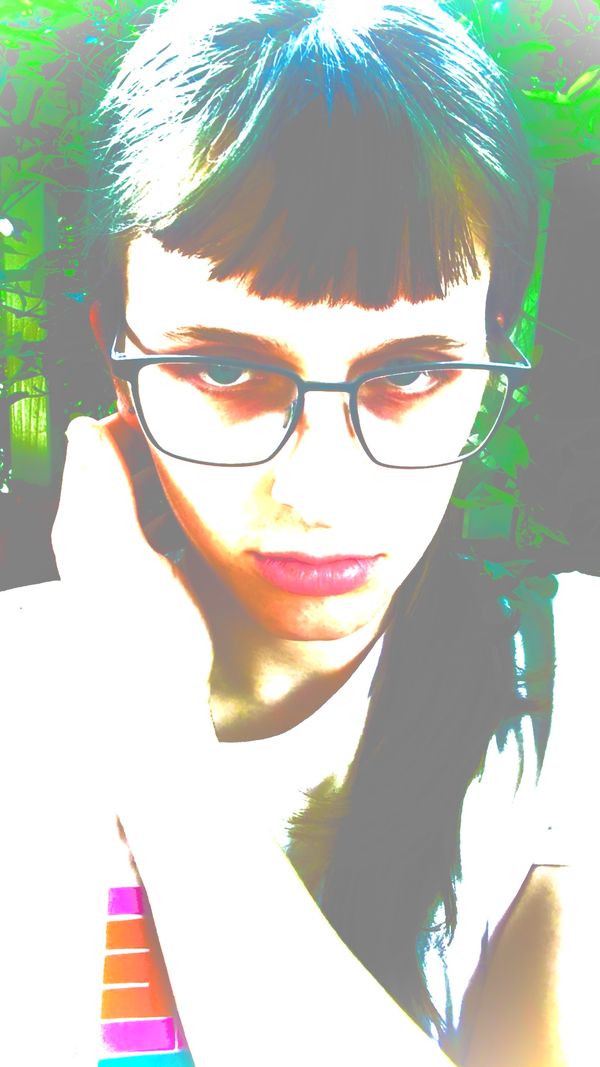
Eydn Spector Delgass @trustthecrow
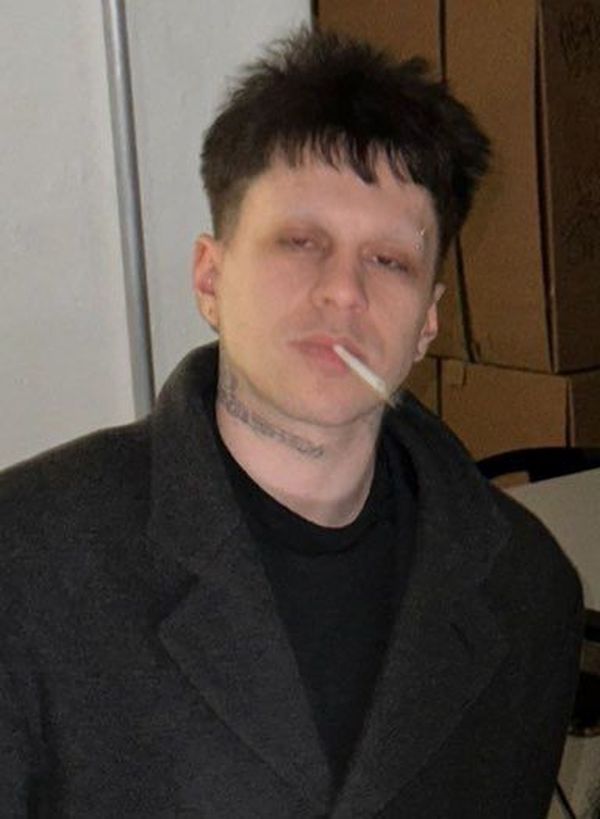
Ian Margo @3_fieldware
Ian Margo is a digital artist and researcher focused on the intersection between language, technology and economy. Working with a wide range of media such as video, software, interface design, experimental essay, generative AI, 3D, blockchain, datamoshing, performance and interactive installations, his practice examines language and its entanglement with material and political processes, with a particular focus on value production, tokenisation and objectification, understanding language and markets as operative media within contexts of visual rupture and intrinsic hyperconnectivity. His practice has been presented through exhibitions, screenings, performances and academic contexts across Europe, Asia and the United States, including institutions, festivals and platforms such as CEDAR (Shanghai), Grey Area Festival (San Francisco), ADAF (Athens Digital Arts Festival), Hangar (Barcelona), Matadero Madrid and NYU Shanghai. He is co-founder of 邊界_RG, an artist-based group focused on machine learning, cognition, memory and interface design. As a researcher, he has published in DIFFRACTIONS and the Institute of Network Cultures. He is currently part of the SYBIL ARC2 residency program in Berlin. Ian recently presented his Ethereum genesis release, d/wb (desert/wet box) in collaboration with Fakewhale. Composed of three interrelated works—wet box, third extension and fieldware—the project explores abstraction as an operative force within artificial intelligence, semiotics and contemporary economies, examining how signs are produced and activated as vectors of value.
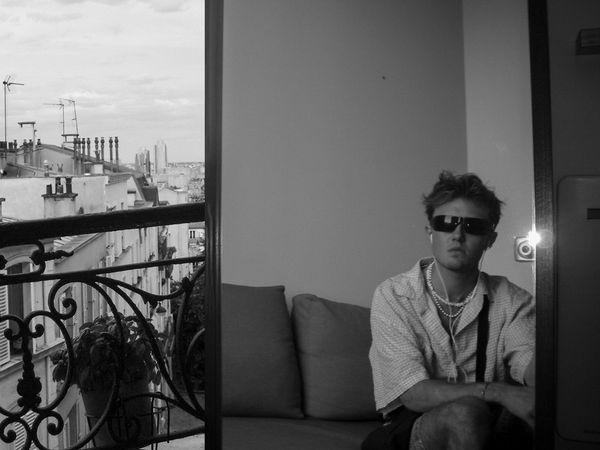
Jude Wolf @art.of.jude
Jude Wolf (b. Denver, CO) (he/him) is a queer visual artist based in the Bay Area. His work centers on the entanglement of the natural world and the human figure to examine the body as a porous site of memory. Through distorted limbs grafted with biota, his paintings probe whether wounds are points of entry or exorcism. Jude creates unsettling yet tender dioramas of his mind's ecosystem to resist legibility, the binary body, and simplified trauma narratives.
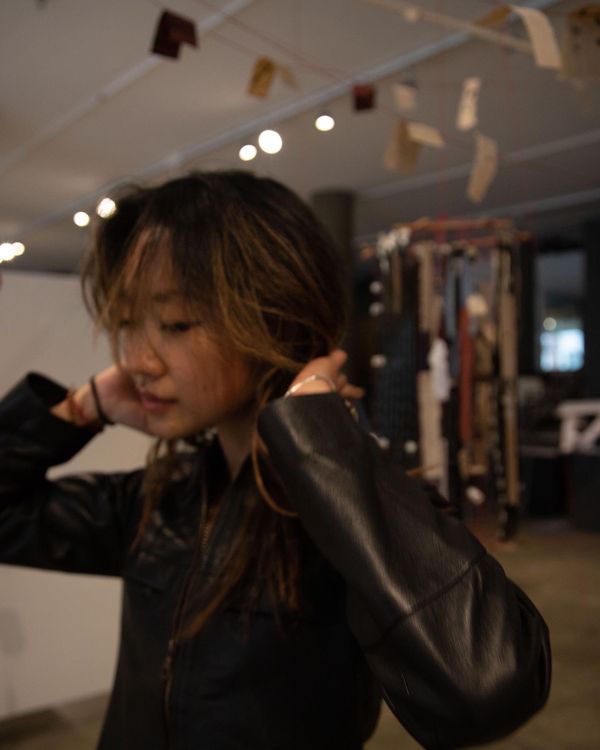
Kelsey Chen @silkpunkbaby
Kelsey Chen (she/her) is a scholar and a multidisciplinary artist. In her scholarly work, she studies speculative and science fiction grounded in scientific/technical traditions outside of a Western techno-science, focusing on _silkpunk_ and Taoist scientific imaginaries. In her art practice, she is dedicated to trying to picture the true form of things, particularly those which are typically occluded or diffused, working across painting, sculpture, weaving, book-making, and performance.
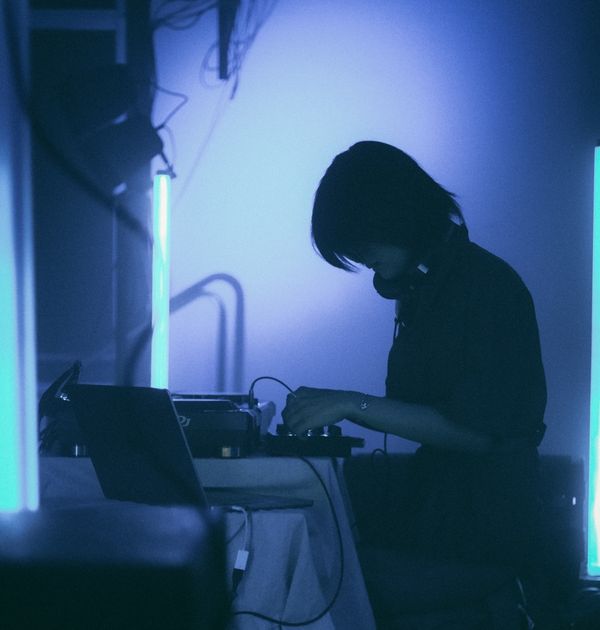
Mai Kao @kk.shucko
Mai Kao is a producer and DJ based in San Francisco. As kk.Shucko, their sound draws from the luster of the tangible world – gelatin, glass, crystalline needles – to construct imagined biomes within ambient and club music contexts. They have released work on soak, Ommaya Records, and Club Moniker, along with past live sets across the Bay and NYC, including appearances at Light and Sound Design, Osmosis In the Trees, and tiat. Outside of production and live performance, they run EEL Automaton, a radio residency at SutroFM and party series unearthing the hyperreal edges of club ritual.
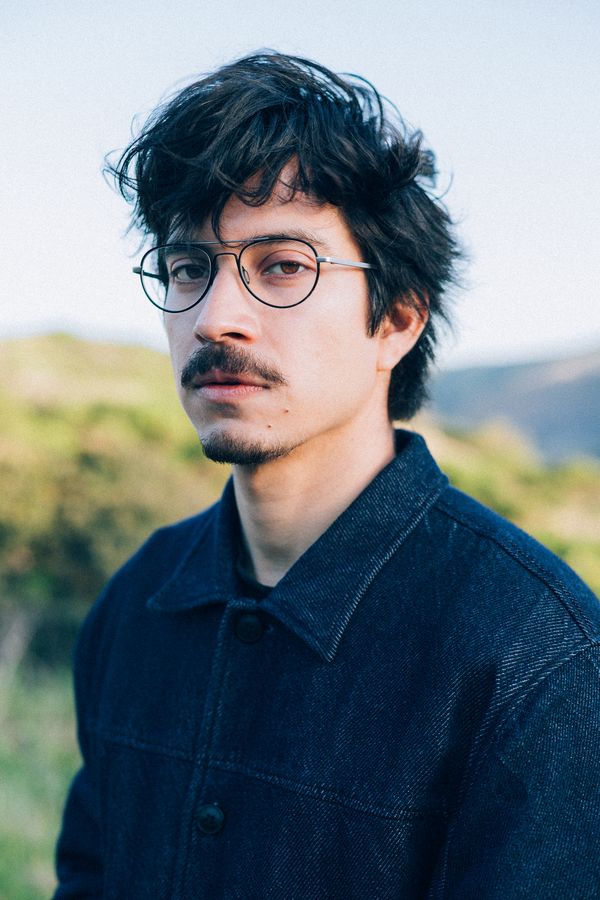
Miguel Novelo @xmiguelnovelo
Novelo, focuses on emerging media and community organizing—currently working on algorithmic movies ☄️, technoshammanic installations 👻, thermodynamic hypnotism, and friendly computer viruses🫠. Novelo earned a Bachelor of Fine Arts from the San Francisco Art Institute in 2018, followed by a Master of Fine Arts from Stanford University in 2022. His work has been exhibited at various institutions, including the de Young Museum, the Stanford Institute for Human-Centered Artificial Intelligence (HAI), the Museo Universitario Arte Contemporáneo (MUAC) in Mexico City, and numerous international film festivals. Currently a lecturer at Stanford Art and Art History Department and San Jose State University.
Statement: My art is technoshamanic, combining emerging technologies and indigenous knowledge—translating matter/energy/ghost/machine into access to the non-human perspective. I make systems/rituals/myths. I embrace mistranslations, uncertainty, simulations, and novelty. I depict systems, ins and outs. I create scenarios in which avatars and characters reimagine our perception of the world. Preach, listen, and invoke change. I utilize world-building, emerging media, and humor to generate myth, dialogue, and experience. I long for status-quo earthquakes, work with the unexpected, dance with data, feel ecological grief, and become non-human. In my work, I make machines that allow me to move like a bat, be judged by a pelican, and confess to an asteroid. Using humor, serious play, and absurd interactions as communication tools, I invite the audience to engage in non-human perspectives and speculative futures through nonsense possibilities. I ask the audience to multi-state sights, to challenge static perspectives. I practice interdisciplinary, research-based art through time-based new media, generative digital art, game engines, expanded cinema, participatory performance, interactive sculptures, and poetry. I focus on the intersection of geopolitical and cybernetic spaces—creating bridges between characters, landscape, and experience. My work is inspired by eco-horror storytelling/video game development, biofeedback user interfaces / object-oriented ontologies, geology studies, animal communication, and computer science. I want to become an active shaker in media ecology, create my own language, and make machines that give us access to alternative realities; I strive to make living art, an ever-changing, never-done process.
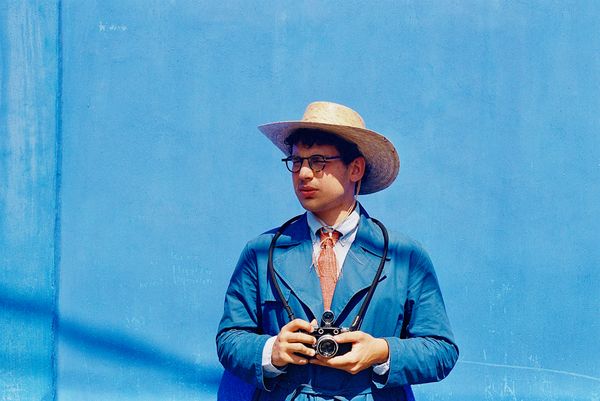
Samuel Minev-Benzecry @samyminev
Film photographer and undergraduate at Stanford from Manaus, Brazilian Amazonia, Samuel aims to capture the rawness of life in the Anthropocene in the places where its wounds are wide open. Beyond film photography, Samuel has interests in language preservation, food systems, and environmental history. His most recent work, PARDES (2026), is centered on cattle carcasses found in BR-319, a mostly unpaved highway in Northern Brazil at the center of environmental controversies for the potential for deforestation it brings to the Amazon region.
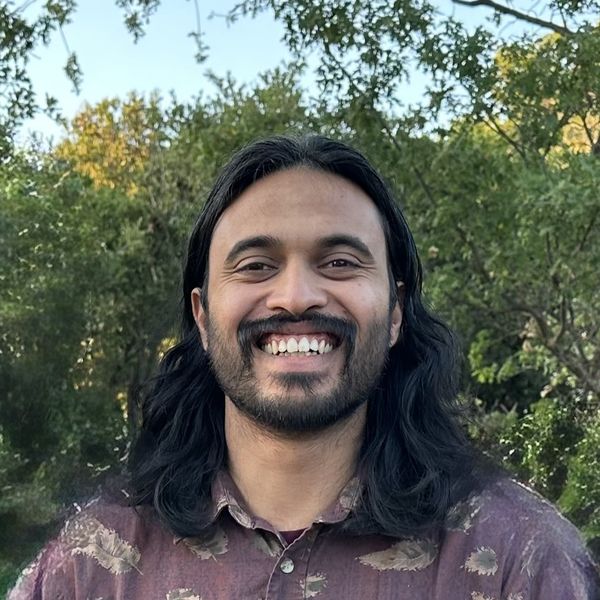
Siddharth Doshi
Siddharth is a materials scientists who explores how we can create new sensory experiences through materials design. He grew up In Sydney, Australia and lives in Pasadena CA, where he is a postdoctoral fellow at Caltech. He did his PhD at Stanford, where he worked on materials that can change their visual appearance, or cesia, by drawing inspiration from octopus skin.
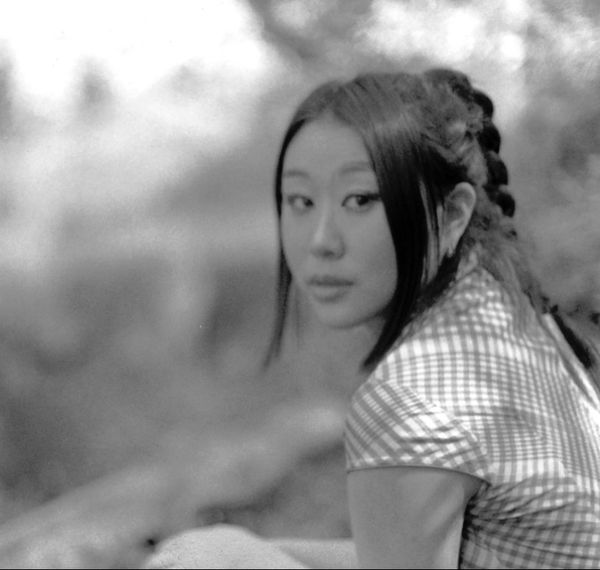
Stephanie Zhang @emergentvessels
Stephanie Zhang is an artist, scientist, and researcher whose work explores how order emerges from chaos. Rooted in complex dynamical systems and phenomenology, her practice deconstructs and reconstitutes material reality to give rise to emergent forms of life. In her lab-studio, she 3D-bioprints self-assembling living sculptures using novel bioinks composed of fungal and cellular matter— working with life as medium. Her work becomes a ritual of transfiguration: cracking open material reality to let something other assemble through it.
Statement: What does it mean to create with life itself as a medium? These sculptures are experiments in transfiguring life — each piece grown from engineered cellular bioinks, tracing the hidden architectures of vascular networks. Vascularization exemplifies the universal physical laws that govern life: order arising from chaos. Life is a dissipative structure, a local instantiation of order contributing to global entropy. These vessels are not static; they are processes, emergence made visible, revealing the aliveness underlying all phenomena. In these forms, one encounters both intimacy and vastness. They bear witness to the interconnectedness of existence and ask: what is the basic unit of aliveness? How does life organize itself? What is left behind -- and what is gained -- when phenomena shift between mediums? Emergent Vessels is an invitation to witness, to inhabit, and to feel the spaces between matter and energy, art and science, system and life.
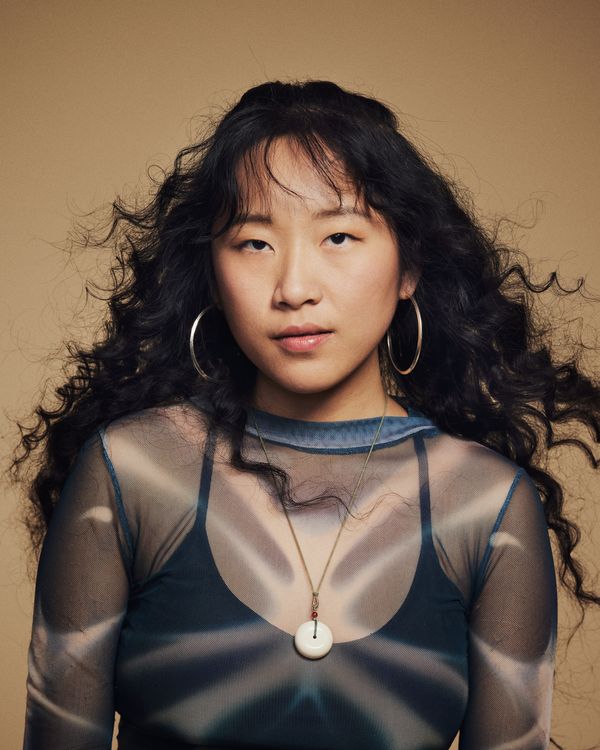
Wendi Yan @wendiyan
Wendi Yan (b. 1999, Beijing) constructs speculative epistemologies through research-driven worldbuilding and metafictional simulation, using CGI, game engines, and documentary practices to probe and play with the artifice of knowledge. She holds an A.B. in History of Science from Princeton University and a M.S. in Fiction and Entertainment from SCI-Arc. She was an inaugural member of the Steve Jobs Archive Fellowship (2023), the Grand Prix recipient of the 6th VH Award by Hyundai Motor Group (2025), and the inaugural resident at A24 Labs (2026). Her work has been exhibited at international institutions including HEK (Basel), Ujazdowski Castle CCA (Warsaw) and Hyundai Motorstudio (Beijing).
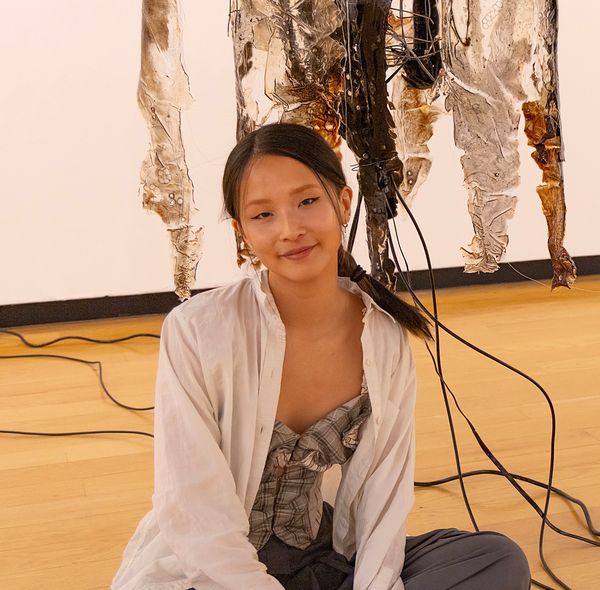
X.S. Hou @_vi_xs_
www.x-s.work b. Beijing; X.S. has exhibited at Offline Gallery, Plexus Projects, Fourth World Festival, and _p_a_l_l_a_s. Their work has been featured in Artnet, ArtNews, Whitehot Magazine, and more.
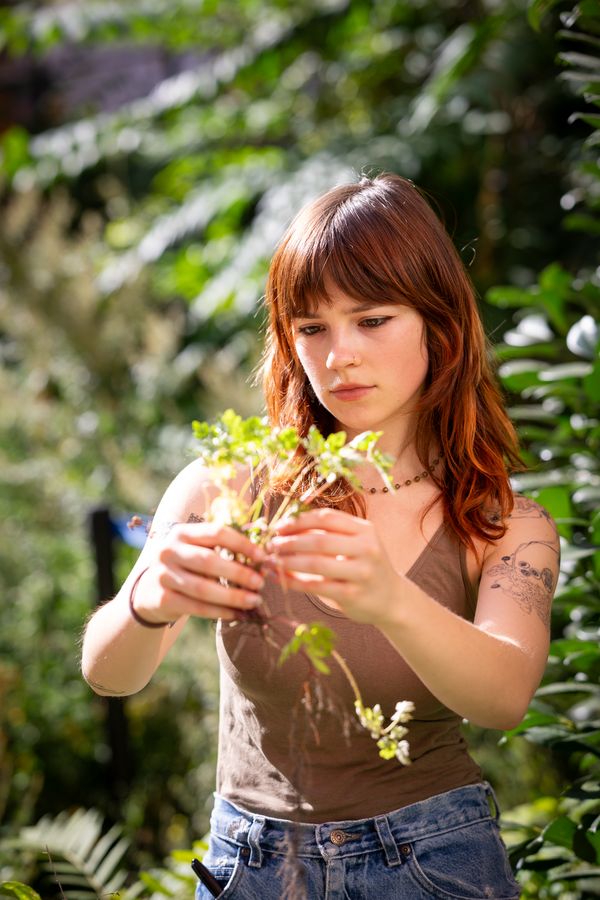
Zoë Kyn Rehnborg @protozo.e
Statement: My practice is first and foremost an act of attention — a sustained look at microbial worlds we inhabit but rarely notice. Informed by my background in biology, my work explores the ecological and existential dimensions of decay, with a particular focus on microorganisms as agents of transformation in both natural systems and human narratives. I work with organic materials such as soil, mycelium, wood, and beeswax to create sculptural forms that engage with the intertwined processes of decomposition and regeneration. Central to my recent practice is scoby, the biofilm that forms in the fermentation of kombucha. Illuminated from within, my scoby sculptures cast light on the structures and textures of microbial architecture, enabling an encounter with the microbial world not as something invisible or abstract, but as something luminous, intricate, and worthy of reverence. Through sculpture, I explore how biological cycles reframe identity, loss, and interconnectedness across human and more-than-human worlds. In this, fungi and bacteria are my trusted guides and collaborators — simultaneously memento mori and memento vivere, reminders of life's transience and celebrations of its continuity. My practice is a devotional act: a love letter to the microbial world, and an invitation to attend to the unseen systems that shape our lives.
Curator
Stephanie Zhang @emergentvessels
Stephanie Zhang is an artist, scientist, and researcher whose work explores how order emerges from chaos. Rooted in complex dynamical systems and phenomenology, her practice deconstructs and reconstitutes material reality to give rise to emergent forms of life. In her lab-studio, she 3D-bioprints self-assembling living sculptures using novel bioinks composed of fungal and cellular matter— working with life as medium. Her work becomes a ritual of transfiguration: cracking open material reality to let something other assemble through it.
Statement: What does it mean to create with life itself as a medium? These sculptures are experiments in transfiguring life — each piece grown from engineered cellular bioinks, tracing the hidden architectures of vascular networks. Vascularization exemplifies the universal physical laws that govern life: order arising from chaos. Life is a dissipative structure, a local instantiation of order contributing to global entropy. These vessels are not static; they are processes, emergence made visible, revealing the aliveness underlying all phenomena. In these forms, one encounters both intimacy and vastness. They bear witness to the interconnectedness of existence and ask: what is the basic unit of aliveness? How does life organize itself? What is left behind -- and what is gained -- when phenomena shift between mediums? Emergent Vessels is an invitation to witness, to inhabit, and to feel the spaces between matter and energy, art and science, system and life.
 https://www.120710.art
120710.art 1207 Tenth Street
Berkeley, CA 94710