Kodandi Nithyananda
Instagram: @kodandi.n
Website: http://www.kodandi.net
Bio: Kodandi Nithyananda is a multi-dimensional, multi-media artist whose work touches themes of the body as ephemera, esoteric landscape, and spatial interiority. The artist’s work comes from a meditative space and is informed by life in an ashram and time spent as a monk.
The artist studied traditional material forms of sculpture at California College of the Arts, focusing on metal working, welding and bronze casting. Kodandi now works primarily in digital media and machine knitting. The artist received their MFA in Visual Arts from Maharishi International University. The artist also hold a BA from Mills College, in anthropology and sociology, and cross cultural communication study at Tokyo University of Foreign Studies in Tokyo, Japan.
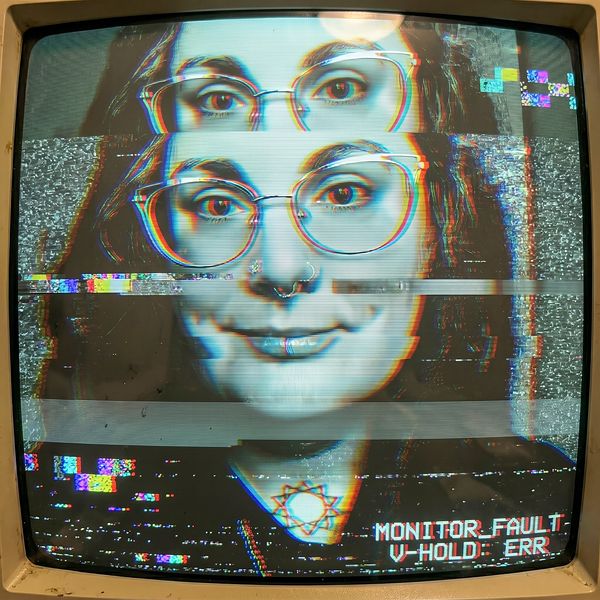
Statement: I use reclaimed materials, and technology that is old, discarded and obsolete. I see the unsustainable obsolescence of functional older technologies, and prioritize reclaimed, recycled, and secondhand sources. Accessing data from obsolete software and connecting old hardware to new hardware is an extreme exercise in impermanence, fleeting physical states, and letting go.
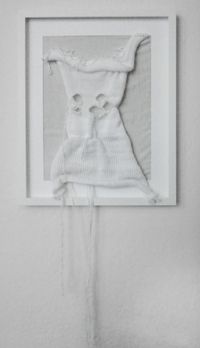
I am interested in the process of moving through dimensions, from a point to line to two-dimensional shape and three-dimensional shape and beyond. Unraveling, or “frogging” in knitting terminology, is a fundamental part of the knitting process. A knitted piece can be completely frogged and returned to its original form in a ball of yarn. The yarn will be changed in the process, but it is still in essence a ball of yarn. The journey of the yarn from line through a two-dimensional pattern to three-dimensional constructed piece that exists in a four-dimensional space is exciting for me. I feel that this is a spiritual process that reflects my experience in meditation and Hindu ritual.
Knitted fabric feels like a nexus between body and landscape. I use garment making techniques to make sculptural objects. Knitting is a representation of my body as well as a landscape. I am now working with my own medical imagery and biofeedback data. Digital technology has made it very easy to access these secret inner worlds of the body and make them visible. This data is now feeding my digital art and determines the speed and layout of my animations.