Flipside
Curated by Beth Krebs
- Anxious to Make (Liat Berdugo + Emily Martinez)
- Beth Krebs
- Celeste Fichter
- Doug Garth Williams
- Gaby Wolodarski
- Genevieve Quick
- Ginger Krebs
- Jeremy Rourke
- Kate Rhoades
- Kristen Mills
- Paulette Humanbeing
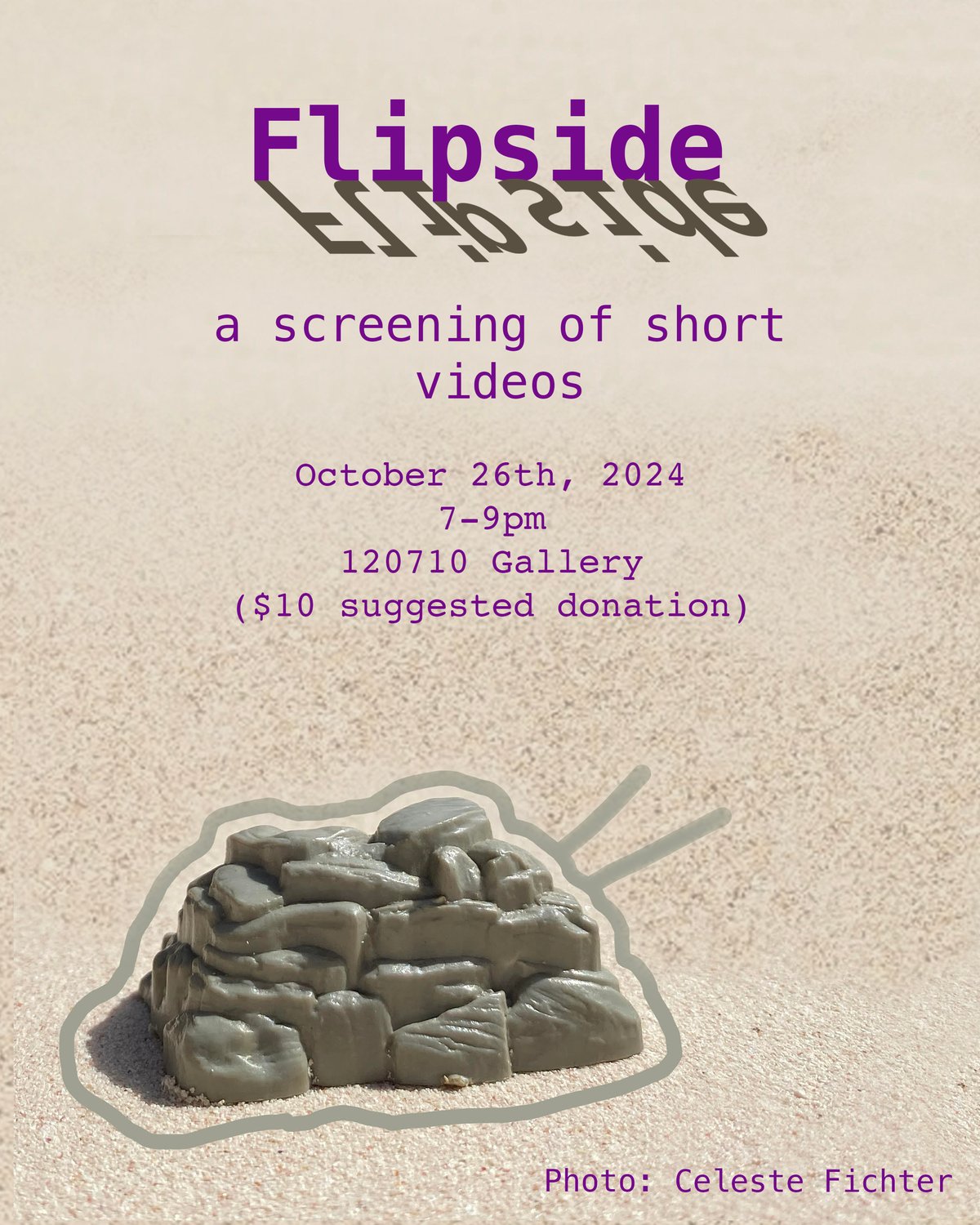
The artists in Flipside construct vivid speculative worlds or turn the familiar one inside out. Join us for an evening of absurd, uncanny, and tender videos whose inversions reveal unexpected truths. Artists: Anxious to Make, (Liat Berdugo and Emily Martinez), Celeste Fichter, Beth Krebs, Ginger Krebs, Kristen Mills, Paulette Nichols, Genevieve Quick, Kate Rhoades, Jeremy Rourke, Doug Garth Williams, Gaby Wolodarski
Works
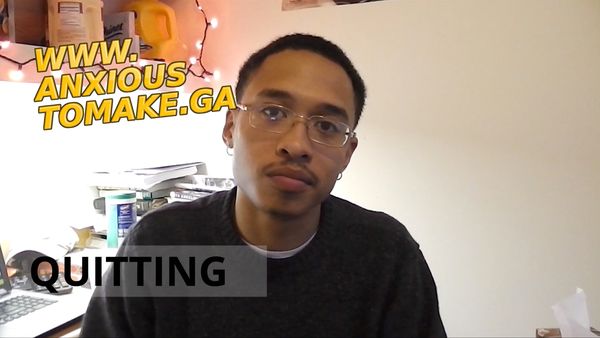
Anxious to Make (Liat Berdugo + Emily Martinez)
Quitting, 2016
Single-channel video
Price on Request
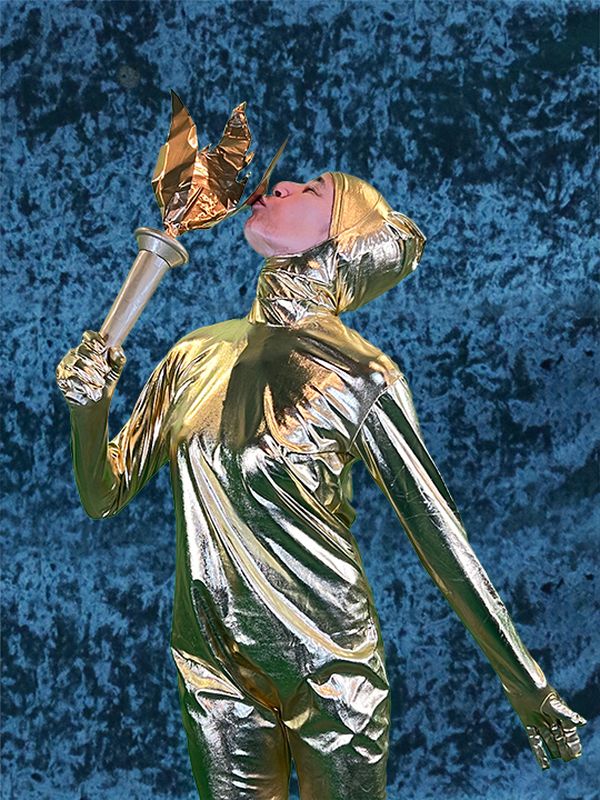
Beth Krebs
Winners, 2024
single channel video
Price on Request
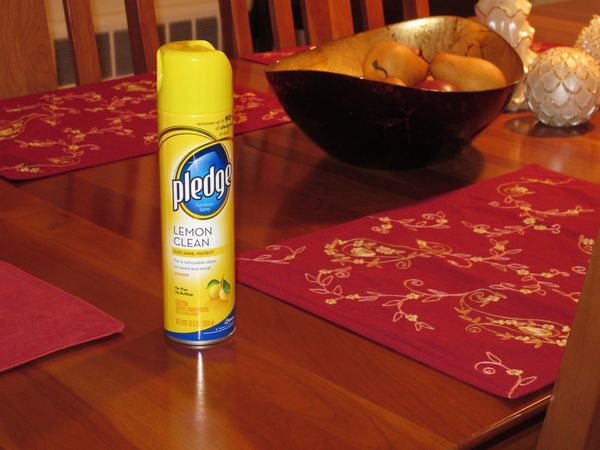
Celeste Fichter
Pledged, 2012
video
Price on Request
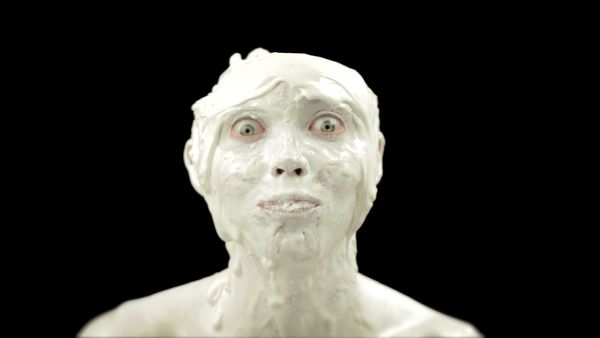
Doug Garth Williams
Ice Cream Is A Feeling, 2012
Video
Price on Request
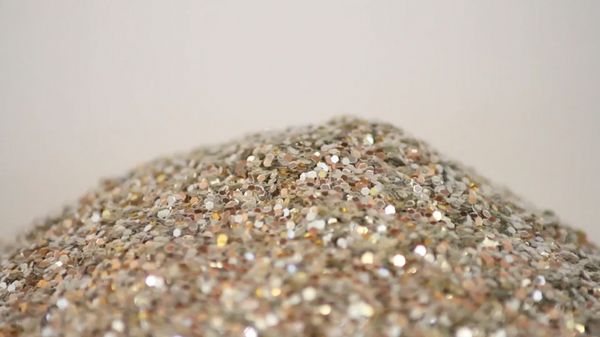
Gaby Wolodarski
Birthday Video, 2014
video
Price on Request
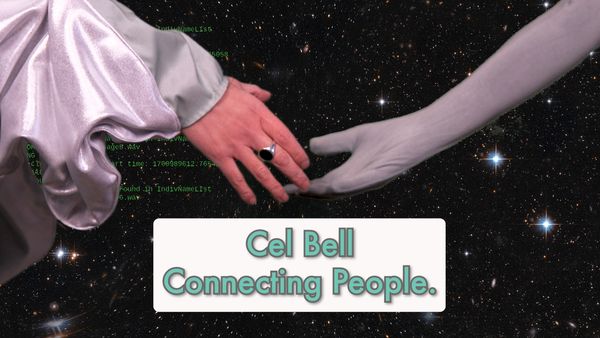
Genevieve Quick
Cel Bell Launch, 2023
video and interactive installation
Price on Request
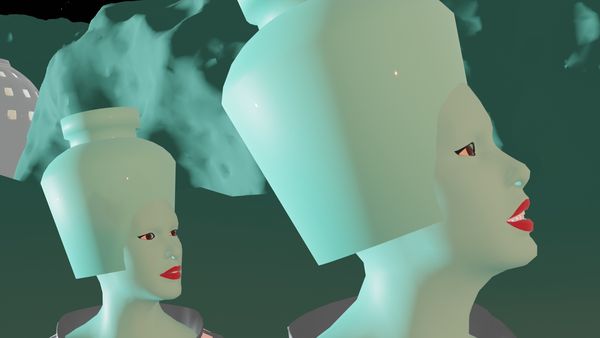
Genevieve Quick
Planet Celadon: Operation Completed, 2020
video
Price on Request
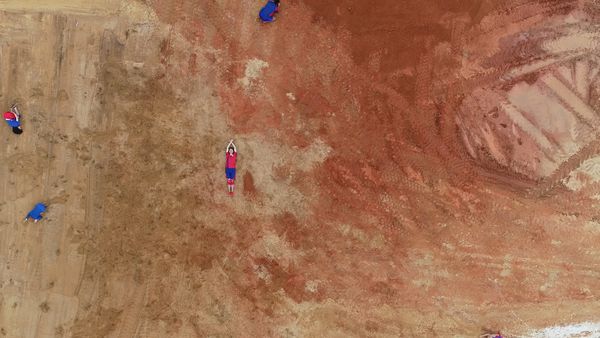
Ginger Krebs
Escapes & Reversals, 2019
video
Price on Request
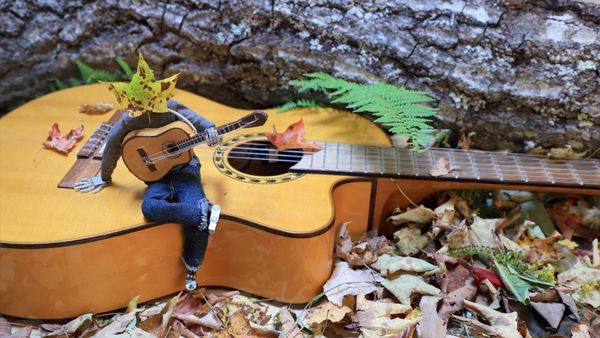
Jeremy Rourke
How do I write this song?, 2022
Stop Motion Animation
Price on Request
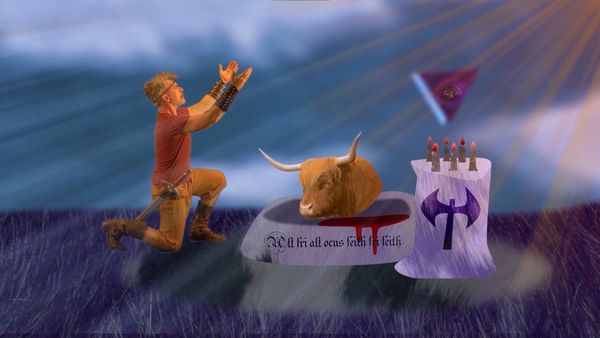
Kate Rhoades
Cattle History (excerpt), 2018
video
Price on Request
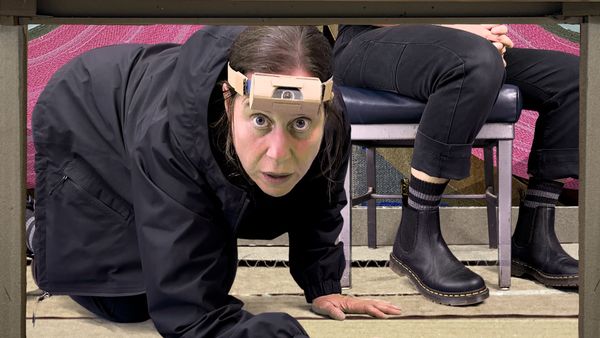
Kristen Mills
The Portal with the Cord, 2023
Video
Price on Request
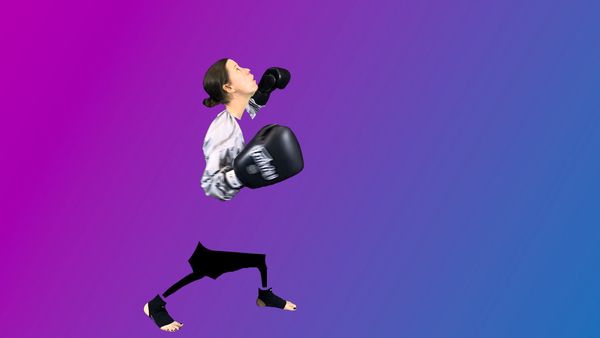
Kristen Mills
Tiny Legs, 2022
Stop Motion
Price on Request
Paulette Humanbeing
Music, 2023
music
Price on Request
Artists
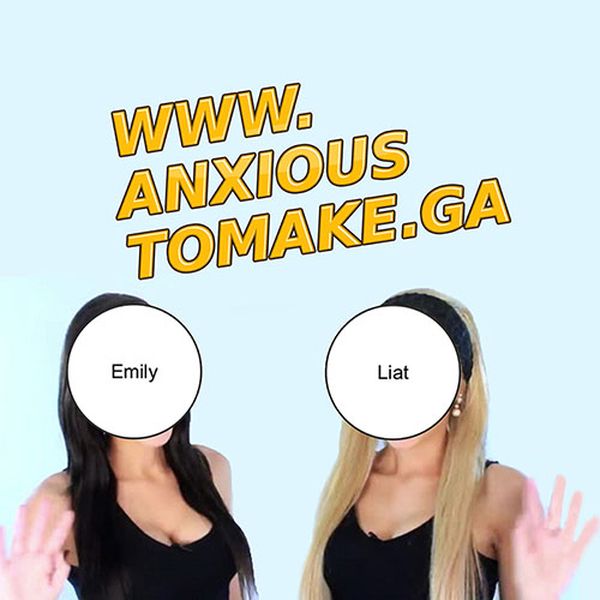
Anxious to Make (Liat Berdugo + Emily Martinez) @whatliat and @queerai
Anxious to Make is the collaborative practice of Liat Berdugo and Emily Martinez, two commissioning bodies. Our focus is on economic concepts, such as cryptocurrencies and the so-called “sharing economy”, and the accelerationist, neoliberal landscapes associated with them. Our work examines how these economic concepts intersect with colonialism, technology, wealth culture, race, altruism, utopianism, and exploitation. While Anxious to Make’s physical existence takes many shifting forms, it often manifests as series of video commissions, downloads, online generators, workshops, net art interventions, books, and sweepstakes. Anxious to Make believes in absurdist extremes as way to examine contemporary realities. Our work has appeared recently in Drugo More (Rijeka, Croatia), EMMEDIA (Calgary, CA), Transmediale (Berlin, DE), Yerba Buena Center for the Arts (San Francisco), MoMA PS1 (New York), V2_Lab for the Unstable Media (Rotterdam, NL), The Luminary (St. Louis), The Institute of Network Cultures (Amsterdam, NL), The Wrong Biennale, and Telematic (San Francisco).
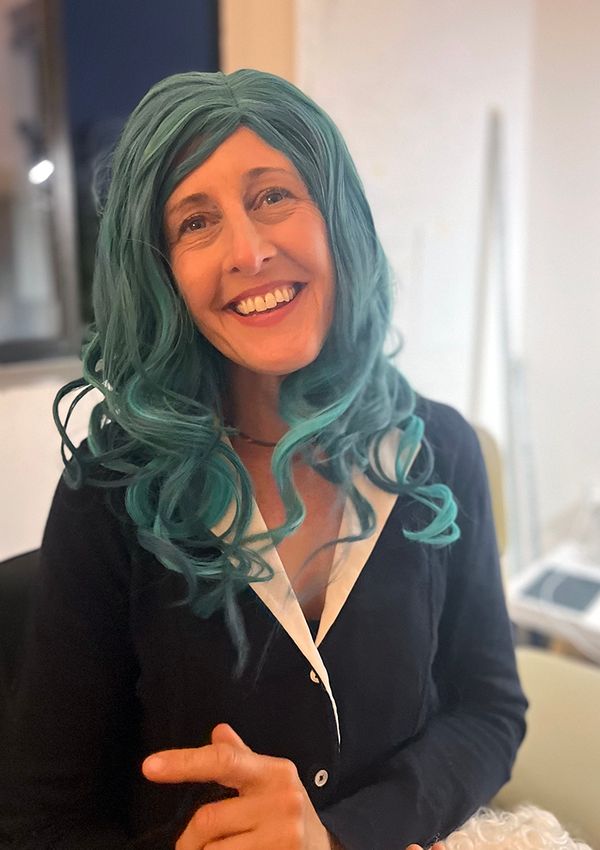
Beth Krebs @beth.krebs.studio
Beth Krebs’ work champions a lumpy vulnerability. Her videos, sculptures, and participatory projects also recognize, with humor and tender regard, the sometimes peculiar ways we humans cope. Beth has been awarded fellowships at the MacDowell Colony, UCross, the Bemis Center, the Joan Mitchell Center, and Recology San Francisco (the dump). In 2020 and 2021, while the San Jose Institute for Contemporary Art was closed due to Covid restrictions, her interactive hotline, “Still on Hold,” took over their phone line. She is currently a Lucas Fellow at the Montalvo Arts Center. Beth has an MFA from Rutgers University. She lives in Oakland, California, and is a member of the cooperative art studio, Real Time and Space.
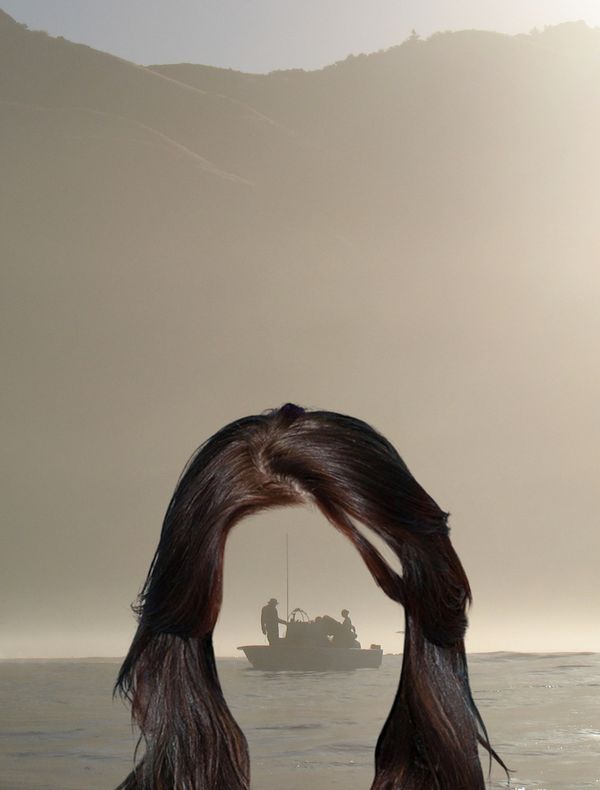
Celeste Fichter @celestefichter
Celeste Fichter holds an MFA in Photography and Related Media from the School of the Visual Arts (NY), a BA in Sociology and Anthropology from William Paterson University (NJ) and has studied at the San Francisco Art Institute (CA) and Middlesex Polytechnic (UK). She has had solo exhibitions at 57W57 Arts (NYC), Point of Contact Gallery at Syracuse University (NY), Go North Gallery in Beacon (NY), PH Gallery (NYC) and the Boyden Gallery at St Mary’s College (MD). Selected group exhibitions include the Aldrich Contemporary Art Museum (CT), Islip Art Museum (NY) and the Bronx Museum of Art (NYC). She has been awarded fellowships at MacDowell (NH), Centrum (WA) and Fundación Valparaiso (Spain). Her work has been reviewed in the New York Times and the Village Voice. Her video work has been in several traveling festivals including the Festival of (In)appropriation (CA) and ARTPORT_making waves and her artists books are in the Artists Book Collection at the Museum of Modern Art (NYC), Beinecke Rare Book & Manuscript Library at Yale University (CT) and the Rhode Island School of Design’s Special Collections (RI).
Statement: With insight and a quiet deadpan humor, Celeste Fichter’s inventive work encourages the viewer to see the world sideways – where the dominant culture that dictates value is not in charge. Embracing what the mainstream casts aside as unimportant, her work insists that significance is in the eye of the beholder and the hands of the maker. Influenced by Arte Povera, Fluxus, Duchamp and the life inherent in humble subjects and readymade materials, she makes work that incorporates photography, video, found objects, collage, installation, multiples and artists books to give voice to the mundane and celebrates the everydayness of things.
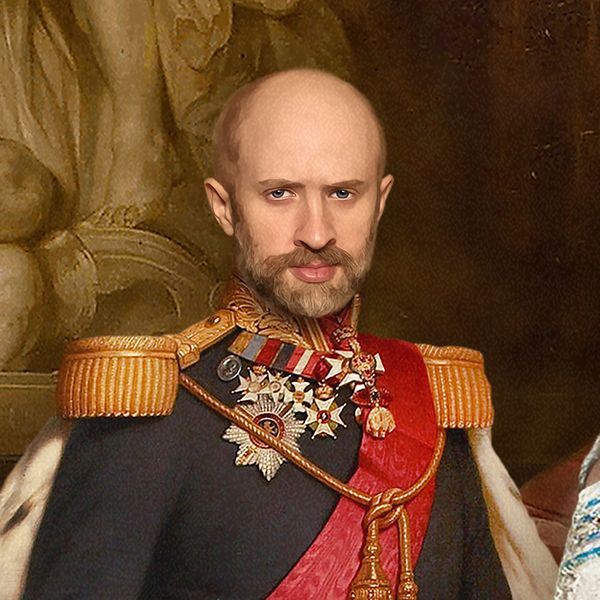
Doug Garth Williams @.
Doug Garth Williams is an award winning writer and director whose music videos, commercials, and independent shorts have collectively received over 25 million views online. In addition to his online presence, he has had more than 20 pieces shown in over 200 exhibitions and screenings in galleries, museums, and film festivals in 17 countries around the world, including 4 solo gallery shows in New York and California. Doug has also been the recipient of the Franklin Furnace Fund Award, the Murphy and Cadogan Award, first place in the Flourish Oakland Art Awards, and the Herringer Family Award for Excellence in Art, as well as winning jury prizes at multiple festivals.
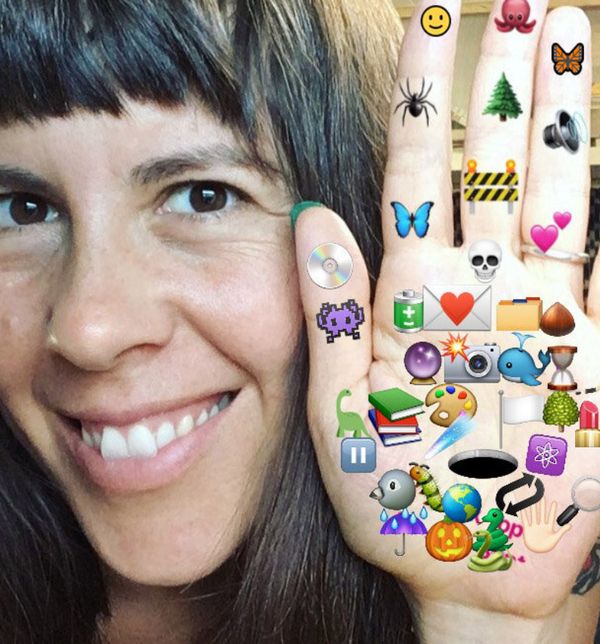
Gaby Wolodarski @gabywolodarski and @wolodarsque
Gaby Wolodarski is an artist, teacher, and tattooer who lives in California. Her painting and installation work uses a mix of humor, abstraction, figuration, and trompe l’oeil to probe fictions and contingencies of the contemporary human psyche, foregrounding ways in which the visible world is subject to pressures from our language-oriented brains.
Statement: My work is about attention span, babies, canaries, description, extracts, filters, grouping, hums, importance, jelly, kerning, looming, motion sensors, nerves, order, parity, qwerty, respite, smallness, stillness, tact, understanding, vanity, the West, xenophobias, yeses and zeros.
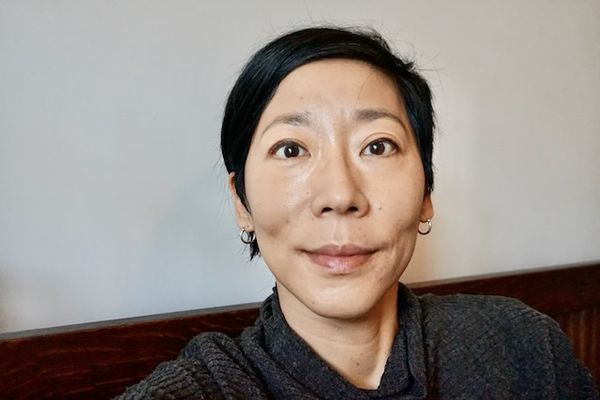
Genevieve Quick @genevieve_q
Genevieve Quick is an interdisciplinary artist, arts writer, and critic whose work explores global identity and politics in speculative narratives, technology, and media-based practices. In her sculptures, installations, videos, and performance, her humorous science fiction narratives exaggerate disaporic identity to the intergalactic to address Otherness and displacement. She has exhibited at the McEvoy Foundation for the Arts, San Francisco; Wattis Institute, San Francisco; Asian Cultural Center, Gwangju, South Korea; Asian Art Museum, San Francisco; Mills College Art Museum, Oakland; [2nd floor projects]; Royal Nonsuch Gallery; and Southern Exposure. Quick has been awarded visual arts residencies at The Headlands Center for the Arts, Recology, MacDowell, Djerassi, the deYoung Museum, and Yaddo. She has received a San Francisco Arts Commission Grant; a Eureka Grant from the Fleishhacker Foundation; a Kala Fellowship; and grants from the Center for Cultural Innovation. Quick has contributed essays and reviews to 48 Hills, Artforum, cmagazine, Art Practical, Daily Serving, Temporary Art Review, and College Art Association.
Statement: Through performance, sculpture, and video my objects and narratives employ science fiction to address Otherness, such that ideas of cross cultural communication and immigration become exaggerated from global contexts into intergalactic ones. My videos and performances feature casts of fantastical characters—including an astronaut, scuba diver, narwhal, unicorn, living vases, cyborgs, and an Asianaut—that explore fantasy, embodiment, displacement, and otherworldliness. I have magnified the alienness of the Asian American diaspora to imagine that we come from Planet Celadon, a reference to the ceramic glaze widespread throughout East Asia. As my work references popular culture through music, dance, and film, it merges the present and recent history with more ancient costumes, ceramics, and symbols in joyful and humorous worlds that affirm difference and create a more nuanced representation of the Asian American diaspora to span time and place.
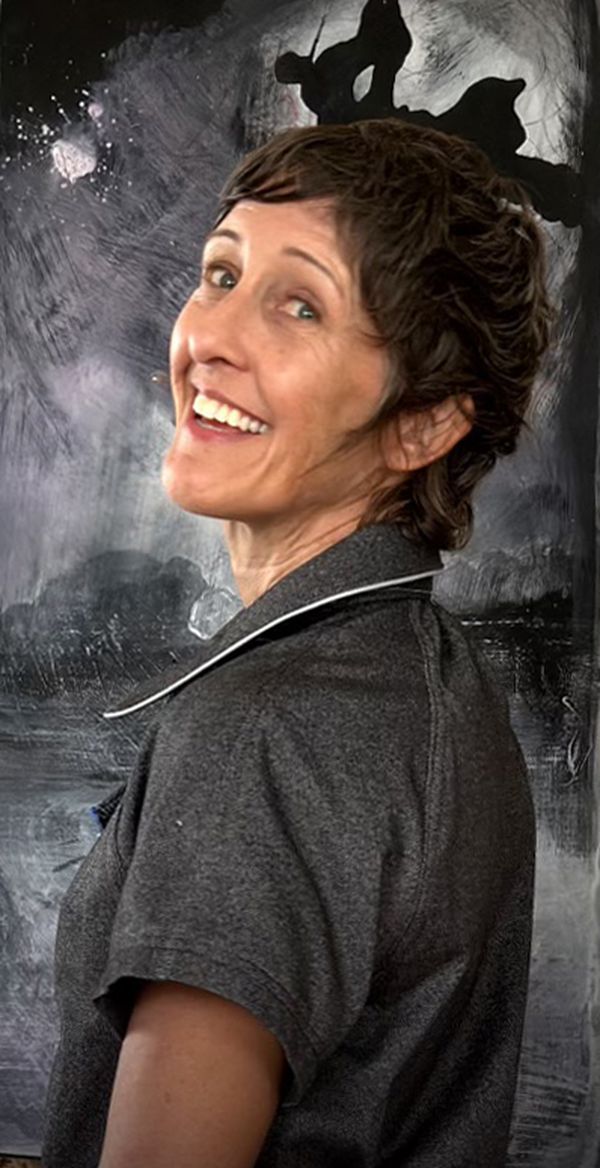
Ginger Krebs @gingerkrebs
Ginger Krebs performs, choreographs, makes visual artist and leads collaborative ensemble projects in Chicago. Her work has been presented recently at Firehouse Arts Center in Bellingham, Washington, Chicago Athletic Association, Steppenwolf’s 1700 Theater, The Dance Center of Columbia College, and Elastic Arts. She has been awarded residencies at Headlands Center for the Arts in Sausalito, California, The Bogliasco Foundation in Genoa, Italy, the Maggie Allesee National Center for Choreography (MANCC) at Florida State University-Tallahassee, MacDowell, Ucross, and Djerassi. Her work is currently being supported by a Creative Catalyst grant from the Illinois Arts Council and a dance studio residency at the Chicago Cultural Center. She was recognized with an Artist Fellowship Award in Performance-Based Arts by the Illinois Arts Council in 2019, a MAP Fund grant in 2015, and a Chicago Dancemakers Forum Lab Artist Award in 2014. She is an Adjunct Full Professor at The School of the Art Institute of Chicago.
Statement: I began, as an artist, by making sculpture, but my interest in networks and relationship dynamics led me to want to enact systems through movement, so I’ve been making performances since 2005. My performances are preoccupied with power, and haunted by the ways it hides behind the mirages of capitalist ideology, while enforcing visibility on other bodies. The dancers respond to spatial constraints, behavioral rules, and to the fundamentally exposed condition of live performance. The humble, “barely coping” material that results is “given the formalist treatment” to become complex, layered choreography that updates 1970’s formalism and complicates it with power and desire. Bravery in the face of vulnerability is central to my work: the way people are impacted by violence and exploitation, and the ingenious psychological responses we invent to cope with, protect or heal from the damage. I’ve made dances of procrastination, a self-pity montage and an awkwardly ritualistic “square dance” of apology and reconciliation (inspired by a pattern that emerged among dancers during a rehearsal process). I made an entire performance about status and my quest for specialness, where at one point the performers compete, as in a game show, for things we had anonymously admitted we wanted, like “muscle definition” and “luxury camping equipment”.
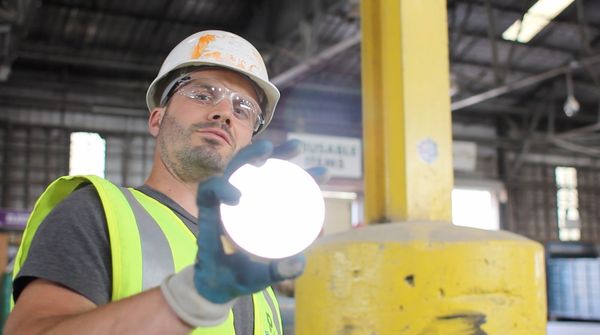
Jeremy Rourke @jeremy.rourke
As a stop motion animator who loves to sing, Jeremy Rourke constructs 12 frames per second homes for his performative, musical, educational and collaborative endeavors. Based in San Francisco, his work has been supported by the San Francisco Arts Commission, the Creative Work Fund, Djerassi, Recology, I-Park, Other Cinema, The Exploratorium, the Ann Arbor Film Festival, Ashland Independent Film Festival, Shapeshifters Cinema, the Roxie Theater, and Basement Films. He was the recipient of the Orphan Film Symposium’s Helen Hill Award in 2024. When We Were Bullies, a film for which he produced the animation, was nominated in 2022 for an Academy Award in the short documentary category.
Statement: One frame at a time, I meticulously construct handmade worlds where paper cutouts, handmade puppets, drawings, photocopies, clay, paint, and light can live their uncanny yet familiarlives.
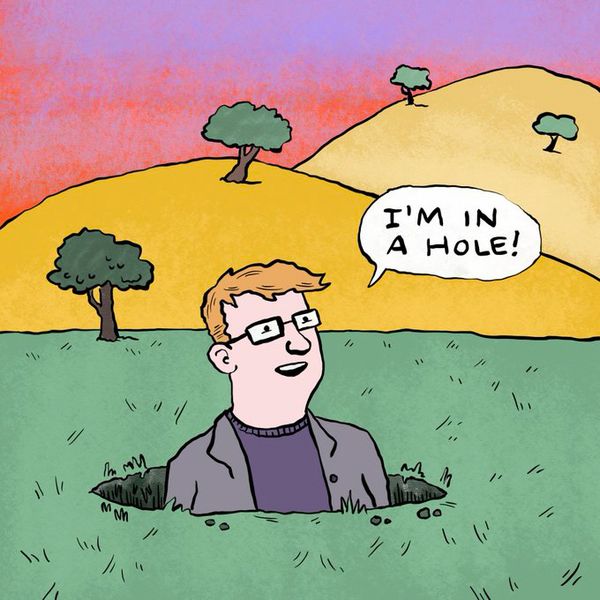
Kate Rhoades @kaaaaate
Kate Rhoades is an artist and lesbian living in Oakland, CA.
Statement: We need to talk more about livestock.
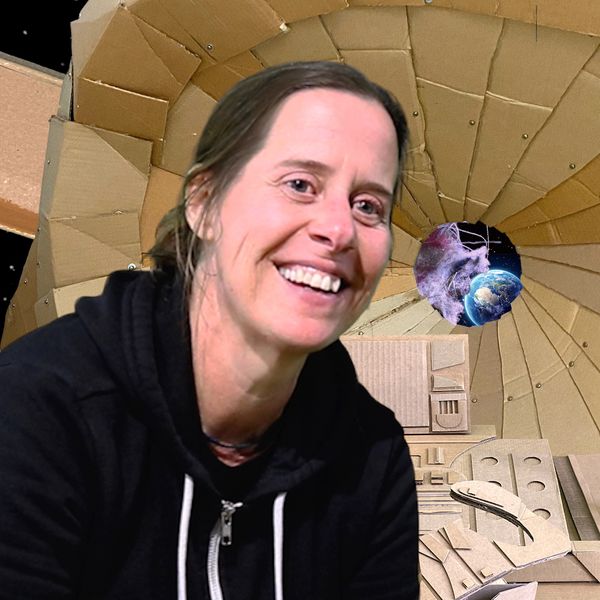
Kristen Mills @k.millzzzzzzzzzzz
Kristen Mills is an interdisciplinary visual artist hailing from the Hudson Valley and Brooklyn, NY. Her work engages a variety of strategies: video, installation, comedic performances, and teaching in an ongoing investigation into what makes something believable. As a part of her studio research, she has been an artist in residence at the Philadelphia Museum of Art, Vermont Studio Center, Sculpture Space, Skowhegan School of Painting and Sculpture, MacDowell, and the Sharpe-Walentas Studio Program (2024-2025). Mills gained her first museum show at the Delaware Contemporary, in 2017, with her collaborative project, Sister Spaceship. She has also held solo exhibitions at PRACTICE Gallery in Philadelphia, PA; Ortega y Gasset Projects in Brooklyn, NY; and currently at Turley Gallery in Hudson, NY (Sept 14-Oct 27, 2024).
Statement: I use video and images to engage with timing and humor. I use myself as a surrogate for others, freeing me to poke fun at pop-cultural assumptions and behaviors. I multiply and position myself as willful yet unexceptional in these various versions of “me”. I work things out this way, where I create interactions with myself, and I can rearrange my world how I want. I create situations where I belong or where I work to prove that I belong - using personalities, acts, and labor to distinguish these self-characters. Staging and sound are critical as they act as props or characters that assist in the telling. I often create cardboard structures for my sets; pairing digital work with analog material has allowed me to look at things differently. I blend the real with the staged to heighten visual and cerebral absurdities. I am fascinated by the difference between what is real and what is fake, or what makes something believable. While I never set out specifically to create work that is often viewed as "campy", my humor and playful approach align with the camp sensibility that embraces deliberate exaggeration and the intentional blurring of boundaries between high and low culture.
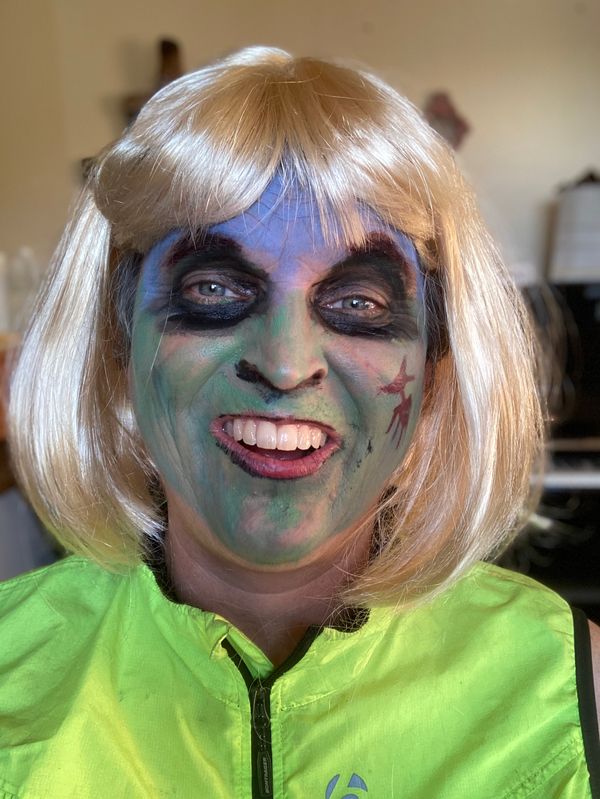
Paulette Humanbeing @paulettespaintings
Paulette grew up in Stockton, California, a port city in the San Joaquin delta. She grew up playing soccer, making and flying remote control gliders, drawing, being a negligent pet owner to her parakeets, chameleon, alligator lizard and frog. She got her amateur radio license when she was in the third grade, but she never used it to go on air. She had a paper route for a couple of years and used the money she made from that to go golfing and to buy a bike. She loved golfing at Swensen Park golf course in Stockton. It was a public course. She started taking piano lessons when she was 11 years old. Her teacher thought she might be a reincarnated bebopper because she made bebop melodies somewhat naturally. She played her brother’s records in High School. He had Pat Metheny’s As Falls Wichita, So falls Wichita Falls, Todd Rundgren’s Back to the Bars and others, Emerson Lake and Palmer’s Greatest Hits. She started playing guitar when she was 16. She liked the Tubes a lot, mostly the first and second albums. One of her first songs was about wiping out while skiing and hurting her neck. It went, “Ouch my neck, it hurts so badly, not good at all, could you fix it, I need it by tomorrow, so I can turn my head when they yell and scream and shout and wait for any utterance from Paul.” Her name was Paul at the time and she played the song for her music teacher. She sang “I Want To Be Your Dog” in the high school talent show her senior year with the impromptu band, The Ugly Girls. Paulette had to face the reality of leaving home and living on her own, but she wasn’t ready for that so she went to college for seven years. She dropped in and out of college, changing her major from engineering to English to music to English and finally to music. She found that whatever major she pursued, she was still transgender. It just wouldn’t go away.
Statement: I like to make things.
Curator
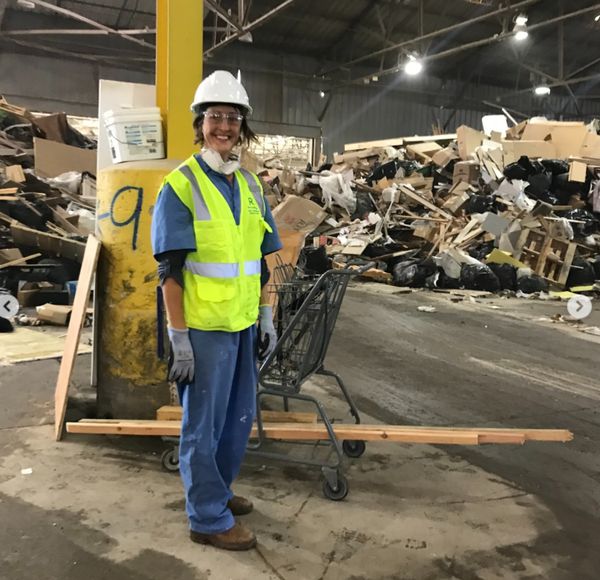
Beth Krebs @https://www.instagram.com/beth.krebs.studio/
 https://www.120710.art
120710.art 1207 Tenth Street
Berkeley, CA 94710