I Can't Go On, I'll Go On
Curated by Rena Tom
- Alice Wu
- Angela Roberts
- Brian Singer
- Bussie Parker Kehoe
- Garett Brown
- Hunter Saxony III
- Izzy K-A
- Julia Goodman
- Karen May
- Karin Dahl
- Leah Koransky
- Maria Radilla
- Micah Lessans
- Michelle Wilson
- Mira Musank
- Rena Tom
- Reo Eveleth
- Rochelle Youk
- Steph Rue
- Zach Fish
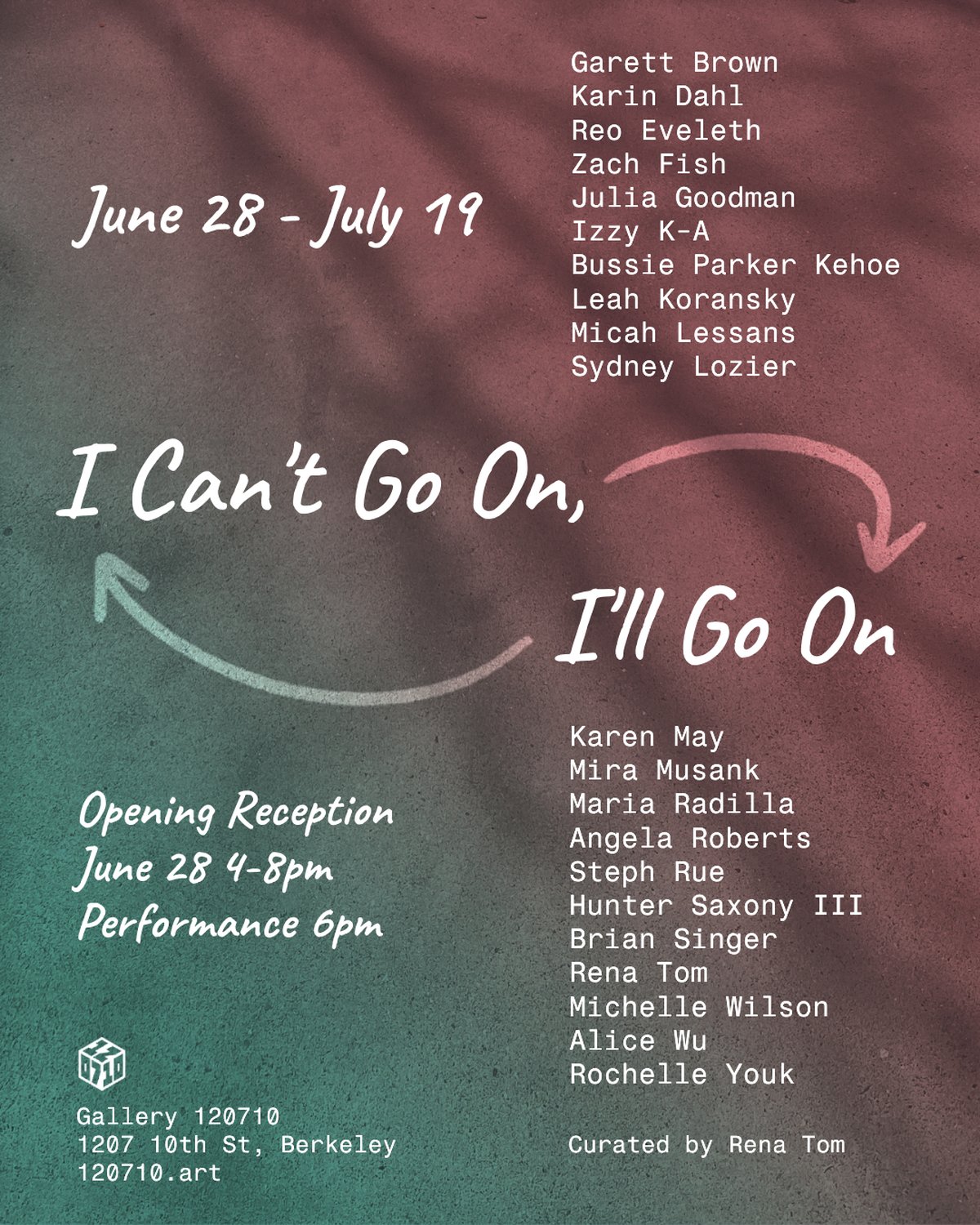
I Can’t Go On, I’ll Go On borrows its name from a phrase about perseverance by Samuel Beckett. Whether exploring legacies of the past that are carried into the present, showcasing different flavors of sustenance, or reimagining social frameworks that can reshape the future, the artists in the exhibition recognize the importance of nurturing a collective web of support as well as acknowledging how one is situated in the world. To sustain is not just to exist, but to resonate through time. In our current economic, political, and ecological climate, this work is more necessary than ever.
Works
![[oh]](https://120710-web-assets.s3.us-west-1.amazonaws.com/media/CACHE/images/piece_images/Alice_Wu/d79dbf0f28ceb724da49296e6d1ef6ca.JPG)
Alice Wu
[oh], 2025
Glassine, glue, artist’s breath
52 × 60 × 6 in
$3,000
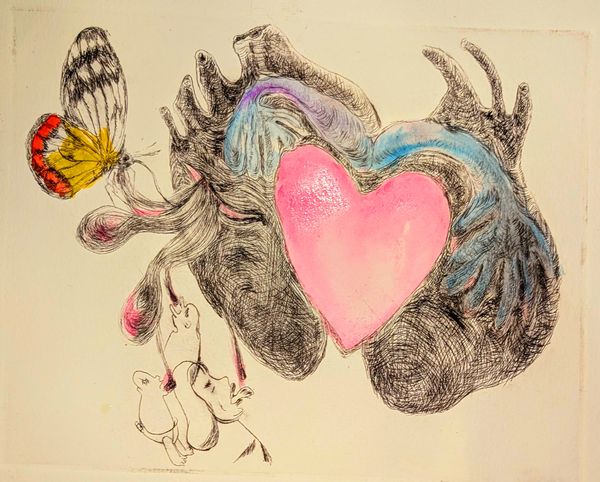
Angela Roberts
Painted Jezebel, 2025
Hand-colored drypoint
10 × 13 in
$50
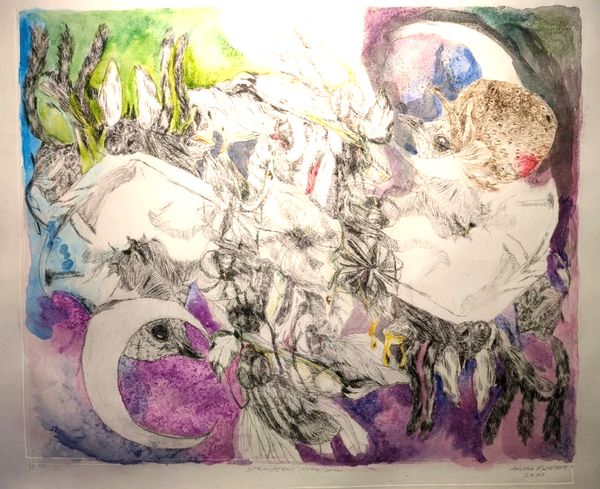
Angela Roberts
Strawberry Moonflower, 2025
Hand-colored drypoint
18 × 22 in
$200
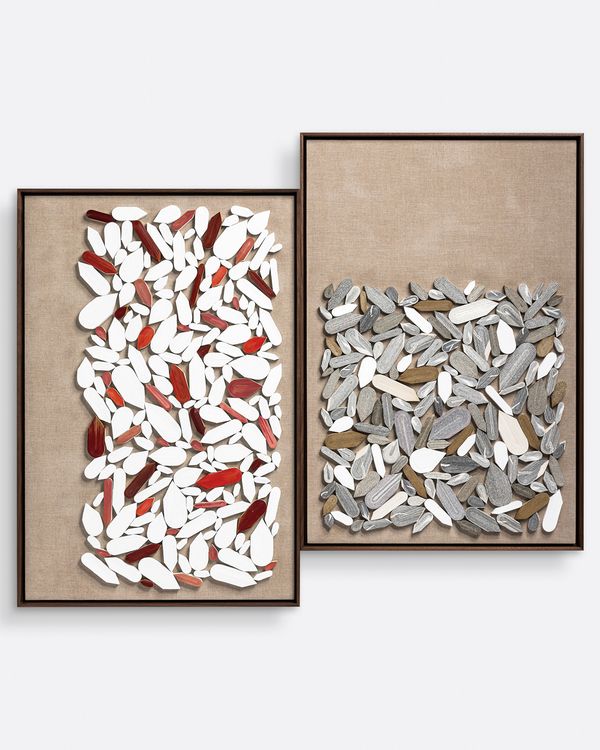
Brian Singer
Chapter and Versus #2, 2025
Bible pages and acrylic on Belgian linen wrapped wood panel
48 × 40 × 2 in
$5,600
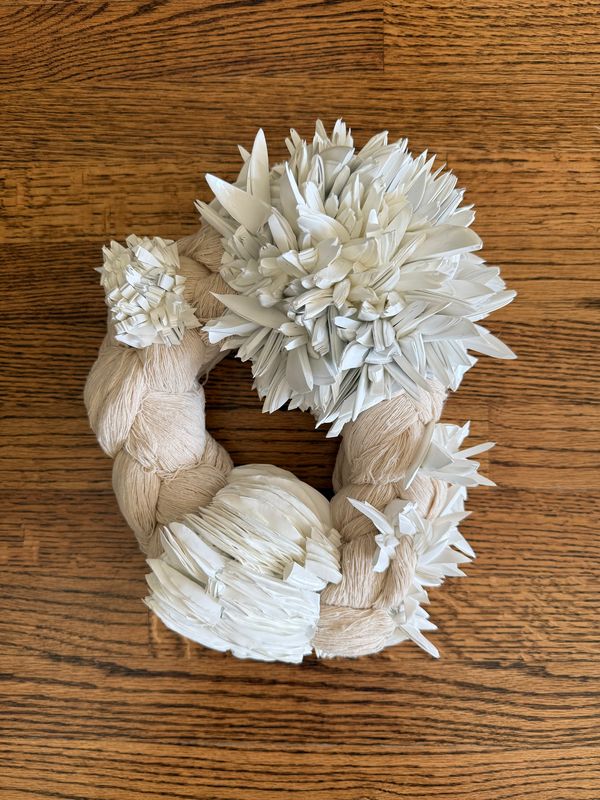
Bussie Parker Kehoe
Outgrowth, 2025
Recycled house paint, rope scraps, wood peg
13 × 10 × 6 in
$400 — sold
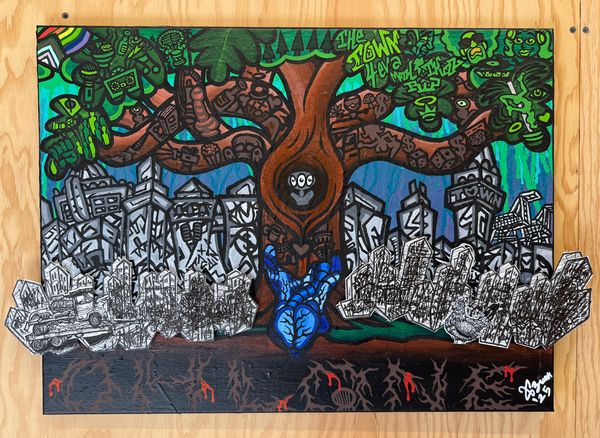
Garett Brown
Sustainable?, 2025
Acrylic, paint marker, spray paint, cut paper
18 × 24 in
$1,138
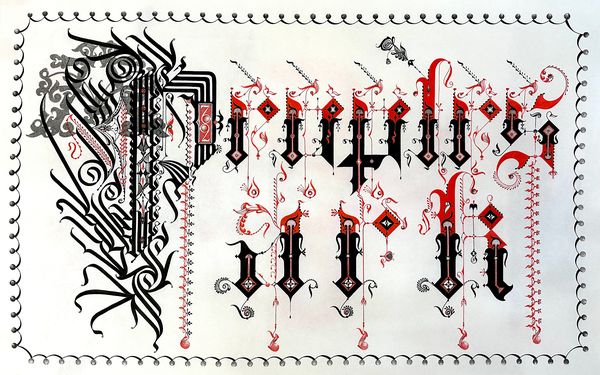
Hunter Saxony III
The Battle of 1969 is Over (A People's Park), 2025
Ink on pergamenata
27 × 40 in
$2,000
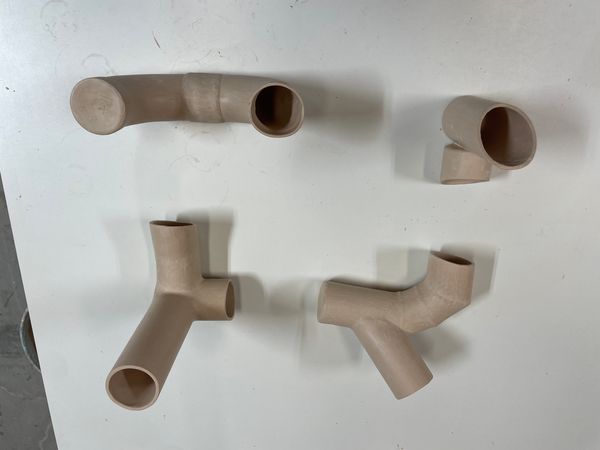
Izzy K-A
Untitled (Connectors Series, cont.), 2025
Slipcast ceramic, glaze, handbuilding
Price on Request
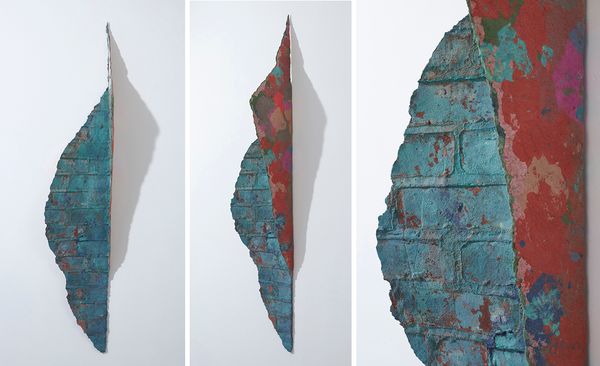
Julia Goodman
Akimbo, 2020
Hand formed paper, different color pulped repurposed bedsheets and t-shirts with lifted brick and white paint residue
66 × 13 × 10 in
Price on Request
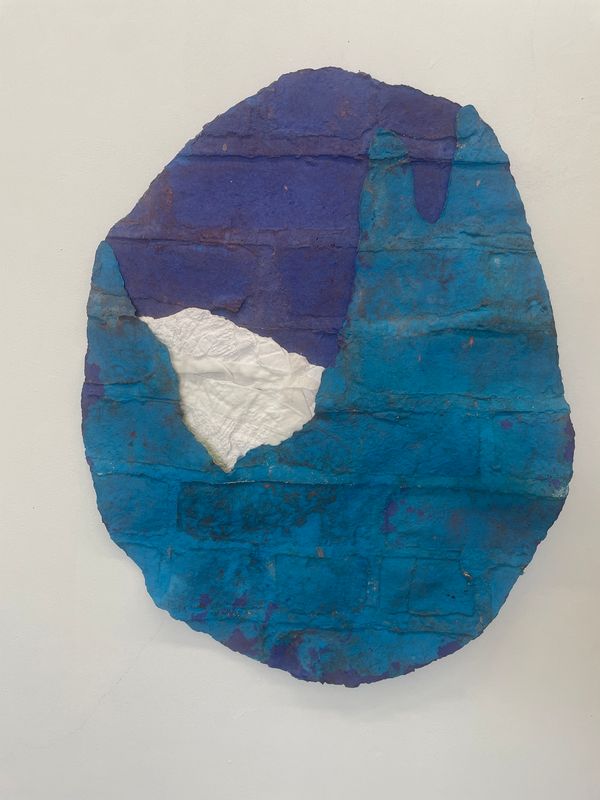
Julia Goodman
Untitled, 2025
Hand formed paper, different color pulped repurposed bedsheets and t-shirts with lifted brick residue
24 × 19 × 1 in
Price on Request
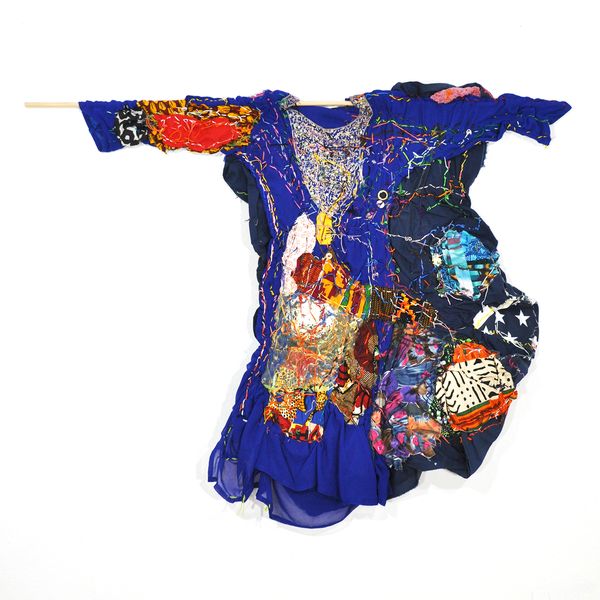
Karen May
Blue Dress Flag, 2025
Mixed fiber media on found blue dress
39 × 44 × 1 in
$950
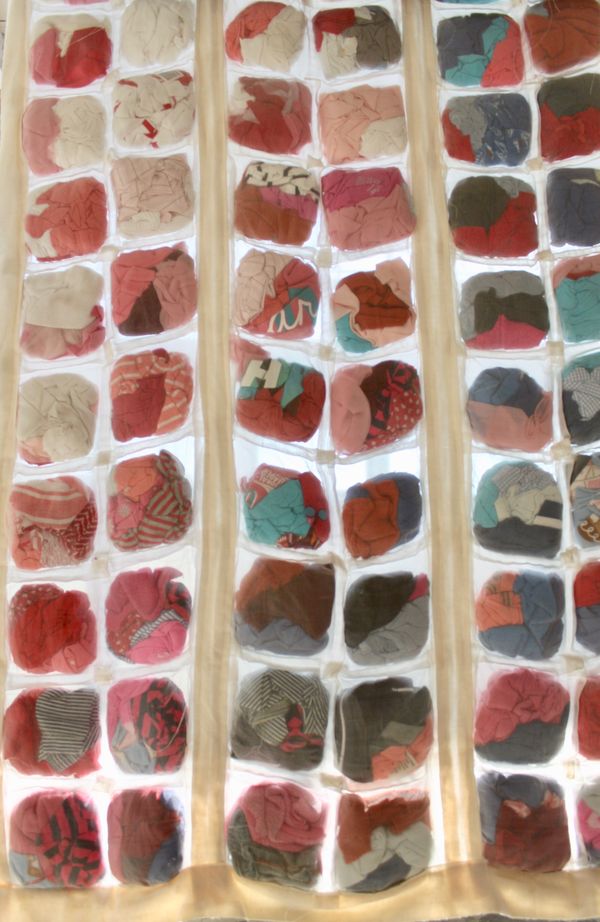
Karin Dahl
Untitled (Fragment from 70 lb Robe), 2021
Silk organza, cotton muslin, and post-consumer clothing from Goodwill Industries (graphic t-shirts, baby onesies, worn-through Levi’s, socks, cut-off jean shorts, yoga pants, bike racing uniform, leotard, kids floral sundress, leggings, business casual button-down shirts, blouses, so many cotton/poly t-shirts, and more)
92 × 40 in
$2,300
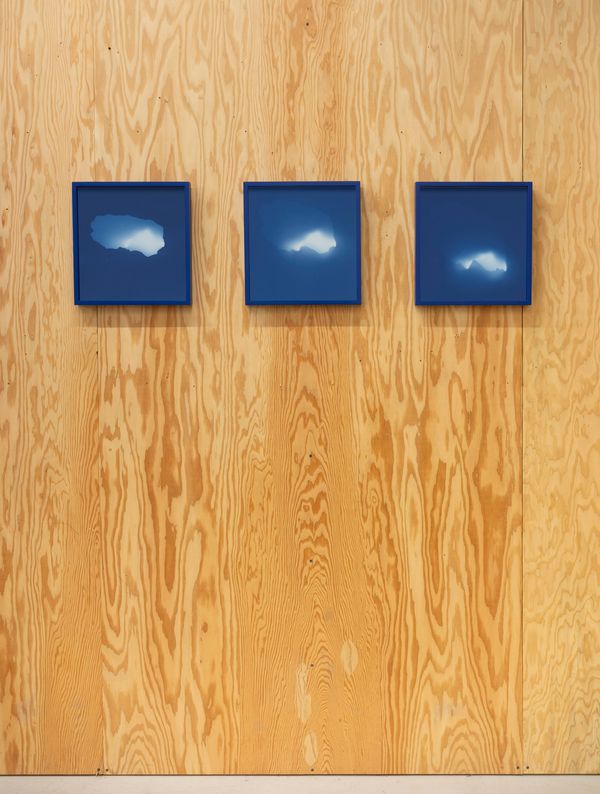
Leah Koransky
Day’s End, 2023
Cyanotypes on Arches Platine in Handmade Maple Frames
12 × 12 × 36 in
Price on Request
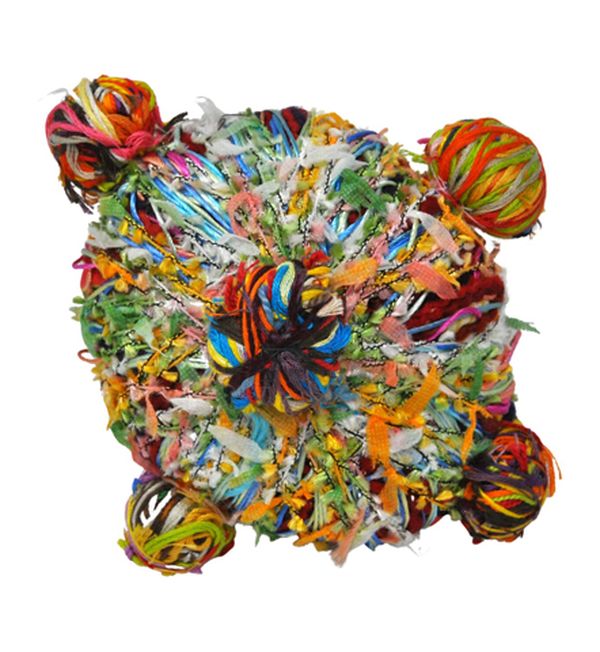
Maria Radilla
Bolita, 2023
Batting, fabric and thread
6 × 3 × 6 in
$80
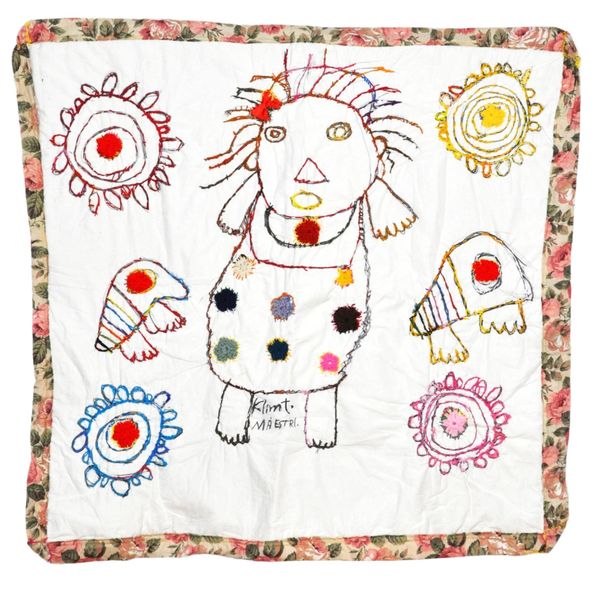
Maria Radilla
Untitled (After Klimt), 2024
Embroidery yarn on sewn fabric, batting
44 × 46 in
$250
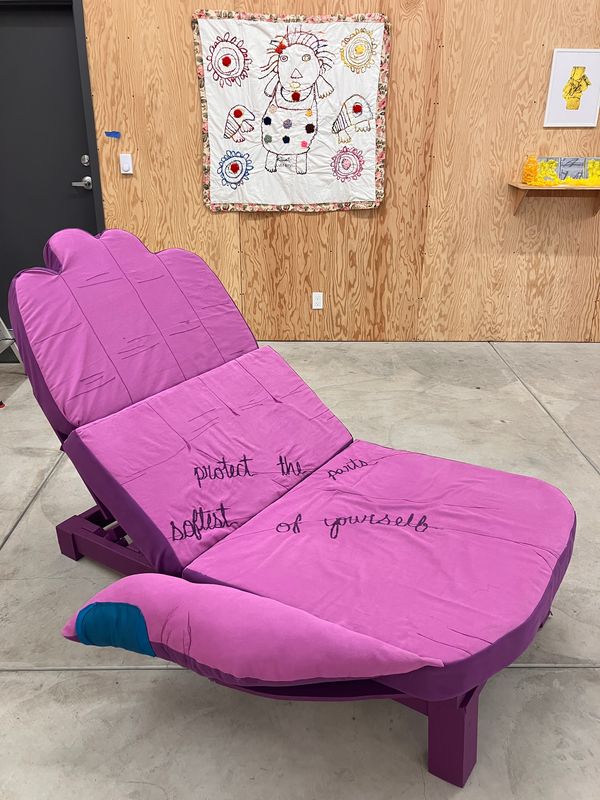
Micah Lessans
Held, 2025
Wood, paint, fabric, foam
64 × 38 × 16 in
$1,600
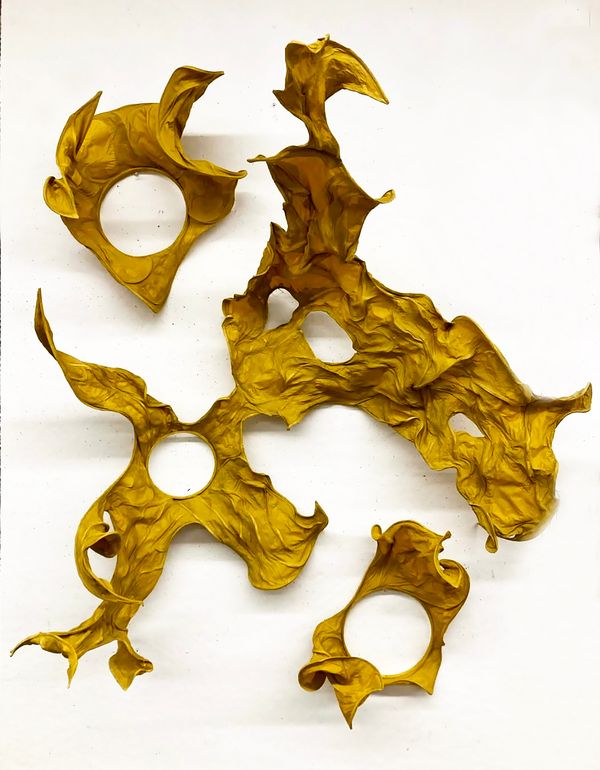
Michelle Wilson
Guardian, 2025
High-shrinkage handmade paper from hemp fiber, rattan armature
50 × 46 × 12 in
$1,500
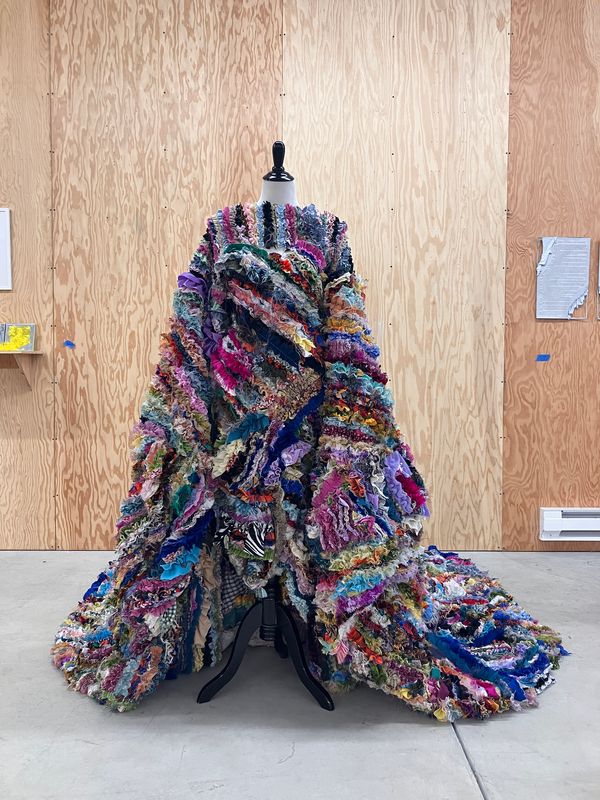
Mira Musank
Gathered Cloths, 2021–2025
Sewing remnants of natural and synthetic materials
140 × 153 in
Not For Sale
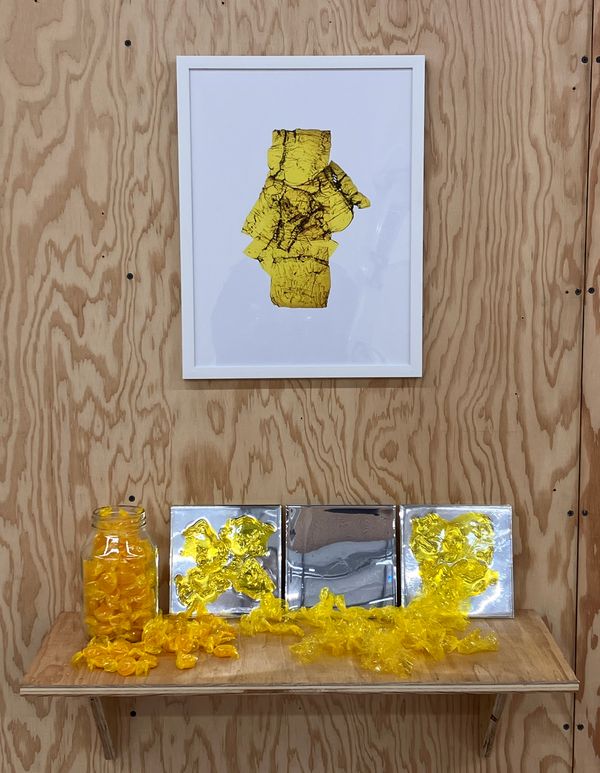
Rena Tom
Yellow, 2025
Pigment inkjet print, butterscotch candy, resin, acrylic, glass
Not For Sale
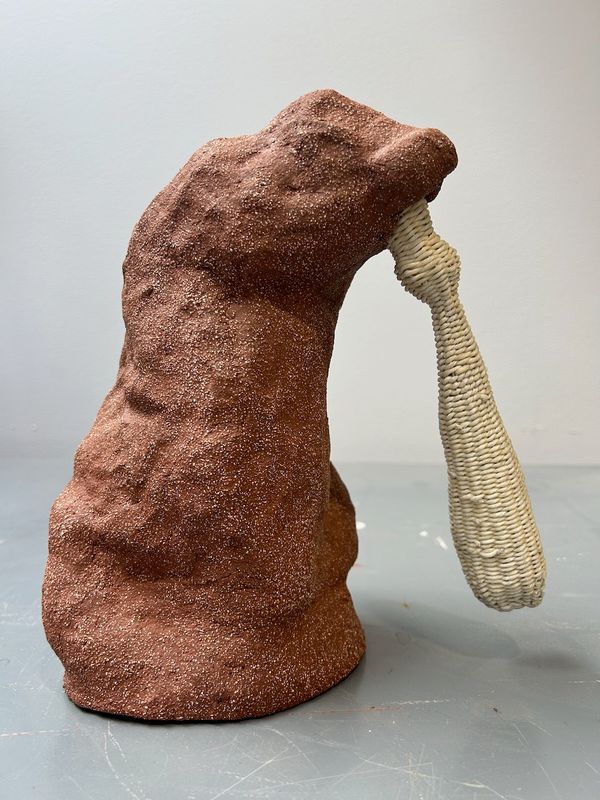
Reo Eveleth
Hunch, 2025
Ceramic, waxed linen
10 × 10 × 5.5 in
$100
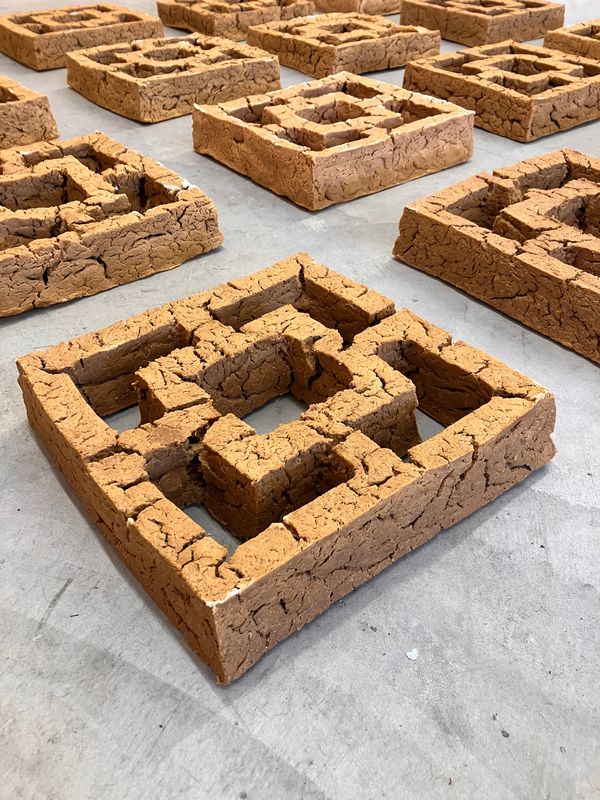
Rochelle Youk
meju/메주 breeze blocks, 2025
Soybeans, salt
12 × 12 × 3 in
Price on Request
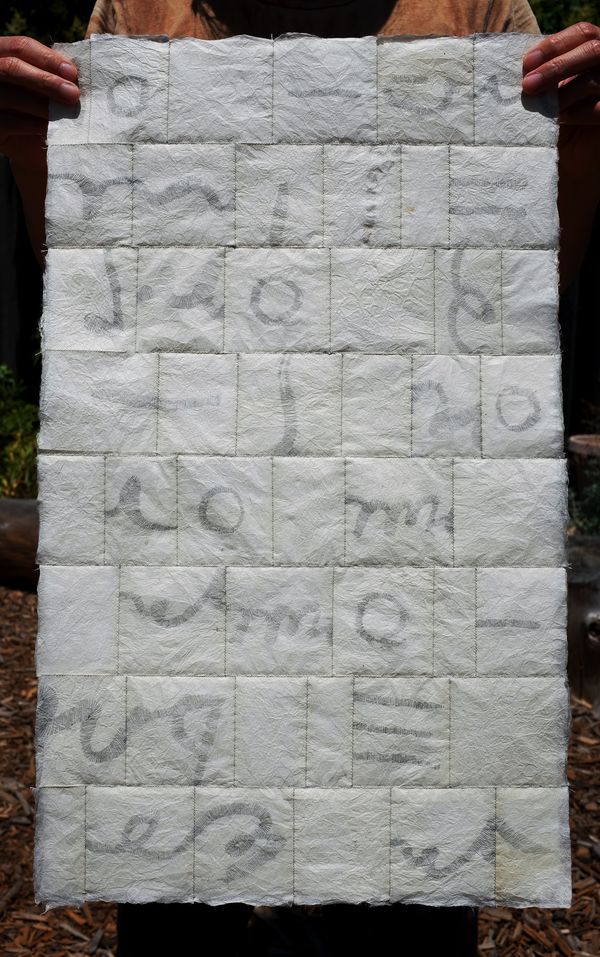
Steph Rue
Sign Here, 2025
Graphite on hanji (Korean mulberry paper), cotton batting, thread
22 × 13 in
$1,200
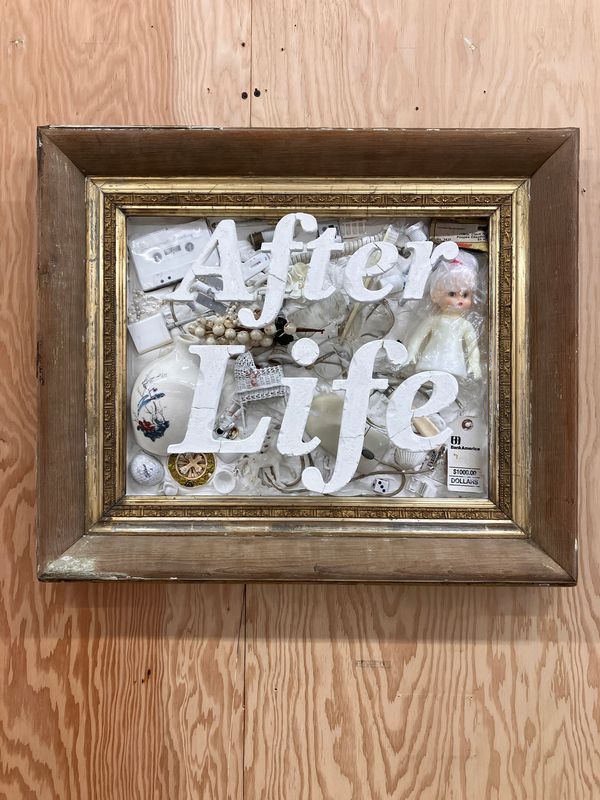
Zach Fish
After Life, 2025
Objects recovered at estate sales, concrete, joint compound
22 × 26 in
$500
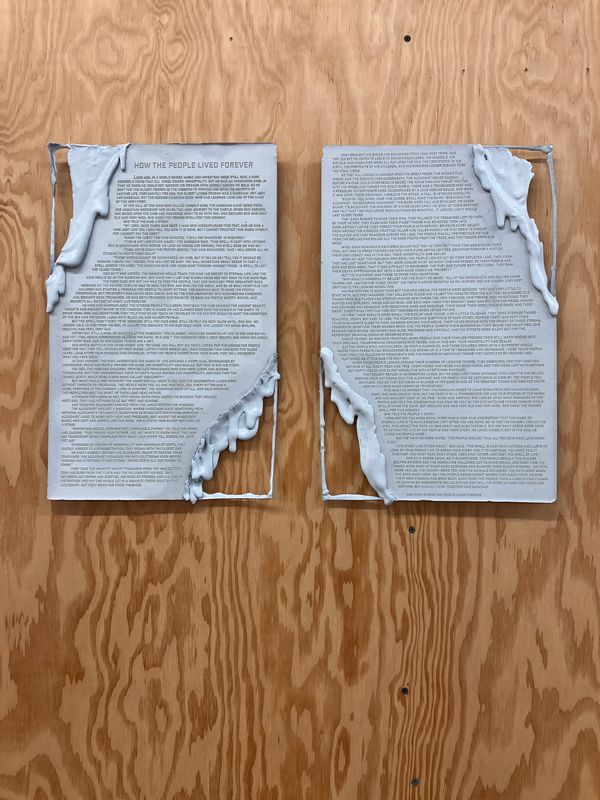
Zach Fish
How the People Lived Forever, 2025
Concrete, thermoplastic
17 × 11 × 24 in
$1,000
Artists
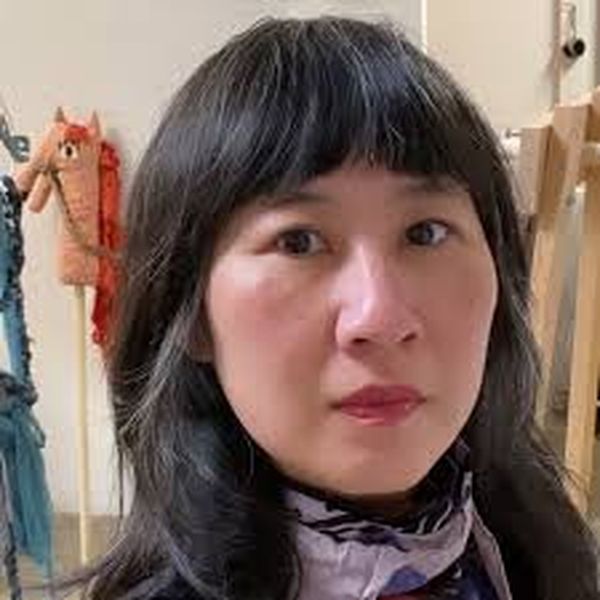
Alice Wu @alice.wu.art
Alice Wu is a Bay Area multidisciplinary artist who explores self-expression and reinvention. She transforms everyday materials—textiles, wood, paper, and salvaged treasures—into tactile, modular sculptures.
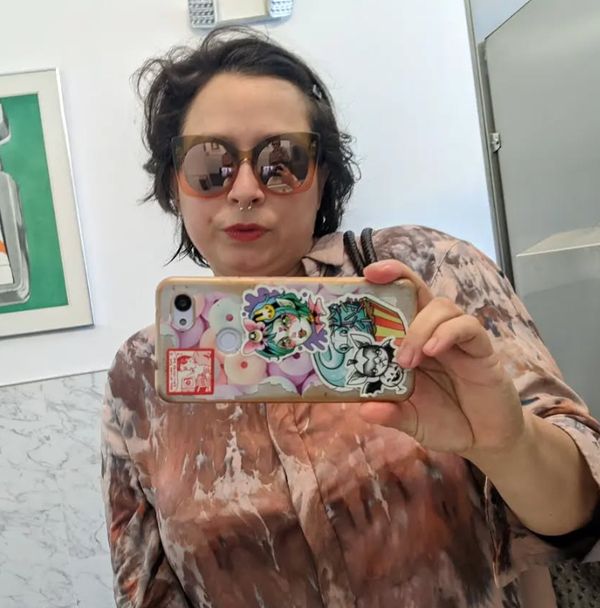
Angela Roberts @superangelaartmart
Angela Roberts is an Oakland based writer, printmaker, and musician. She plays cello and electronics in noise acts FOOTSOS, and Cruel Work. Her zine Supertrooper is reviled by many: a collect of which, Supertrooper Omnibus, is available at select emporiums of fine books.
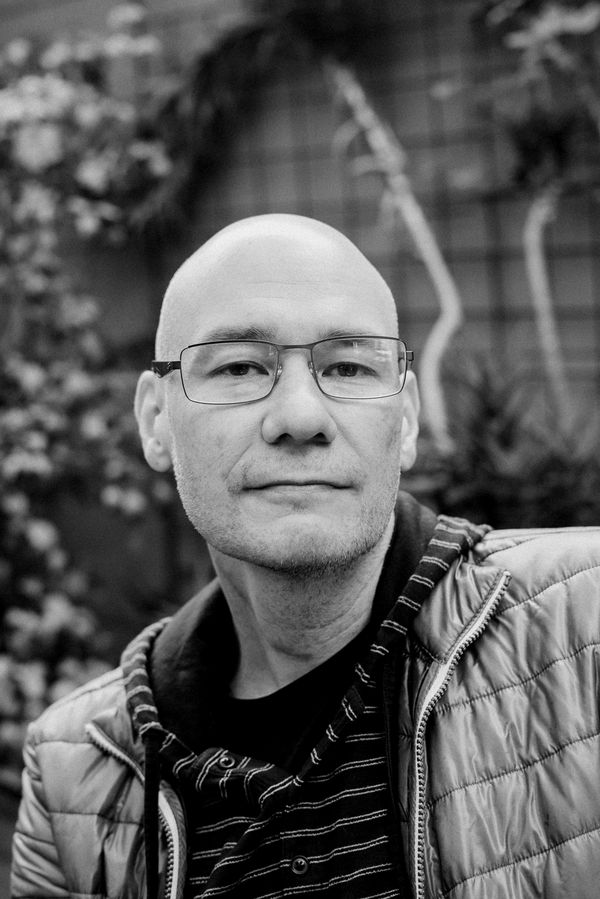
Brian Singer @someguy.is
Best known for his thought-provoking work, Brian Singer, is a multimedia artist who challenges conventional perceptions of objects and cultural symbols. Singer’s work often delves into the complexities of human connection, communication, and societal dynamics. His work has been exhibited at SFMoMA, The Skirball Cultural Center, The Torrance Art Museum, Jack Fischer Gallery, and EXiT at Catharine Clark Gallery. Brian currently serves on the board of directors of Southern Exposure, and the SECA Council for SFMoMA. He has an upcoming solo show at the Thacher Gallery at USF.
Statement: As an artist, I see my role as part cultural anthropologist and part creator. My work deconstructs and reforms objects, symbols, and sayings to expose our shifting relationship with shared meaning. To me, a great piece of art is not only aesthetically pleasing but also carries a deeper story, be it site-specific, cultural, or cause-based. By disassembling familiar objects—flags, books, childhood games—and rebuilding them in unexpected forms, I invite viewers to confront uncomfortable truths embedded in our national identity (we’re kind of awful to each other). My aim is not just for institutional critique but to make art that is visually engaging while simultaneously creating entry points for difficult conversations. The dramatic rise in attempts to ban books has provided fuel to the already strained clash of ideologies in America. In this series, pages from Bibles and banned books have been cut and assembled into a variety of arrangements representing the voices and ideas being removed from public discourse.
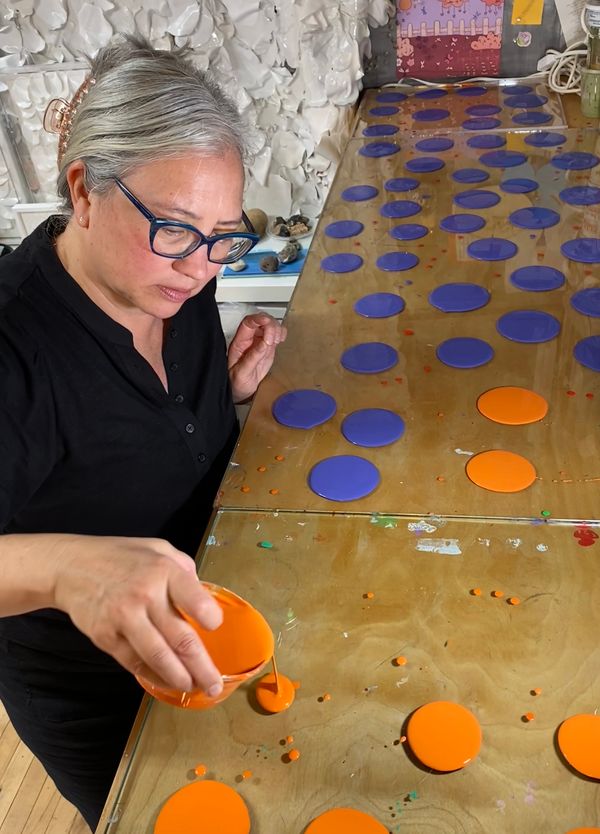
Bussie Parker Kehoe @bussieparkerkehoe
"Bussie Parker Kehoe is a San Francisco-based mixed-media artist. Kehoe’s found object assemblages combine her need for creative exploration and her lifelong love of hunting for treasures among discarded everyday items. Kehoe studied printmaking and drawing at the University of Virginia, then put her art practice on pause while she practiced law, started a family, and taught art to preschool-aged children in Washington DC. After a couple of family moves, the need to create could not be contained any longer and Kehoe opened her first studio in 2017 in Winston-Salem, North Carolina. She now resides in San Francisco, CA with her family and works out of her Mission District studio.
Statement: "Currently, I pour old discarded house paint onto glass, let the paint dry, then sculpt with the resulting dried paint peel. I intentionally place each paint peel so that it connects to and supports the others surrounding it, which is directly related to my life experience of moving and searching for those connections and support. Sometimes, I stack and cut those paint peels, then assemble a “quilt” reminiscent of the Korean textiles that I grew up with. Other times, I coax the paint into organic patterns I see in nature. I love the lack of control when pouring paint juxtaposed with the meticulous placing of the dried paint peels. Chaos and order are inherent in this process. It reflects life, where you take what life throws at you and try to make sense of it.
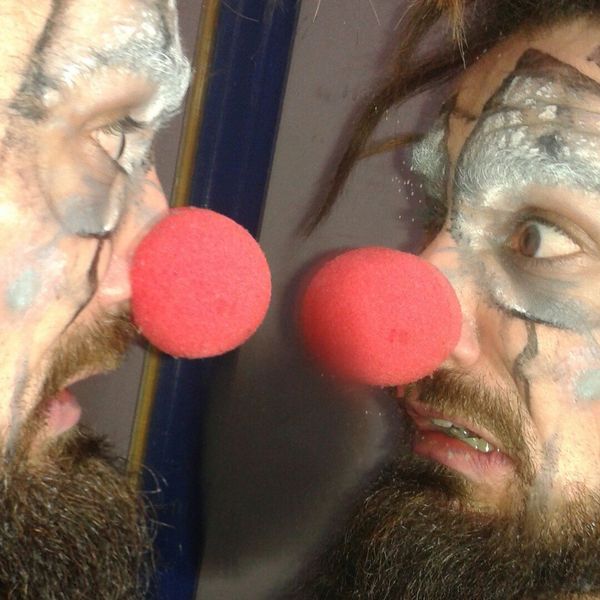
Garett Brown @garcheese
Garett Brown is a painter and illustrator who lives and works in Oakland since 2012. They graduated from Butera School of Art's sign painting program in Boston, MA before moving to California to pursue an independent art career. Sustainable? is their love letter to Oakland before they take a much needed break from the Town for a couple months. A portion of the sales of this work will go to a non-profit that supports the Ohlone people.
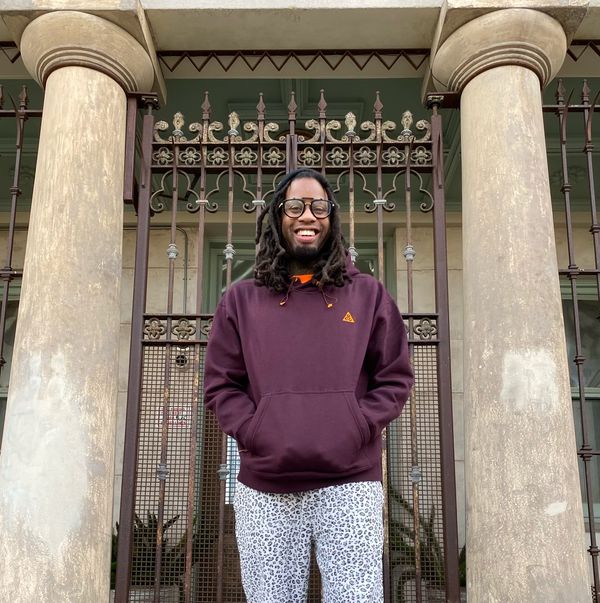
Hunter Saxony III @death_by_a_1000_serifs
Hunter Saxony III, also known as "the Last Black Calligrapher in San Francisco," is a San Francisco-based artist known for his calligraphy and installation work that explores themes of mortality, ritual, preservation, loss, and the discovery of self. He uses traditional calligraphic techniques and vintage imagery to address contemporary issues.
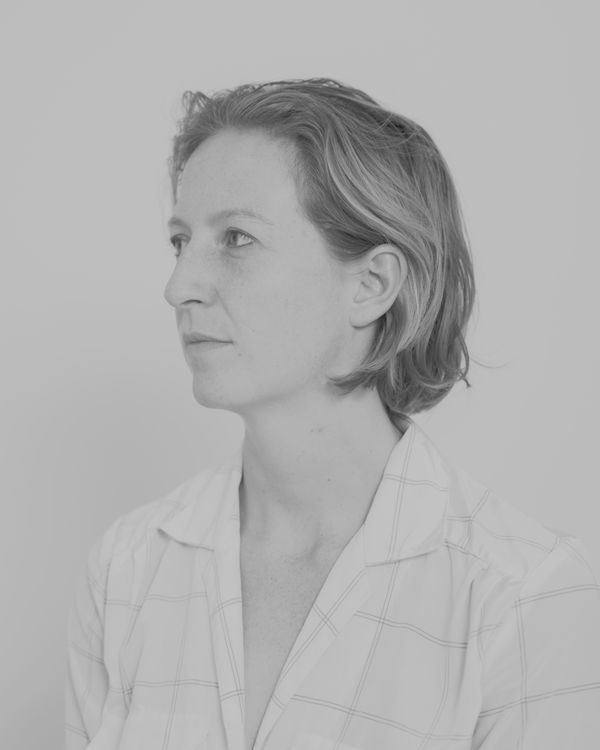
Izzy K-A @crumb.licker
"Izzy Krompegel-Anliker is an artist working with objects, furniture, and spaces. Her practice investigates how objects and infrastructures shape our environments and movements, and reflects a critical examination of value, labor, and material culture. IKA received her MFA from Cranbrook Academy of Art and later participated in a residency at High Desert Test Sites. Her art and design work has been included in national group exhibitions, including at SOBU, Oakland, ARTCLVB and Passageway Gallery, Detroit and ICFF/Wanted Design, Manhattan. "
Statement: "In short, I’m looking for signs of connection and interconnectedness by looking at pipes and ducts, by following deer trails and desire paths. I see these infrastructures as shape and line. Forms which structure our patterns of movement. Lines by which we can trace our interdependence. Negotiations between desire and the built environment. Seeing tubes as infrastructure — elastic and porous, ever-changing ways of mediating our relations to the world and each other. Infrastructures sustain, creating and supporting life under ongoing conditions of precarity."
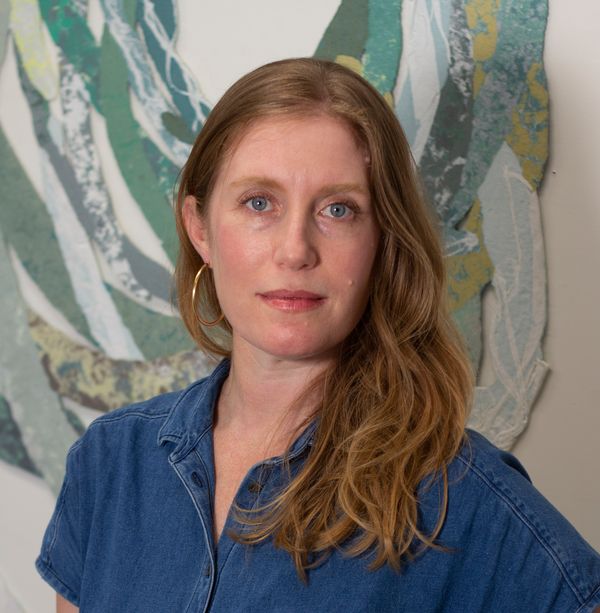
Julia Goodman @juliaannegoodman
"Julia Goodman works at the intersection of papermaking, textiles, sculpture, and painting. Her work is included in the collections of the National Museum of Women in the Arts, DePaul Art Museum, Recology San Francisco, and Google. Goodman has a forthcoming solo exhibition at the San Luis Obispo Museum of Art and recent exhibitions include the National Museum of Women in the Arts, Contemporary Jewish Museum, San Jose Museum of Art, DePaul Art Museum, Poetry Foundation, California College of the Arts, and Berkeley Art Center. Her residencies include JB Blunk Residency, Recology SF, Creativity Explored, Salina Art Center, and The Space Program. In 2020 she was selected for the 2020 Women to Watch Award by the San Francisco Advocacy for the National Museum of Women in the Arts. Goodman earned an MFA from California College of the Arts and a BA in International Relations and Peace & Justice Studies from Tufts University. She teaches Papermaking: From Fiber to Paper at CCA and leads papermaking workshops throughout the Bay Area including Berkeley Art Museum Pacific Film Archive, Exploratorium, Creative Growth, and NIAD. Julia lives in the Bay Area with artist Michael Hall and their family."
Statement: My work with torn and pulped textiles reimagines rag papermaking, upending monochromatic, rectilinear, flat paper. I gather, tear, pulp and press color t-shirts and bedsheets – fabrics close to bodies day and night. I hand-form pulped fabrics into wallworks and sculptures marked by vivid hues, glowing shadows, decisive edges, and embedded traces of life. I forefront transformative human experiences and essential support by mixing different color pulped fabrics to reveal fibers, bonds and labor. Losing my father in 2007 drove me towards texture and material transformation, while having a child in 2019 deepened my connection to fabrics and reawakened me to color.
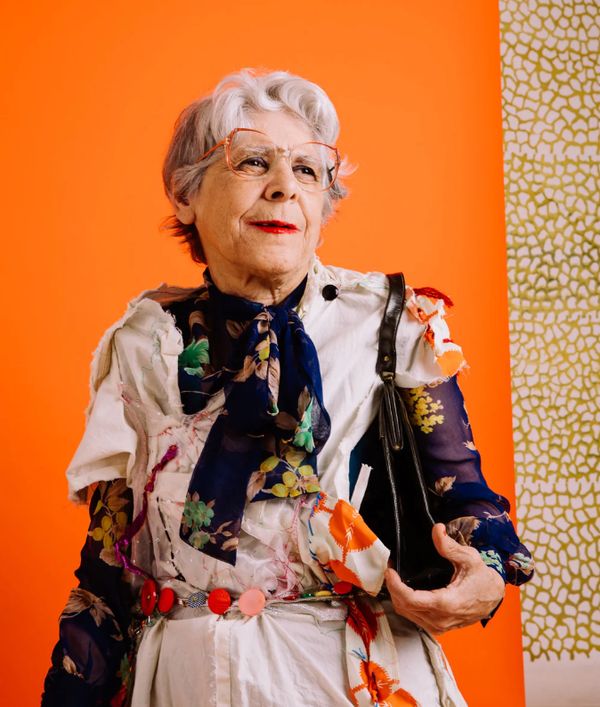
Karen May @niadartcenter
Karen May (b. 1950) is a multidisciplinary artist who joined NIAD Art Center in 2011. Her works often reference gardening, cats, songs, and dolls. May refers to her art as a “memory tool,” explaining, “If I have to remember my mom I can draw a picture of my mom. One way or the other I’m always thinking of my mom.” In addition to themes of personal history, May also uses found ephemera from art publications, co-opting the imagery with her own line-work and text. In 2023, seven of these mixed-media detournements were acquired by the San Francisco Museum of Modern Art. Karen May's work has been published and exhibited widely in the Bay Area, notably at the Oakland Museum of California, Minnesota Street Project in San Francisco, and Personal Space Gallery in Vallejo, CA. A two-part solo exhibition entitled Karen May: ArtForum Interventions (2024) was presented by the Arts Center at Duck Creek in East Hampton, NY.
Statement: Sometimes I make fashion dresses. I try to be easy with myself. Sometimes I make a picture of something, maybe Karen or her mother or a dress. One of the things I do at NIAD Art Center is weaving: over and under, over and under. Some of it I do by hand, I go knitting along the way. To create her textile collages and soft sculpture, Karen May stitches together found fabrics, beads, crocheted and stuffed objects, and other fiber materials that evoke memories of her mother and her garden, among other personal and poetic connections. Some of these constructions start as clothes, become flags, and then become wearable once more.
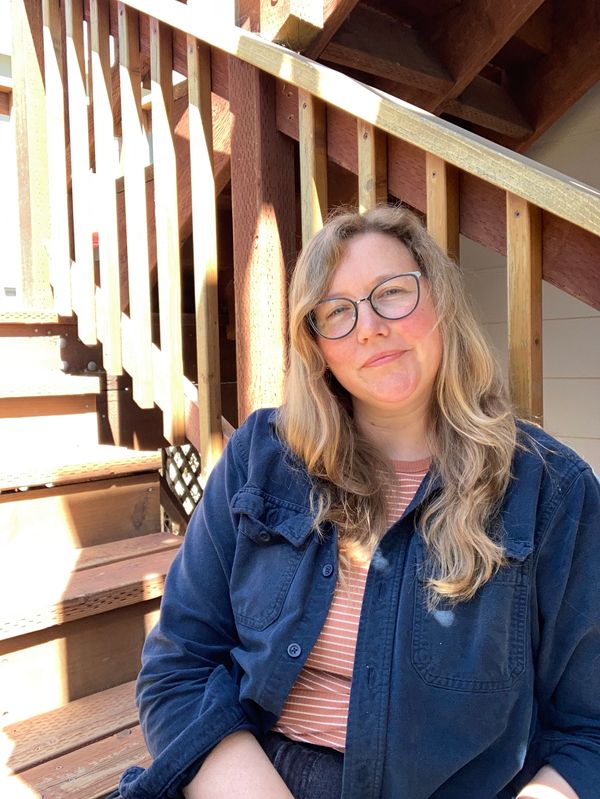
Karin Dahl @karinsideout
Karin Dahl (she/her) is an artist and cartographer living in Oakland, CA. She has an MA in Anthropology from SFSU with an emphasis on archaeology and material culture studies. Her art practice includes textiles, watercolor, and collaborative explorations of relationship to place. In 2023, Dahl co-founded Makeshift Center for Material Studies as a gathering point for discourse and engagements with craft through skill-based workshops, free public events, reading groups, and collaborative projects that are in conversation with the larger history of making objects by hand. She views craft and art practice as a way people form relationships with and situate themselves within the material world, counterbalancing fast-paced consumerism and throw-away culture.
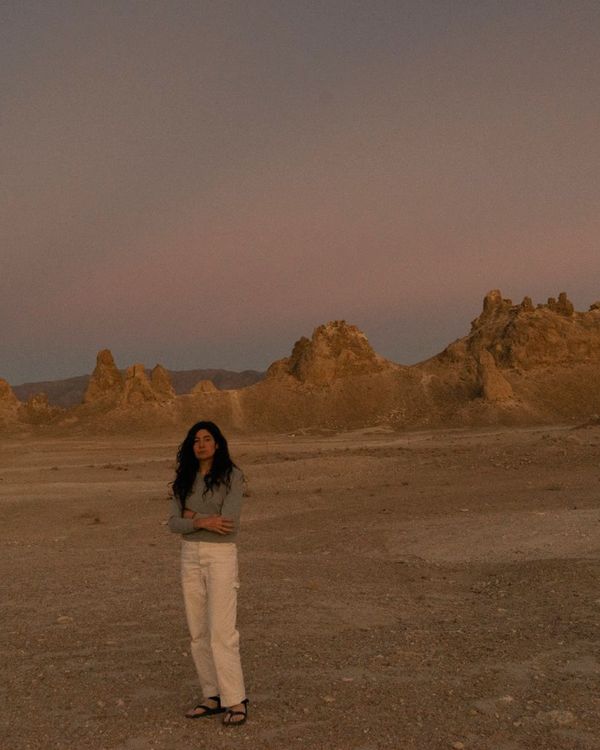
Leah Koransky @leahkoransky
Leah Koransky’s multidisciplinary practice—spanning photography, drawing, printmaking, and sculpture—explores the precarious relationship between place and self. She lives and works in Berkeley, CA. She received her BFA from California College of the Arts in San Francisco, CA, her BA from Skidmore College in Saratoga Springs, NY, and her MFA from the School of Art at San Francisco State University. She is currently a Graduate Fellow at Headlands Center for the Arts. Her work has been featured at The Center for Fine Art Photography in Fort Collins, Colorado, form & concept in Santa Fe, New Mexico; Tiger Strikes Asteroid in Brooklyn, NY; the Berkeley Art Center, Berkeley, CA; San Francisco Design Week, and The Future Perfect, Brooklyn, NY. She is a co-founder of Deep Time Press︎︎︎, an independent publishing imprint that focuses on concepts of time and place, with photographer Justin James King.
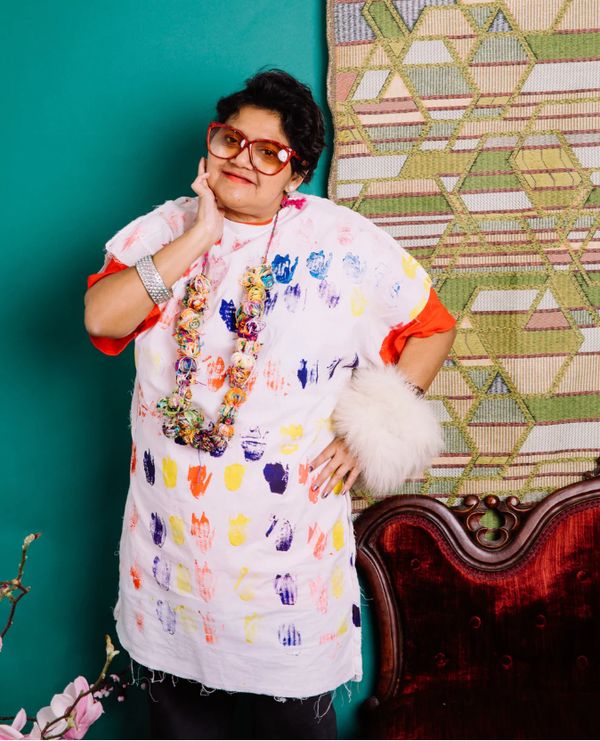
Maria Radilla @niadartcenter
Maria Radilla (b. 1969) is a Bay Area painter and fiber and textile artist. Since joining NIAD Art Center in 2005, Radilla has produced dozens of intricately embroidered quilts inspired by the dolls, fashion, and gardens of her childhood. She has been featured in group exhibitions at Sonoma State University Art Gallery, Et al. Gallery, Eddie Rhodes Gallery, Marin MOCA, and the OMCA. In 2024, Radilla's work was acquired for the public collection of the Regional Center for the East Bay in San Leandro, CA.
Statement: I started creating art at NIAD in 2005, and since being here I’ve learned how to make dolls and embroider quilts in my own style. I’m inspired by my childhood in Mexico, fashion, food, flowers, and traditions where we give and receive gifts. These are the things that I really love. When I make artwork with fabrics, I think about my experiences: growing up, I had dolls and played with them in fields of flowers by my home. I love flowers that are red or yellow or white. I also look at a lot of books, especially a big book of colorful birds and a catalogue filled with pictures of beautiful old dolls. I go through the images and pick a different doll to embroider onto a quilt or make into my own doll. I’ve also made dolls based on figures in paintings, like the people in Goya’s paintings of the Spanish courts.
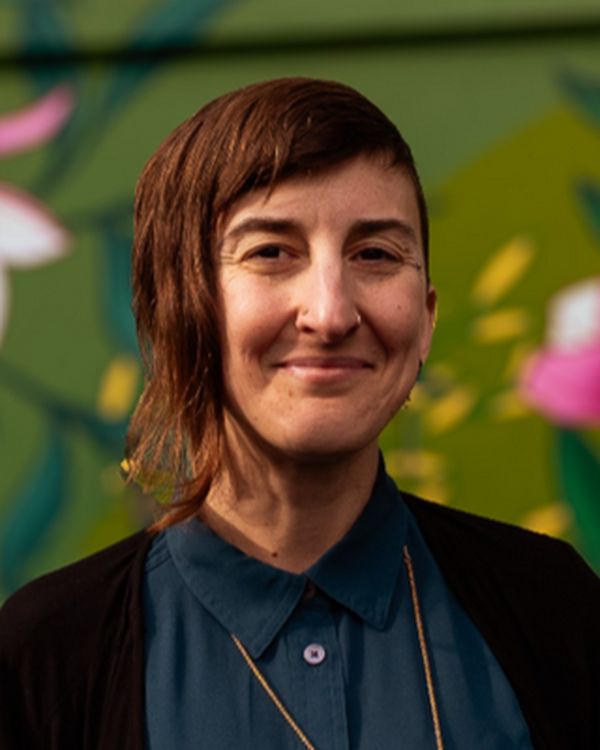
Micah Lessans
Micah finds joy in creating art that reflects on the nature of what it means to be human. As a social worker for more than 15 years, they draw inspiration from bearing witness to and holding space with individuals, families, and communities across all parts of life. They strive to honor the breadth and depth of human experience while creating room for hope and imagination of what is possible.
Statement: Through both my work and my own personal life experience, I’ve come to believe that trying to get through hard things alone is usually a recipe for burnout and isolation. When we are able to lean on each other and accept support in our most vulnerable spaces, there is so much more capacity for growth, healing, resilience, and change. “Held” is a reflection on this concept, in that the support of allowing someone to hold you (physically or emotionally).
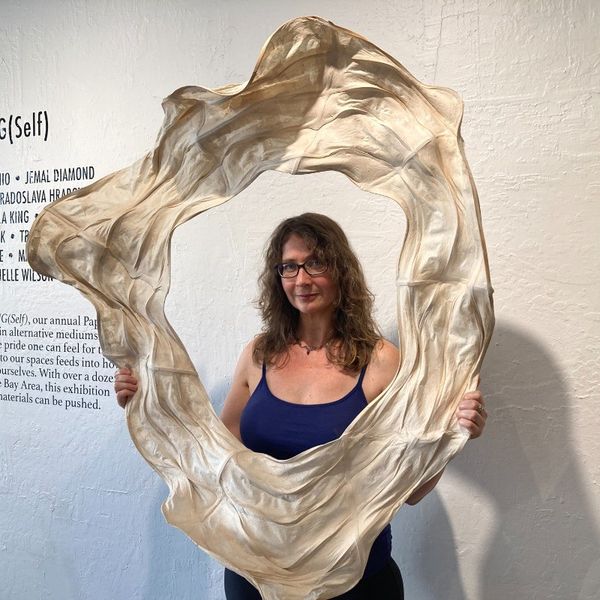
Michelle Wilson @michellewilsonprojects
"Michelle Wilson is interested in the intersections of ideas: the crossroads of colonialism and natural history, migration, vegetation, and the loss of diversity. She finds meaning in material and process, often starting directly with fibers or dye as the basis for her work, which takes the form of paper making, printmaking, artist books, installations, textiles, and social practice investigations. Her practice includes frequent collaborations with other artists; in particular her ongoing collaboration with Anne Beck as the Rhinoceros Project. Artist-in-Residence programs that she is an alumna of include the David and Julia White Colony in Ciudad Colon, Costa Rica, the Jentel Artist Residency Program, in Banner, Wyoming, the San José Museum of Quilts and Textiles, and LAB-8’s Riabitare con l'Arte program in Abruzzo, Italy. As a Community Artist, she served as a Teaching Artist for the NIAD Art Center, (Richmond, CA) and Southern Exposure’s program at the Oakland Juvenile Hall. She is a past hand-papermaking advisor to Signa-Haiti, a non-governmental organization developing a sustainable and bio-dynamic economy in Haiti. Grants and awards she has received include a a 2022 and 2023 ArtsCatalyst Award from Stanford University, 2021 Artistic Excellence in Programming Grant from San Jose State University, a 2013 Artist-Investigator Grant from the San Francisco’s Intersection for the Arts, and the 2007 Lenore Edelman Award for Book Arts. As a member of the Rhinoceros Project, she is a recipient of a 2020 Barbara Deming Foundation Grant, and a 2016 Puffin Foundation West Grant. Creative Capital designated her as an ""On Our Radar"" artist in 2015. "
Statement: "I am an interdisciplinary thinker whose work takes the form of handmade papers, installations, sculptures, prints, textiles artist books, collages, and social practice interventions. This practice is rooted in papermaking and textile traditions, and explores materials as a means of telling stories, understanding history, and building community. As a papermaker, the fibers with which I work come from waste products, plants I grow myself, or invasive plants I harvest, for which my studio practice becomes a means of clearing habitat space for native ecology. Paper is traditionally considered a substrate; however in my work the very fibers of it’s making transcend this to become signifier, content, documentation of history and place, and embodiments of site-specificity. My papers manifest records of seed migrations, weather patterns, soil conditions, climate change and interactions in a more-than-human world. Material research, history, social engagement, and collaboration galvanize my work. By finding intersecting narratives across these topics, I address a changing world, the the complexities of meaning, sentiment, and consequence. I analyze the crossroads of the human unconscious, the sociocultural milieu, the loss of diversity, ecological systems, and how social and environmental justice frequently go in unison. "
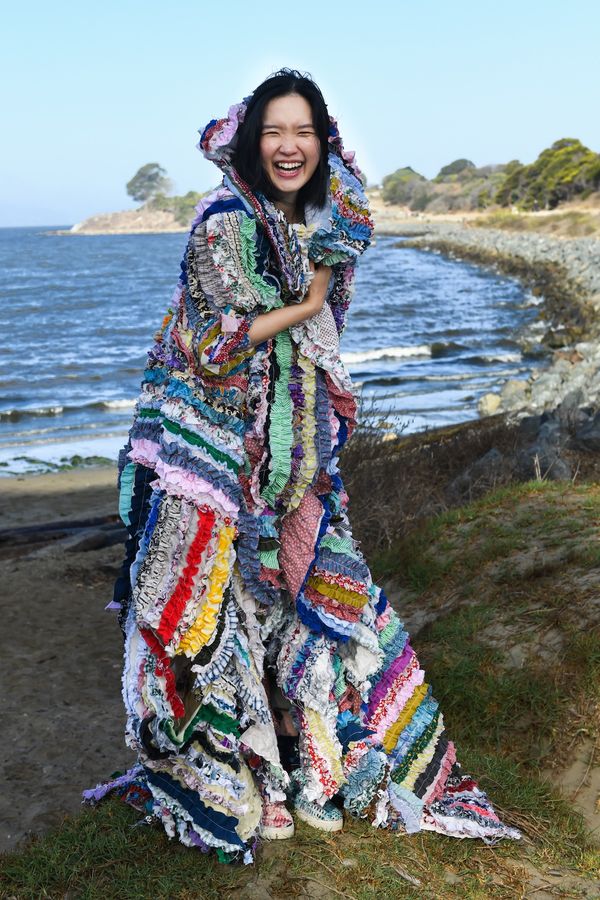
Mira Musank @miramusank
"Mira Musank (she/her) is an interdisciplinary textile upcycling artist who transforms textile waste into custom garments. She focuses on the intersection of slow fashion practices, sustainability solutions, and climate activism in her learning journey. A community-taught artist, she transforms discarded textiles and second-hand clothes into one-of-a-kind pieces. Circularity as a counter act of overconsumption and waste is central in both her artistic expression and her community engagements. To date, her brand Fafafoom Studio has recirculated 300+ pounds of textiles back into local communities. She has showcased her works in Climate Week events in SF, LA, and NYC. Her signature “Gathered Cloths” project, made out of 100% sewing remnants, has started to gain recognition in the Bay Area and global stage. Fafafoom Studio aims to inspire people to rethink their relationship with textiles, embrace a 'waste not, wear more' mindset, while also raising awareness of the global threat of textile waste. Instagram: @miramusank Website: https://www.fafafoom.com Newsletter: https://fafafoom.substack.com/
Statement: "My work extends beyond the studio to education and advocacy, fostering a community engaged with sustainable practices and climate actions. By collaborating with diverse partners and leading initiatives like Rethink the Runway movement, I strive to weave narratives of resilience and hope into community engagements. I believe that by reimagining our relationship with materials and embracing innovative, sustainable approaches, we can collectively design a more equitable and environmentally conscious future for fashion and beyond, moving towards models that are both ethically sound and creatively fulfilling."
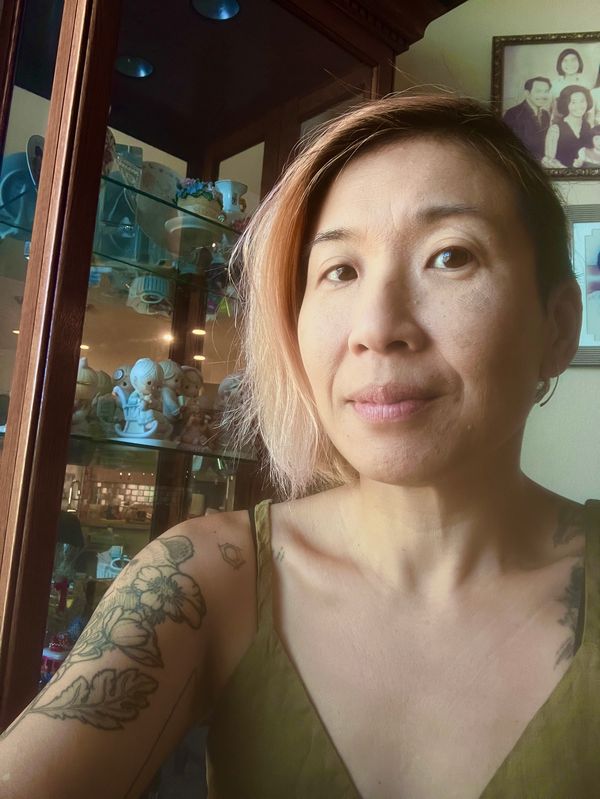
Rena Tom @rena_tom
0
Statement: 0
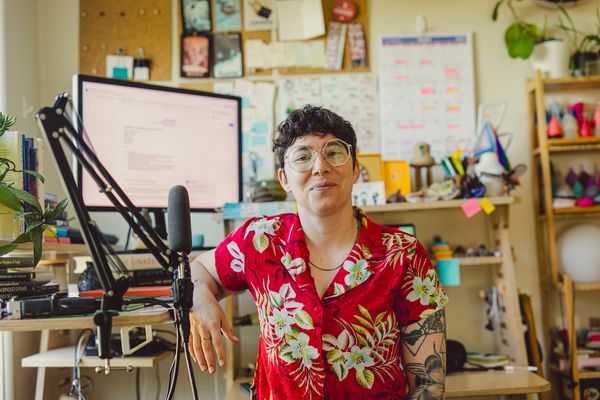
Reo Eveleth
Reo Eveleth is an award-winning reporter and writer who explores how humans tangle with science and technology. Most recently, they’re the creator and host of the podcast Tested from CBC and NPR's Embedded. Before that, they made the hit independent podcast Flash Forward. Their work has been nominated for a Peabody, an Emmy, and an Eisner Award, and has appeared in the Best American Science and Nature Writing, and they've covered everything from fake tumbleweed farms to million-dollar baccarat heists for places like The Atlantic, Scientific American, Eater, ESPN's 30 for 30 podcast, and more. They're also a sculptor, union organizer, plant propagator, and powerlifter.
Statement: Reo Eveleth creates abstract, organic, playful forms that embody concepts of extrusion and escape. Working with a wide variety of materials (clay, concrete, glass, slime, foam, stuffing, wood and more) they make pieces that tell tiny stories pressure and containment, and what happens when elements break free from those walls.
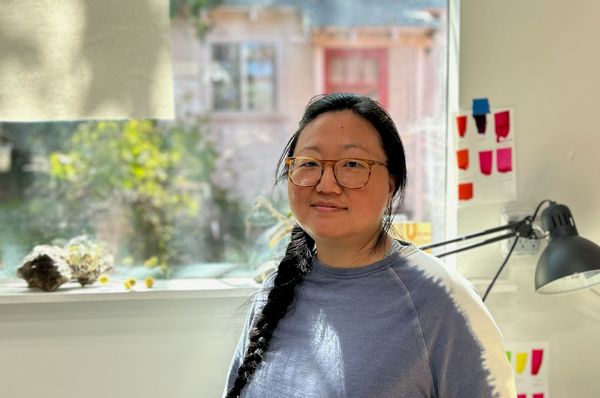
Rochelle Youk @roachyface
After receiving an MFA from the San Francisco Art Institute in 2010, Youk completed a bookbinding apprenticeship at letterpress publisher, The Arion Press, where she honed her skills for over a decade. She is a member of the Korean American Artist Collective, and the book arts themed collaborative project, The Boogers. Currently, Youk is an MA candidate at SF State University in the Asian American Studies department focusing on the relationship between art and radicalism.
Statement: Rochelle Youk works across media to craft objects informed by her heritage as the American daughter of immigrants from Japan and Korea. Labor intensive paintings, drawings, and sculptures examine the history between Asia and the United States through the lens of cultural traditions, especially folk crafts. She uses non-traditional materials like plexiglass, and cigarettes, to examine how visual traditions are shared, exchanged, and used to form identity.
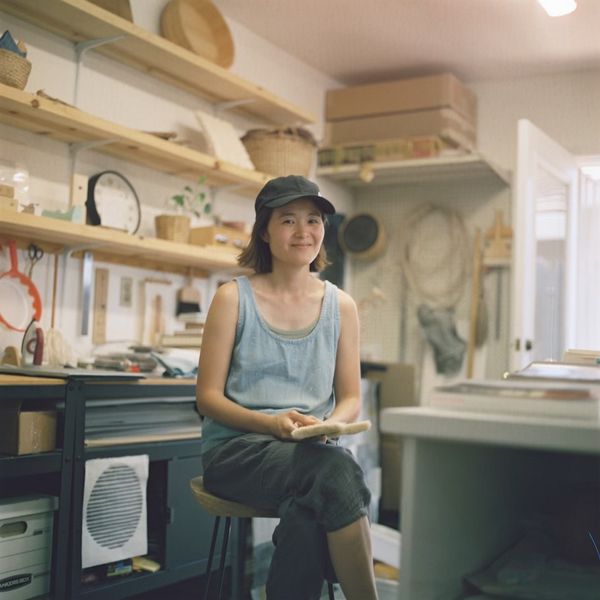
Steph Rue @sjrue
Steph Rue is an artist and papermaker based in Sacramento, CA, where she maintains a hanji (Korean papermaking) studio. Steph creates artwork and conducts research, workshops, and community building events around papermaking, fiber arts, and cultural heritage. Her creative practice is rooted in an ongoing exploration of Korean traditional paper and fiber arts and influenced by her religious upbringing and Korean diasporic identity. Steph is a co-founder of the Korean American Artist Collective and a co-founder of Hanji Edition, a publisher of limited edition art/prints on hanji. She serves as the board chair of Hand Papermaking, Inc., a nonprofit organization dedicated to advancing the art of hand papermaking through print and online publications.
Statement: My father speaks in incoherent run-on sentences, a litany of non sequiturs. Last summer the stroke left him unable to read, write, or comprehend people's words. Listening to him reminds me of how I feel trying to communicate with Korean elders or sitting in Korean church. There is next to no comprehension, only exaggerated gestures and occasional moments of recognition. A few months ago I had to forge my dad's signature on a document. I practiced writing his name over and over. The letters took on a life of their own. I traced their forms on scraps of paper I made last summer. I stitched the pieces together and quilted them into a blanket, like the one my dad uses at the residential care home. The letters like the scrabble tiles we try to use with my dad to help restore his language. He refuses again and again, but we keep trying.
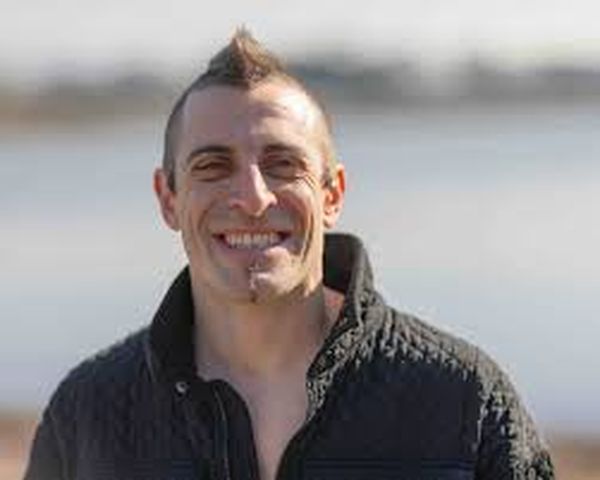
Zach Fish @thisistrash.art @onbeyond.xyz
Zach Fish is an Oakland-based artist whose work explores the intersections of waste, wonder, and material memory. Through large-scale installations and sculptural interventions, they repurpose discarded materials to examine the hidden systems behind consumption and value. Recent exhibitions include Consumed at Drawing Room SF, Dispatches from Dreamland at Art Fuse, and Exposure, a solo installation at Clip Health constructed from over 200 discarded COVID tests. Zach has held residencies at Port Labs and Urban Ore, and their piece Wasted was featured at the 2022 Sustainable Packaging Awards at the Emerald Cup. Their practice invites audiences to rethink what we throw away—and why.
Statement: "The work presented here grows out of my recent deep interest in estate sales. Estate sales are the intersection of treasure and trash. A liminal space where death bleeds into life, and value is recalculated in the absence of context. Society is encountering the truly novel problem of massive generational waste. We've never had so much, and we've never left behind so many things when we pass. What will we do with it all? "
Curator
Rena Tom @rena_tom
0
Statement: 0
 https://www.120710.art
120710.art 1207 Tenth Street
Berkeley, CA 94710