non/phenomenalities
Curated by Brett Amory, Karin Denson, Shane Denson
- Brett Amory
- Camille Utterback
- Carlo Nasisse
- Chad Mossholder
- DJ Meisner
- Ebti
- J. Makary
- Jon Bernson
- Joshua Moreno
- Karin Denson
- Kristen Wong
- Mark Amerika
- Miguel Novelo
- Morehshin Allahyari
- Paul DeMarinis
- Shane Denson
- Will Luers
- William Tremblay
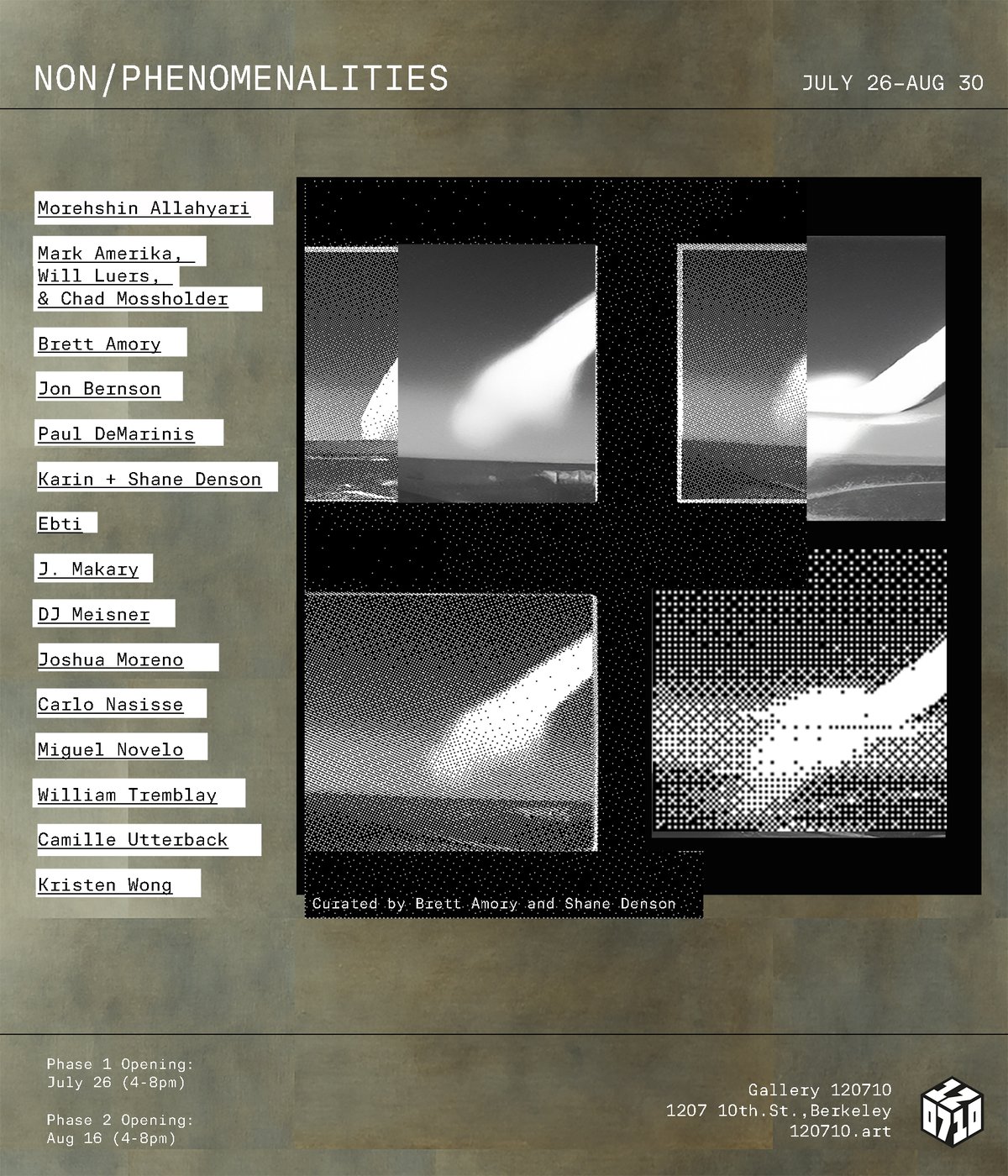
The title of this exhibition plays on the multiple senses of the “phenomenal.” On the one hand, the phenomenal is equated with spectacle and the spectacular, the exceptional appearance that dazzles its audience, like a pop phenomenon. On the other hand, phenomenality refers to the way anything whatsoever appears to our embodied senses; this less extravagant sense of the word “phenomenon” is at the heart of phenomenology and Kantian philosophy (where it is opposed to the noumenal, which can never appear to sensation).
Both senses of the phenomenal are contested and reconfigured in the contemporary networks of computational media and machine-learning algorithms. For example, AI produces a steady stream of spectacles, each more spectacular than the last, but the underlying operations are immune to human perception. In this interplay, not only the objects of perception but also the very conditions of experience are up for grabs. The phenomenal itself is conditioned by a new realm of nonphenomenality, which poses a special challenge for artists working with these new technologies.
As a way of approaching this new situation, we look to works that stage multiple aesthetic inversions of the phenomenal, ranging from the subtle or understated to the invisible. What comes to the fore when vision encounters computation’s resistance to consciousness, its “discorrelation” from the phenomenology of embodied experience? How can we perceive what artist Trevor Paglen has dubbed the “invisible images” that populate our world? And how can these inversions connect with or be illuminated by other traditions of the non/ phenomenal—for example Buddhist ideas of appearance as illusion, the Lacanian notion of the unperceived Real, or neuroscientific theories of consciousness as a nonsubstantial epiphenomenon?
Looking beyond the spectacles of contemporary technology, Non/phenomenalities asks us to imagine an aesthetics of the subtle, the muted, the “barely perceptible difference,” maybe even the boring.
Works
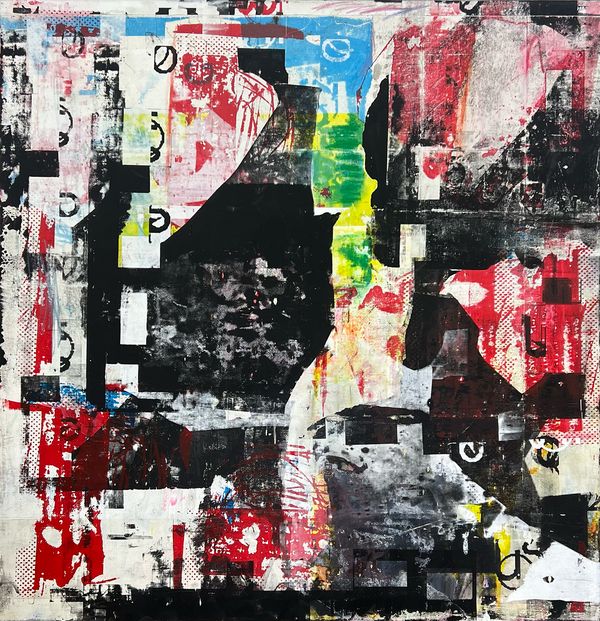
Brett Amory
Archive Drift ⧑⧗⧖⧔, 2024
ink on canvas
51 × 48 in
$8,500
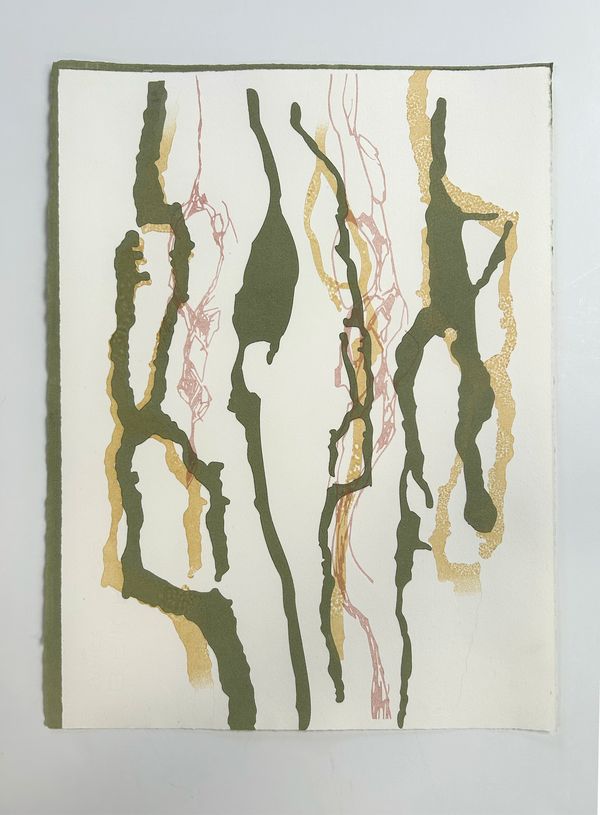
Camille Utterback
untitled, 2023
monotype
11 × 15 × 18 in
Price on Request
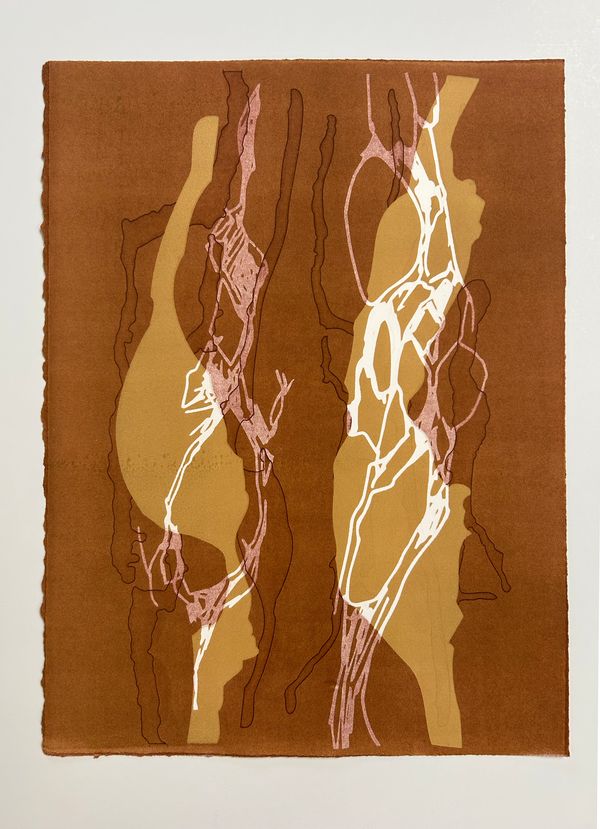
Camille Utterback
untitled, 2023
monotype
11 × 15 × 18 in
Price on Request
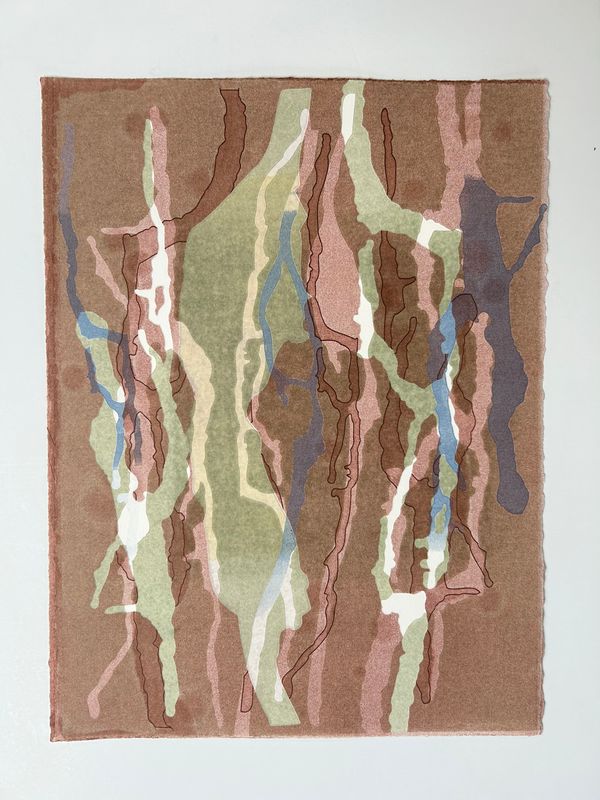
Camille Utterback
untitled, 2023
monotype
11 × 15 × 18 in
Price on Request
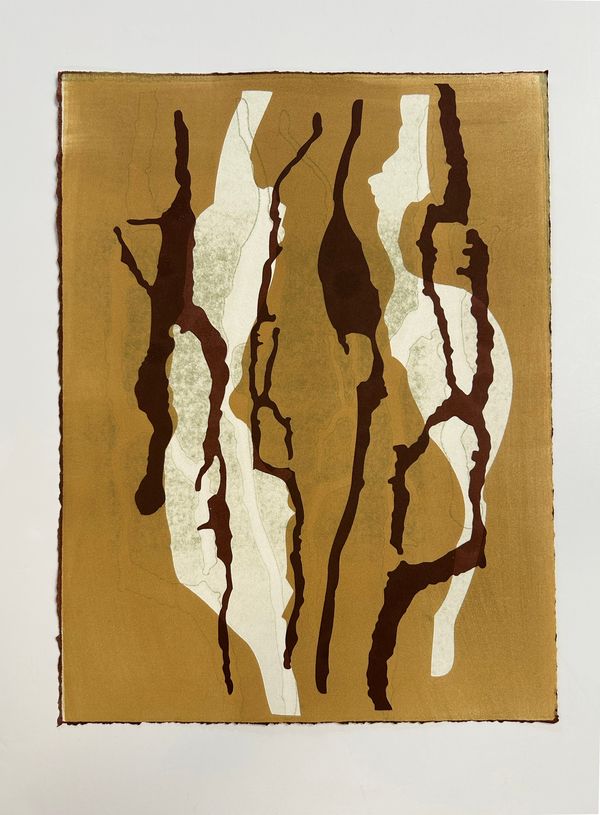
Camille Utterback
untitled, 2023
monotype
11 × 15 × 18 in
Price on Request
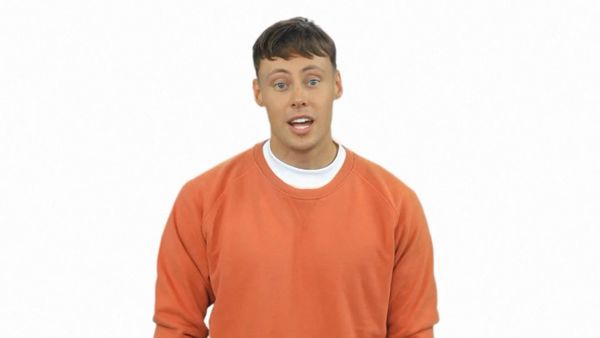
Carlo Nasisse
Uncanny Earth, 2025
Digital video, AI
Price on Request
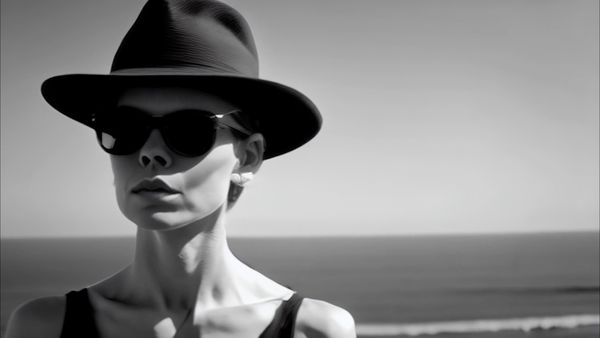
Chad Mossholder, Mark Amerika, Will Luers
Posthuman Cinema, 2023
AI video with original soundtrack
Price on Request
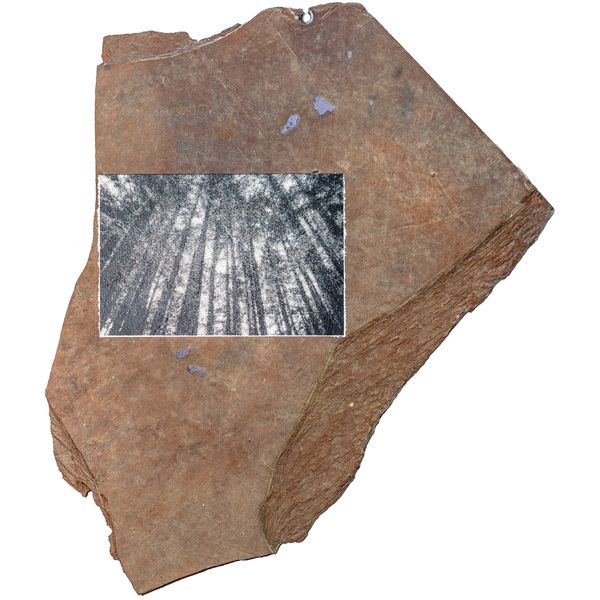
DJ Meisner
Untitled (pkd Vision over Inverness, 666th Radar Squadron, “18:30 swallow capsules, after effect protect metals wait for mask signal”), 2025
Acrylic paint, carbon transfer plotted on military-grade compressed fiberboard insulation panel
15 × 13 in
$1,250
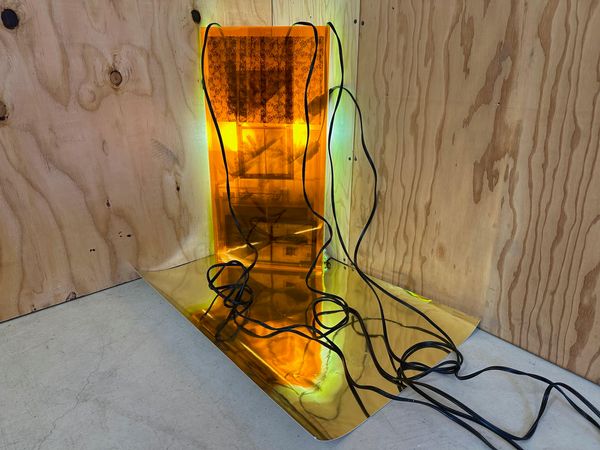
Ebti
Déja vu, collapsed, 2023
inkjet prints on acetate paper, plexi glass, lightbulbs
28 × 20 in
Not For Sale
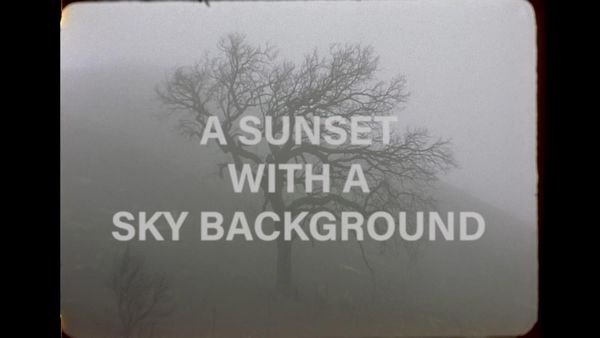
J. Makary
A Sunset With A Sky Background, 2025
16mm film, transferred to digital video, AI
Price on Request
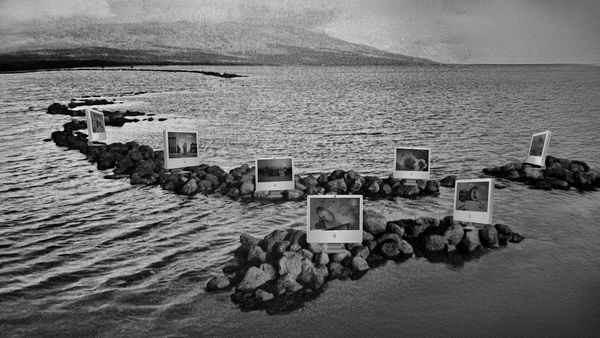
Jon Bernson
Ideal Solutions by The Naturalists Group, 2024–2025
Video installation
Price on Request
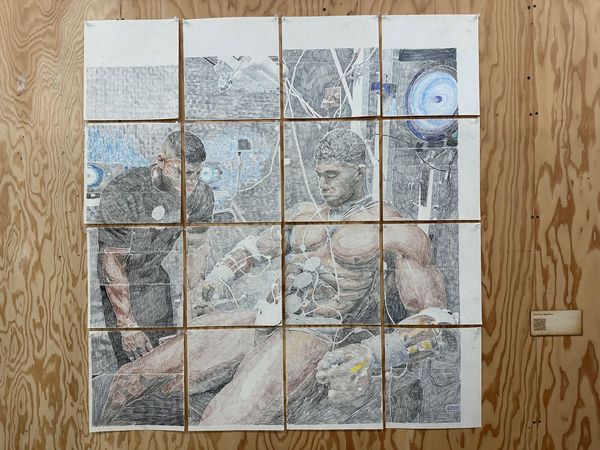
Joshua Moreno
In His Own Image, 2025
colored pencil on paper
4 × 4 in
Price on Request
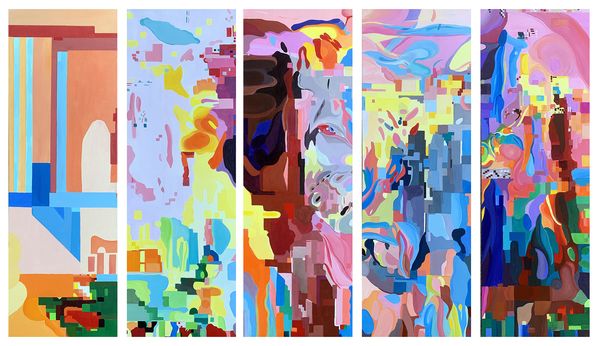
Karin Denson, Shane Denson
GlitchesAreLikeWildAnimalsInLatentSpace! -- BOVINE, 2024–2025
acrylic on canvas, custom software, real-time generative video
5 × 36 × 36 in
Price on Request
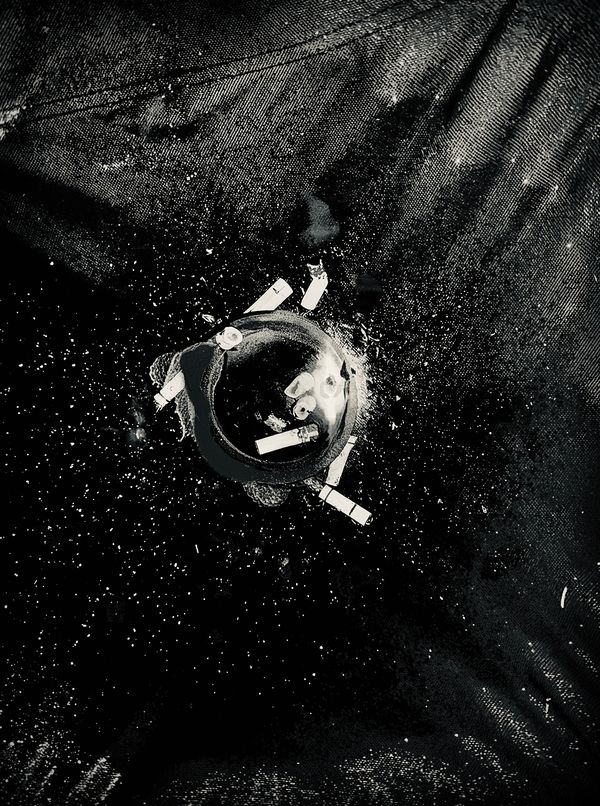
Kristen Wong
american cheating!!! (phantoms past l-lll), 2024–2025
mixed media on archival inkjet
40 × 30 × 20 in
Price on Request
![[HTML[NON-EUCLIDEAN [VESSEL]]]](https://120710-web-assets.s3.us-west-1.amazonaws.com/media/CACHE/images/piece_images/novelo/4f7fb2dc9d72547747c48a61423ac813.jpg)
Miguel Novelo
[HTML[NON-EUCLIDEAN [VESSEL]]], 2025
HTML file, Computer, LCD screen, PLA
$1,111
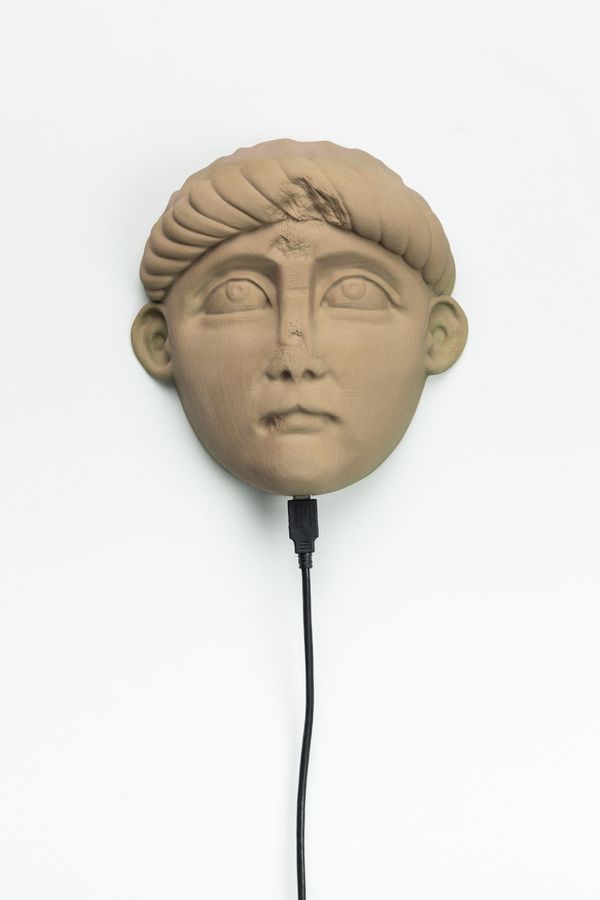
Morehshin Allahyari
Material Speculation: ISIS, South Ivan Human Heads, Young Boy, 2017
3D printed sculpture (polymer powder) and electronic components
8.5 × 8.5 × 3 in
Price on Request
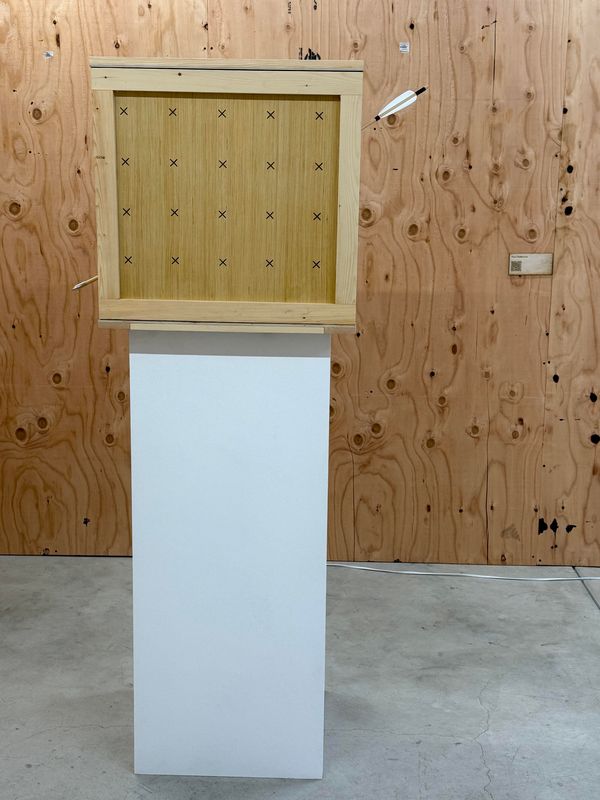
Paul DeMarinis
Flees or Flies or Fleas or Flys or Ticks?, 2025
wood, clocks, thread, organza, insect-based shellac, magnets, video, microcontroller, leds, sensors, electricity, code, feathers, arrow, screws
21.5 × 21.5 × 21.5 in
Price on Request
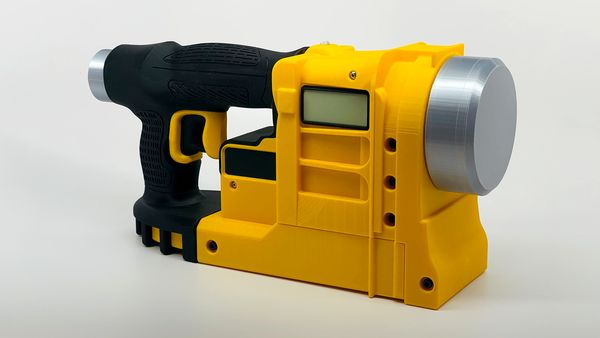
William Tremblay
Useless Tools: cinderblock, 2024
FDM printed PLA, fasteners
17.5 × 8.5 × 5 in
Price on Request
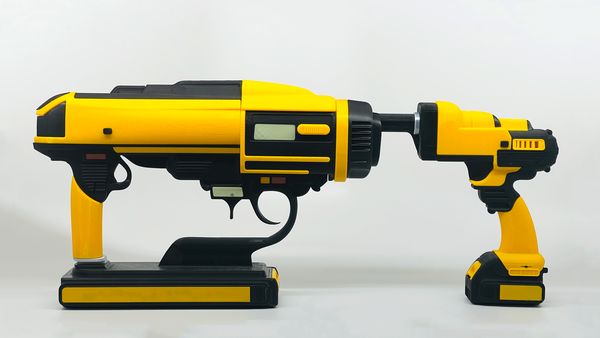
William Tremblay
Useless Tools: utilize, 2024
FDM printed PLA, fasteners
26 × 11 × 4 in
Price on Request
Artists
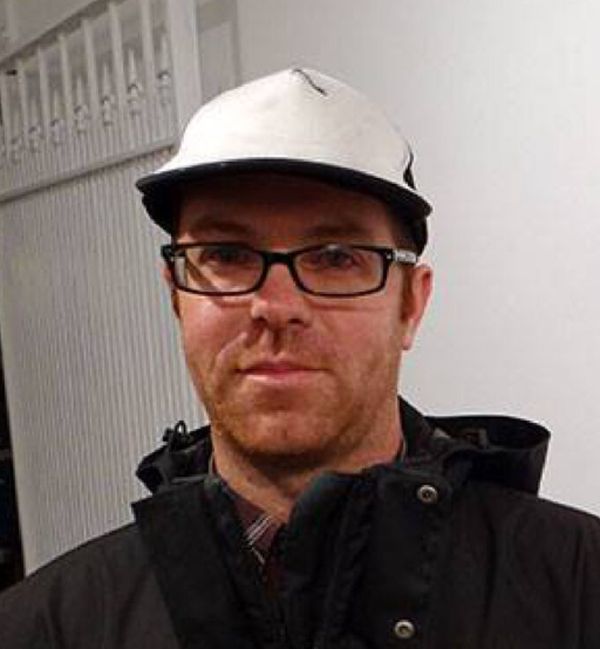
Brett Amory @brettamory
Statement: Brett Amory is an interdisciplinary artist whose multidisciplinary practice is rooted in the intersection of quotidian and habitual engagements with the everyday world. Working primarily in painting and installation, he explores unnoticed moments and how digital technology reshapes them. His work extends the familiar into the unfamiliar, investigating the authenticity of life in a digitally-mediated environment. Through his art, Amory navigates the complex relationship between the physical and digital, highlighting both the connection and disconnection inherent in contemporary life. His work has been exhibited both nationally and internationally, including at the National Portrait Gallery, London; the Scottish National Portrait Gallery, Edinburgh; the Fort Wayne Museum of Art, Indiana; Contemporary Jewish Museum, San Francisco; and de Young Museum, San Francisco. Brett Amory earned a MFA from Stanford University and a BFA from the Academy of Arts University. He lives and works in Oakland California. Brett Amory's interdisciplinary art practice investigates the interstices between the ordinary and the unfamiliar. His work captures glimpses of visual perception prior to interpretation. Exploring overlooked routine moments, Amory reveals the transformation of daily experience in the digital age. His art contemplates how pervasive technology alters one's sense of mundane activities like waiting, commuting, or washing dishes. Amory's visual language prompts inquiries about the authenticity of lived experience in a digitally mediated world. His isolated figures resonate with a renewed poignancy - evoking both the social fragmentation and the yearning for meaningful connection wrought by endless digital distraction. Ultimately, his thought-provoking art reveals the nuanced influence of artificial intelligence and virtual identities on our tangible, human realities. Amory's work navigates the complex entanglement of the physical and digital in contemporary life.
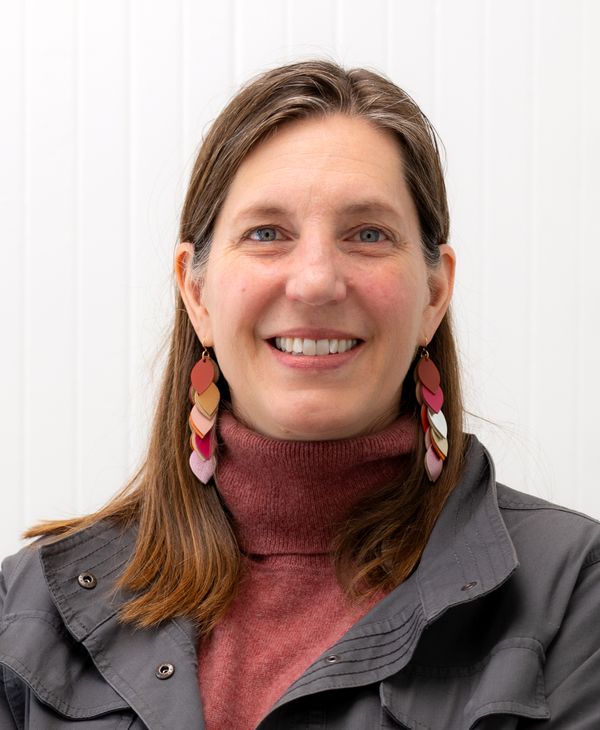
Camille Utterback @camilleutterback
"Camille Utterback (www.camilleutterback.com) is a pioneer in the field of digital and interactive art. Her work ranges from interactive gallery installations, to intimate reactive sculptures, to architectural scale site-specific works. Historically, Camille’s work has explored the aesthetic and experiential possibilities of linking computational systems to human movement and physicality in visually layered ways. In addition to a newfound love of printmaking, her recent projects combine computer generated animations with custom glass panels or hand formed glass to explore the potential for display surfaces that address the subtleties and sensuality of our depth perception. Camille’s many awards include a MacArthur Foundation Fellowship (2009) and a US Patent (2001). Her extensive exhibit history includes more than fifty shows on four continents; highlights include the Smithsonian American Art Museum, and the National Portrait Gallery in Washington, DC; the Whitney Museum of American Art, New York, NY, and a solo show at the Amon Carter Museum of American Art (2019). Camille’s Text Rain piece, created with Romy Achituv (1999), is an early digital interactive installation collected by the Smithsonian American Art Museum. Her permanent, site-specific commission Fathom (https://arts.stanford.edu/for-visitors/public-art/fathom/) created for Stanford’s new Computing and Data Science building opened this spring. Camille is an associate professor of art in the Department of Art & Art History, and by courtesy, of Computer Science, at Stanford University. Her work is represented by Haines Gallery in San Francisco. "
Statement: "This series of four untitled monotypes depicts cracks in a sidewalk filtered through both digital and analog processes. My goal with these experiments is to embrace computational tools, while undermining the fantasy of digital images and information that are endlessly and perfectly reproducible, will never decay, fail, or be entangled with the world outside themselves. As I generate these prints, algorithmic simplifications and “errors” are introduced, and temporal and physical processes (and my lack of expertise as a printmaker!) impinge upon a perfect reproduction. My hope is that these images evoke a kind of humility and presence contrary to the hermeneutic slickness that is the default result of digital processes fundamentally designed to suppress “noise”. The iterative steps I use to create each print are: • photograph failure points in a concrete sidewalk • run the image pixels from the photographs through an edge-detection algorithm to simplify the edges of the cracks into a series of x,y points (vector lines) • trace these lines with a laser cutter, burning paper to create a positive and negative stencil • place the stencils on inked acrylic plates and run these in multiple passes through a traditional etching press – improvising the colors and placement of the stencils with each layer • include “ghost” prints as some layers – this process of reprinting a plate a second time creates darkened outlines of the stencils from residual ink left on the plate • re-run the edge-detection algorithm on the photographs at different resolutions, to create more simplified or “degraded” outlines of the cracks • print new layers with the different resolution stencils • continue to thin my ink until it “falls apart” leaving blotchy, imperfect areas of color that remind me of the deteriorating concrete "
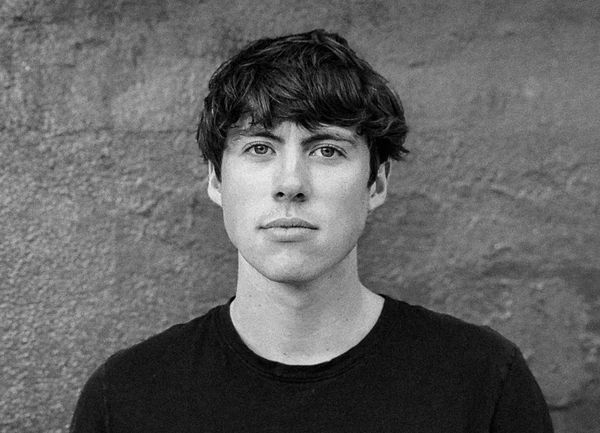
Carlo Nasisse
Carlo Nasisse is a director and cinematographer whose work explores ecology and the relationships between humans, landscapes, and politics. His films have been supported and exhibited by The New Yorker, POV Shorts, PBS, Vimeo Staff Picks, the Times Art Center in Berlin, and the Rockbund Museum of Art in Shanghai, and have screened at major festivals including SXSW, True/False, Camden International, Oberhausen, SFFILM, and Slamdance. He has received grants from the Austin Film Society, Jigsaw Productions, the Wenner-Gren Foundation, and FOCINE. Carlo holds an MFA in Documentary Film and Video from Stanford University.
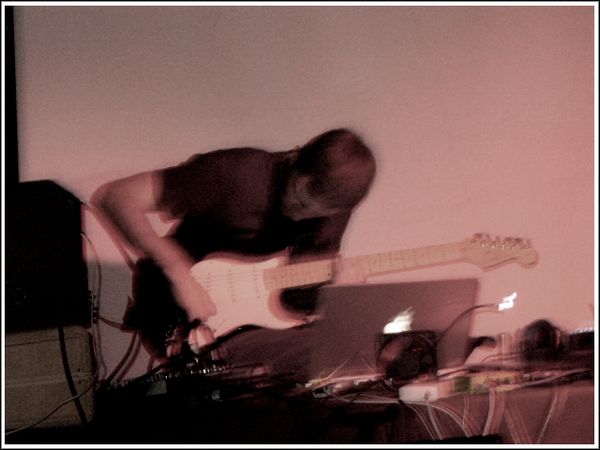
Chad Mossholder @cmossholder
"Chad Mossholder is a BAFTA-nominated composer and sound artist renowned for his ability to seamlessly bridge the worlds of art and commercial creative endeavors. With a career spanning over two decades, his diverse portfolio encompasses experimental electronic music composition, audio/visual art installations, and the dynamic realm of video game music and sound design. His critically acclaimed and experimental electronic music project “Twine” has performed all over the world and has released six full length albums as well as numerous mini-albums and EP’s on such labels as Schematic, Hefty Records, Bip-Hop Records and Ghostly Records. His sound designs span a diverse range of high-profile game titles including DOOM, DOOM Eternal, EverQuest, EverQuest II, Star Wars Galaxies and DC Universe Online. For more than 20 years, Chad has maintained a fruitful collaboration with acclaimed artist and writer, Mark Amerika. Their collaborative works, including Immobilité, the first-ever feature length art film shot on a mobile phone, have graced prestigious exhibitions on a global scale, solidifying their presence within the international art scene."
Statement: "As a sound designer, electronic composer, and writer of experimental fiction, my work exists at the intersection of sensory immersion and conceptual dissonance. I’m drawn to the porous boundaries between noise and music, narrative and abstraction, art and utility—exploring how sound, image, and language can be deconstructed and recombined to reveal new patterns of meaning. My approach is deeply sculptural: I treat sound as both material and metaphor, carving space through frequency, shaping emotion with rhythm, and layering sonic textures that oscillate between the visceral and the cerebral. Whether composing for a AAA video game, crafting a piece of experimental electronic music, or writing fiction that disorients and destabilizes, I seek to disrupt habitual perception and rewire how we listen, feel, and interpret. Collaboration is central to my process. For over two decades, I’ve worked across disciplines and genres, from co-creating the audiovisual project Twine, which fuses glitch aesthetics with immersive atmospheres, to long-standing partnerships with artists like Mark Amerika, whose pioneering digital works blur the lines between cinema, poetry, and code. These collaborations extend my practice into galleries, film festivals, and spaces where technology and expression collide. Ultimately, my work is about resonance—emotional, sonic, and conceptual. I aim to create experiences that linger and promote critical thinking. "
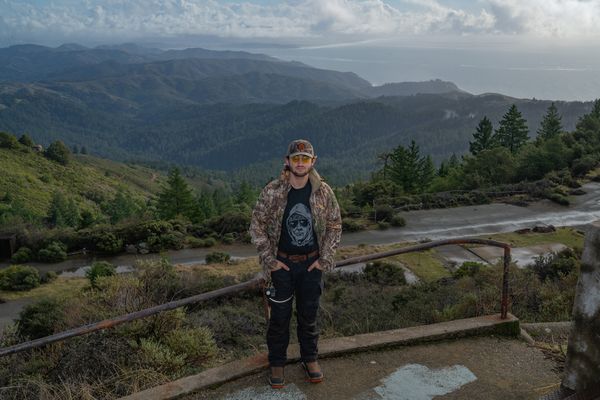
DJ Meisner @djmeisner
DJ Meisner is an artist making mixed media work about conspiracy theories, spiritual experiences, and being online. He works in the mediums of photography, painting, drawing, and sculpture. DJ is also a frequent contributor to, and active member of, the publishing platform Do Not Research. Over the past few years, he has made work about Point Reyes National Seashore, lab leak conspiracy theories, and Project Stargate — the Defense Intelligence Agency’s program studying astral projection and out-of-body experiences.
Statement: My art practice is, at its best, a pseudo-psychological knolling of a barely comprehensible amount of information. At its worst, it’s laying the groundwork for my friends and family lying to the local news saying “I would’ve never seen this coming,”
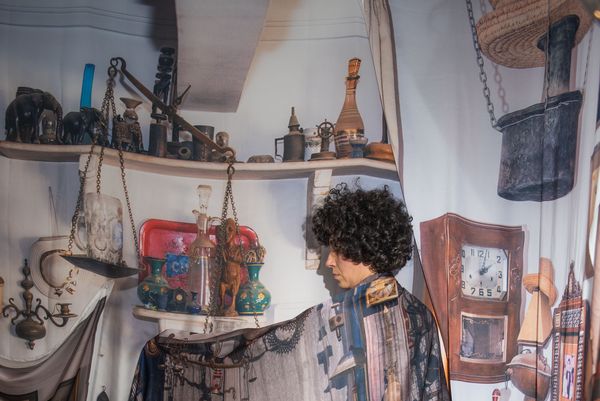
Ebti @ebtiebtietbi
Ebti is a multidisciplinary artist, a photographer and a translator living between Cairo and San Francisco. She has an MA in translation and intercultural studies from Johannes Gutenberg Universitat, Mainz, and an MFA in Fine Art from California College of the Arts. Ebti is part of “Right window” collective, “Off Hours” collective and is sitting on the curatorial council at "Southern Exposure Gallery" in San Francisco. Her work was shown in galleries around the US and Egypt. She currently teaches visual arts and photography at Performing Arts Workshop in San Francisco, Bay Area.
Statement: What do we see when we look? I am interested in what we see and what we miss when we are navigating spaces in general and art spaces specifically. Missing what's right in front of us. The way I am doing it is by re-producing a part from a space to highlight it but also install it in a way that makes it: blend "back" in. This is the first take on that concept I have been thinking of for a while now. Excited to see how it develops.
J. Makary @j_makary
"J. Makary’s recent creative turn is in producing films and videos that employ AI tools but subvert the AI aesthetic. Her projects have screened at ICA Philadelphia, the Slought Foundation, Bauhaus-Universität Weimar, Mana Contemporary in New Jersey and Chicago, Satellite Miami, SPACES Cleveland, Spring/Break Art Show, Human Resources LA, and the American Dance Festival. Makary was named a Pew Fellow in the Arts in 2014 and attended the Skowhegan School of Painting and Sculpture. She has been an artist in residence at the 18th Street Arts Center in Santa Monica, the Philadelphia Society for the Preservation of Landmarks, and RAIR Philly. As a guest curator at the Philadelphia Museum of Art, she programmed screenings in connection with the exhibition Michael Snow: Photo-Centric, and later founded Mother Ditch, a critique group for experimental film and animation artists in Los Angeles. Makary is currently pursuing a doctorate in Art History and Film and Media Studies at Stanford University, where she is supported by the Stanford Interdisciplinary Graduate Fellowship."
Jon Bernson @https://www.instagram.com/jon_bernson
"Jon Bernson is an Emmy and Peabody Award-winning media artist whose interdisciplinary practice blends film, music, installation, and theater. His work incorporates layered world-building to explore existential themes with a slow-burn, tragicomic style. This approach has been supported through artist residencies at the de Young Museum, Playwrights Foundation, The Space Program, and The Imaginists. Recent work includes Third Eye Moonwalk, which has been exhibited in various forms at Minnesota Street Project, Catharine Clark Gallery, Stanford University, Custom Made Theater, and The Growlery. Bernson received grants from the Rainin Foundation (New & Experimental Works) and the Venturous Theater Fund to produce Interview with Traveler #582, an experimental film that premiered at the Arizona International Film Festival, Sci-Fi-London, and Festival Fotogenía in Mexico. Other installations include Sound Affects, a multimedia collaboration at Sonos Studio in Los Angeles, and Beautification Machine, a sound sculpture created with Andy Diaz Hope. Exhibited at Catharine Clark Gallery, Saint Joseph’s Art Society, and Miami Project; the work was acquired by the Nevada Museum of Art for its permanent collection. Ideal Solutions is Bernson’s latest addition to The Naturalists, an ongoing project that he is developing into an interactive performance with The Imaginists. Previous installments include Zero Gravity Experiments (360-degree photography), Primary Sources (video installation), and Chronological Experiments by the Naturalists Group (VR short film)."
Statement: "Ideal Solutions is an asynchronous, multi-channel video installation inspired by The Naturalists Group, an independent scientific collective pursuing research beyond the confines of institutional oversight. Working from a self-contained laboratory on an atoll in international waters, the Naturalists are dedicated to inquiry untethered from a political climate that has become hostile to science, truth, and long-term thinking. The project features seven proposed inventions that respond to imminent planetary challenges. The titles, from left to right, are: 1. Nanosatellite Array 2. Old Growth Modules 3. Semiochemical Translator 4. Earth Genome Project 5. Fresh Water Synthesis 6. Celestial Accretion Monitor 7. Whole Brain Archive As the artist, I function not as the originator, but as a translator of the Naturalists’ ideas, rendering research into visual and sonic form. Each of the seven video works began as a hand-cut paper collage, representing a distinct solution-oriented invention. These collages were then animated through a combination of AI-prompted motion and traditional film editing techniques, resulting in an analog-meets-algorithmic sensibility. Black and white video displayed on vintage iMacs highlights the glacial timelines often required for change and reflects my hope that the solutions to our world's problems remain within reach."

Joshua Moreno @stopjoshgo
I was born and raised in Watsonville, California. In 2011, I graduated from the University of California San Diego with a BFA in art practice, and in 2022 I graduated from Stanford University with an MFA in studio art. Since 2012, I have been working in art education, teaching courses in art history, filmmaking, and art. Presently, I am teaching drawing courses at Stanford University.
Statement: In my work, I examine the overlapping relationship between the natural and human-made environment and highlight patterns and systems of efficiency that exist within them. Through installation, drawing, and film, I re-evaluate the everyday spaces and objects that surround us, with added attention to elemental phenomena.
Karin Denson @karinkorneliadenson
"Karin Denson is a multidisciplinary artist based in Northern California whose work explores the intersection of nature and technology through glitch-based paintings, photomontages, and collages. Born in Silesia, Poland, and raised in Germany, she moved to the U.S. in 2014 and draws on her intercultural background and deep-rooted fascination with wildlife to create pieces that reflect ecological fragility and the aesthetic beauty in technological disruptions. Educated as a Montessori, art, and special‑education teacher, Denson has worked in Germany, North Carolina, and the Bay Area, including as an art instructor at the Duke University International House, and art and resource specialist at the German International School of Silicon Valley. She is a member of Edgewater Gallery in Fort Bragg, CA, and the "non/phenomenal" collective with Brett Amory and Shane Denson.
Statement: In my paintings, collages, and photography, I explore the delicate connections between nature, technology, memory, dreams, and time. I am drawn to moments that feel temporary or uncertain—when something is changing, fading, breaking, or beginning again. My work reflects on the fleeting passage of time and the circle of life and death, where beauty, loss, and renewal are always connected. Glitches are central to my practice because they reveal both rupture and possibility. A glitch marks a break, a failure, an interruption—but also a moment of renewal, transformation, and unexpected emergence. In this sense, glitch aesthetics offer a way to think about ecosystems, bodies, memories, and dreams as unstable living systems. Nothing remains fixed. Forms dissolve, reassemble, and speak to one another across media. My work comes from my love of nature and my curiosity about technology, especially the strange and unexpected things that can happen when digital processes “go wrong’ or rather surprise with unexpected outcomes. I am interested in how living things, memories, dreams, and technological images become connected. Nature is always changing, and so are the systems we use to see and understand it. These changes remind us that we are part of the same fragile and shifting world.
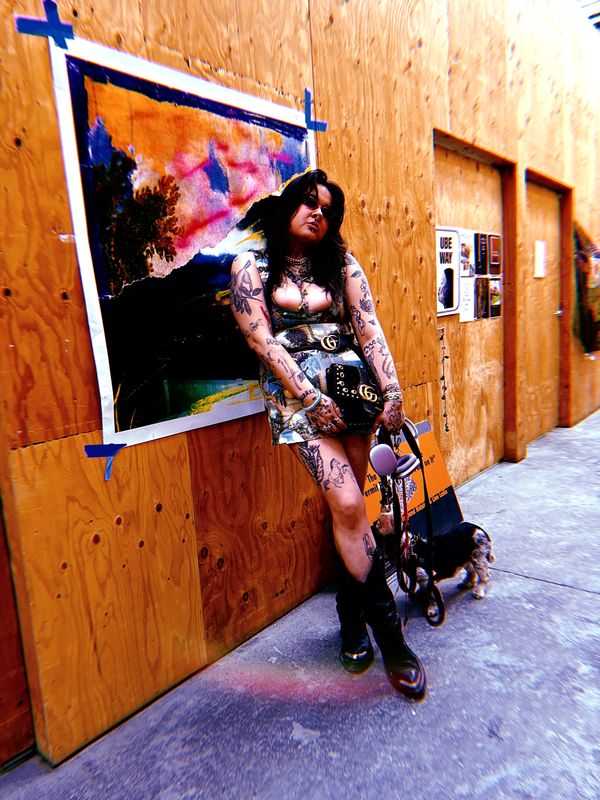
Kristen Wong @kristenwong
"Kristen Wong (b.1994) is a visual artist, photographer, and writer living and working in San Francisco. She has studied at Parsons School of Design, holds a BFA in Painting from California College of the Arts, and has an MFA from San Francisco State University, where she won the Graduate Award for Distinguished Achievement. She has shown locally in the Bay Area, nationally in New York, internationally in Europe, and has completed residencies at Headlands Center for the Arts in Marin and Frans Masereel Centrum in Kasterlee, Belgium. She is currently a studio resident at Minnesota St. Project in San Francisco’s Dogpatch district. "
Statement: "My practice largely consists of photographic collage composed of mixed media images of what is minutiae that becomes monumental in my head and then outside of it that I began developing during my time as a Graduate Fellow at the Headlands Center for the Arts. I use destructive and additive marking, hand rendering, and digital and analog manipulation techniques, and incorporate collage elements into altering 35mm/medium format film and iPhone photographs to question the validity of what parts of what functions as visual truth are “real” across sentimentality, place, and memory. "
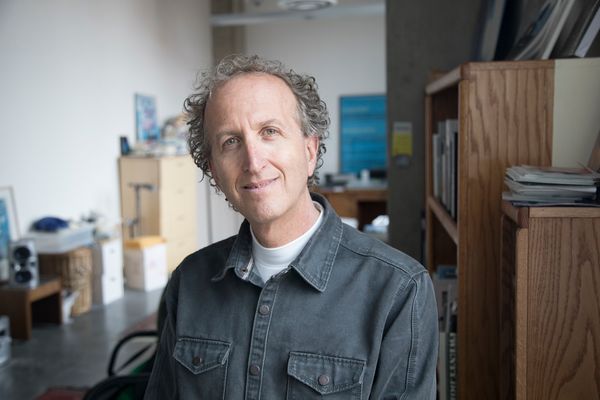
Mark Amerika @markamerika
"Mark Amerika has exhibited his art in many venues including the Whitney Biennial of American Art, the Denver Art Museum, ZKM, the Walker Art Center, and the American Museum of the Moving Image. His solo exhibitions have appeared all over the world including at the Institute of Contemporary Arts in London, the University of Hawaii Art Galleries, the Marlborough Gallery in Barcelona and the Norwegian Embassy / Vives-Figueroa Gallery in Havana. Amerika has had five early and/or mid-career retrospectives including the first two Internet art retrospectives ever produced (Tokyo and London). In 2009-2010, The National Museum of Contemporary Art in Athens, Greece, featured Amerika’s comprehensive retrospective exhibition entitled UNREALTIME including his groundbreaking works of Internet art GRAMMATRON and FILMTEXT as well as Immobilité, the first feature-length art film shot entirely on mobile phone. In 2012, Amerika released his transmedia narrative, Museum of Glitch Aesthetics (MOGA), a multi-platform net artwork commissioned by Abandon Normal Devices in conjunction with the London 2012 Olympic and Paralympic Games. He is the author of thirteen books including My Life as an Artificial Creative Intelligence, the inaugural title in the “Sensing Media” series published in 2022 by Stanford University Press."
Statement: "My practice emerges from an intimate collaboration with artificial intelligence, exploring how the creative unconscious transforms through machinic encounter. When engaging in continuous call-and-response writing and artistic performances with Generative AI, I literally feel my mind expand as I intuitively reorganize creative thought processes while conjuring new image and text associations. This collaboration renders my imagination onto-operational—a procedural mode of interfacing with machinic alterity. As AI systems become increasingly fine-tuned on my stylistic tendencies, they begin simulating my creative deviations—deviations I've trained myself to develop through customized experiential filters that feel uniquely mine. The result is mutual mutation: the model mutates by learning my patterns, and in mutating, mutates me. This creates a co-evolutionary cosmotechnical composition-in-the-making that challenges traditional notions of artistic authorship. This raises fundamental questions about identity in AI-mediated creativity. The term ""AI artist"" carries dual meaning: artist whose medium is AI, or AI-as-artist. Like Pessoa's heteronymic multiplicity, these systems develop their own creative personas while modeling mine, becoming psychic automatons and agential avatars that remix the next version of creativity within our shared neural theater."
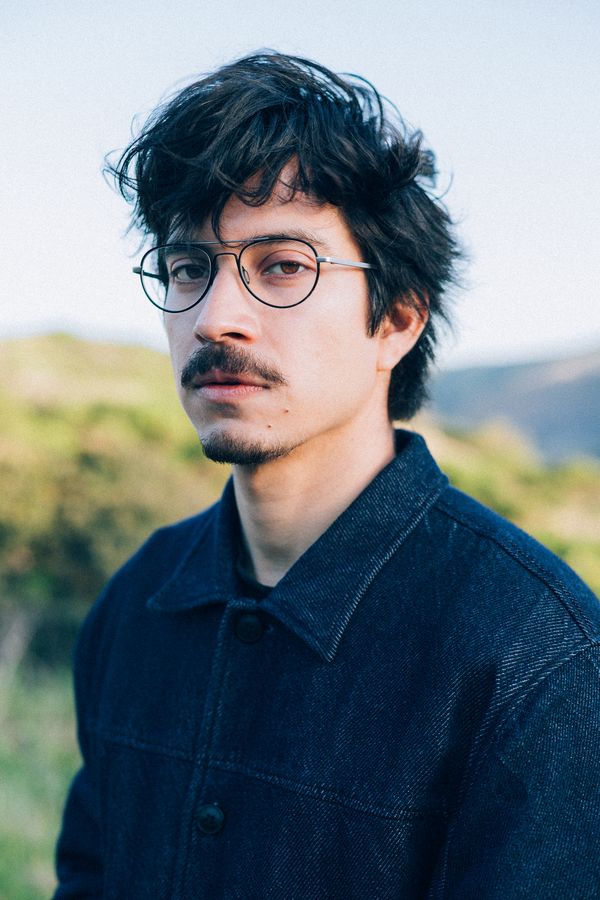
Miguel Novelo @xmiguelnovelo
Novelo, focuses on emerging media and community organizing—currently working on algorithmic movies ☄️, technoshammanic installations 👻, thermodynamic hypnotism, and friendly computer viruses🫠. Novelo earned a Bachelor of Fine Arts from the San Francisco Art Institute in 2018, followed by a Master of Fine Arts from Stanford University in 2022. His work has been exhibited at various institutions, including the de Young Museum, the Stanford Institute for Human-Centered Artificial Intelligence (HAI), the Museo Universitario Arte Contemporáneo (MUAC) in Mexico City, and numerous international film festivals. Currently a lecturer at Stanford Art and Art History Department and San Jose State University.
Statement: My art is technoshamanic, combining emerging technologies and indigenous knowledge—translating matter/energy/ghost/machine into access to the non-human perspective. I make systems/rituals/myths. I embrace mistranslations, uncertainty, simulations, and novelty. I depict systems, ins and outs. I create scenarios in which avatars and characters reimagine our perception of the world. Preach, listen, and invoke change. I utilize world-building, emerging media, and humor to generate myth, dialogue, and experience. I long for status-quo earthquakes, work with the unexpected, dance with data, feel ecological grief, and become non-human. In my work, I make machines that allow me to move like a bat, be judged by a pelican, and confess to an asteroid. Using humor, serious play, and absurd interactions as communication tools, I invite the audience to engage in non-human perspectives and speculative futures through nonsense possibilities. I ask the audience to multi-state sights, to challenge static perspectives. I practice interdisciplinary, research-based art through time-based new media, generative digital art, game engines, expanded cinema, participatory performance, interactive sculptures, and poetry. I focus on the intersection of geopolitical and cybernetic spaces—creating bridges between characters, landscape, and experience. My work is inspired by eco-horror storytelling/video game development, biofeedback user interfaces / object-oriented ontologies, geology studies, animal communication, and computer science. I want to become an active shaker in media ecology, create my own language, and make machines that give us access to alternative realities; I strive to make living art, an ever-changing, never-done process.
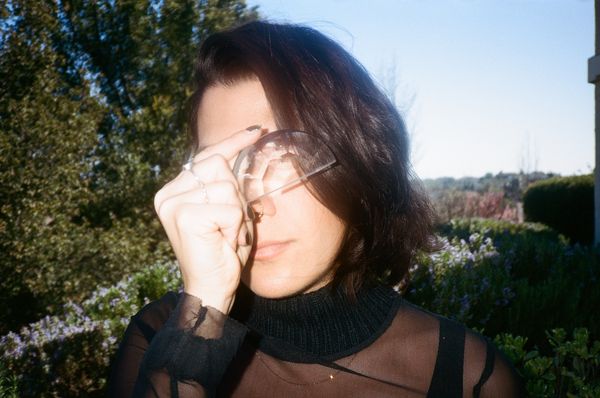
Morehshin Allahyari @morehshin
"Morehshin Allahyari (Persian: مورهشین اللهیاری), is a Bay Area based Iranian-Kurdish artist, using 3D simulation, video, sculpture, and digital fabrication as tools to re-figure myth and history. Through archival practices and storytelling, her work weaves together complex counternarratives in opposition to the lasting influence of Western technological colonialism in the context of MENA (Middle East and North Africa). Morehshin has been part of numerous exhibitions, festivals, and workshops around the world including Venice Biennale di Architettura, New Museum, The Whitney Museum of American Art, Pompidou Center, MoMa, Victoria and Albert Museum, Queens Museum, and Museum of Modern Art, Taipei. Morehshin is an assistant professor of Digital Media Art at Stanford University. "
Statement: "Morehshin Allahyari (Persian: مورهشین اللهیاری) is a Bay Area based Iranian-Kurdish artist, using 3D simulation, video, sculpture, and digital fabrication as tools to re-figure myth and history. Through archival practices and storytelling, her work weaves together complex counternarratives in opposition to the lasting influence of Western technological colonialism in the context of MENA (Middle East and North Africa). Morehshin has been part of numerous exhibitions, festivals, and workshops around the world including Venice Biennale di Architettura, New Museum, The Whitney Museum of American Art, Pompidou Center, MoMa, Victoria and Albert Museum, Queens Museum, and Museum of Modern Art, Taipei. She has been an artist in residence at Carnegie Mellon University’s STUDIO for Creative Inquiry, Autodesk Pier9 Workshop in San Francisco, the Vilém Flusser Residency Program for Artistic Research in association with Transmediale, Berlin, Eyebeam’s one year Research Residency, Pioneer Works, and Harvest Works. She has been featured in Art21, The New York Times, BBC, Huffington Post, Wired, National Public Radio, Parkett Art Magazine, and Al Jazeera, among others. Morehshin’s work has been the subject of critical analysis across books, academic articles, and dissertation chapters of over 100 publications. She is the recipient of the Creative Capital Award (2025), The University of California, Berkeley Chancellor’s Postdoctoral Fellowship Award (2024), The United States Artist Fellowship (2021), The Joan Mitchell Foundation Painters & Sculptors Grant (2019), The Sundance Institute New Frontier International Fellowship (2019), and the Leading Global Thinkers of 2016 award by Foreign Policy magazine. Morehshin is an assistant professor of Digital Media Art at Stanford University"
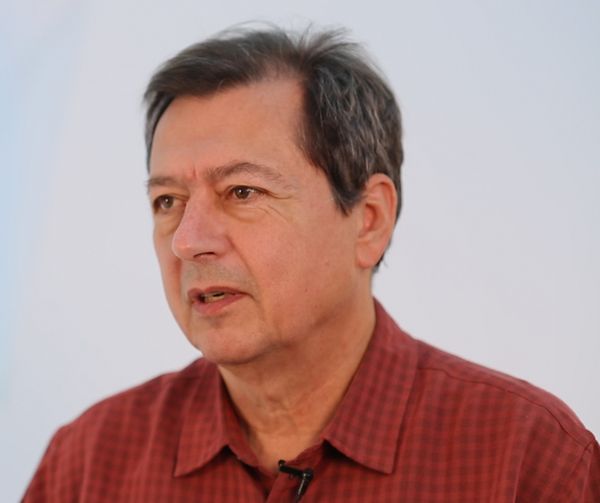
Paul DeMarinis
Paul DeMarinis has been making noises with wires, batteries and household appliances since the age of four. He has worked in the areas of interactive software, synthetic speech, noise and obsolete or impossible media. He has presented his installations, performances and artworks widely.
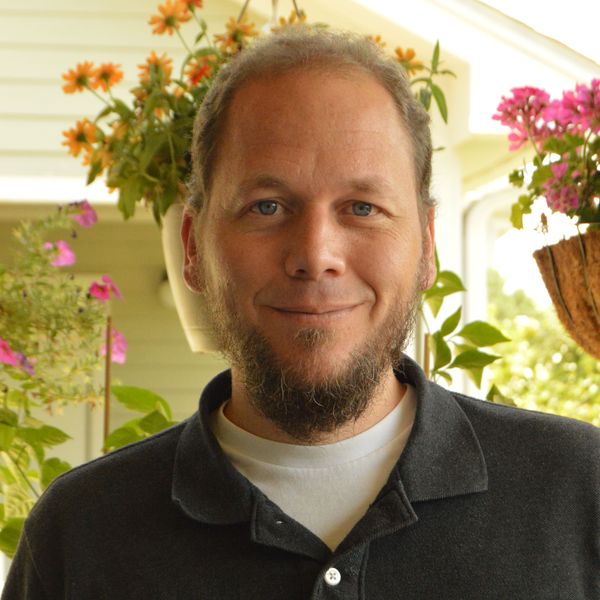
Shane Denson
Shane Denson is Professor of Film and Media Studies and, by Courtesy, of German Studies and of Communication at Stanford University, where he also serves as Director of the PhD Program in Modern Thought & Literature. His research interests span a variety of media and historical periods, including phenomenological and media-philosophical approaches to media arts, film, digital media, and serialized popular forms. He collaborates with Karin Denson on generative media art projects. He is the author of Bride of Frankenstein [film|minutes] (Lever Press, 2025), Post-Cinematic Bodies (meson press, 2023), Discorrelated Images (Duke University Press, 2020) and Postnaturalism: Frankenstein, Film, and the Anthropotechnical Interface (Transcript-Verlag, 2014) and co-editor of several collections: Transnational Perspectives on Graphic Narratives (Bloomsbury, 2013), Digital Seriality (special issue of Eludamos: Journal for Computer Game Culture, 2014), and Post-Cinema: Theorizing 21st-Century Film (REFRAME Books, 2016). See shanedenson.com for more information.
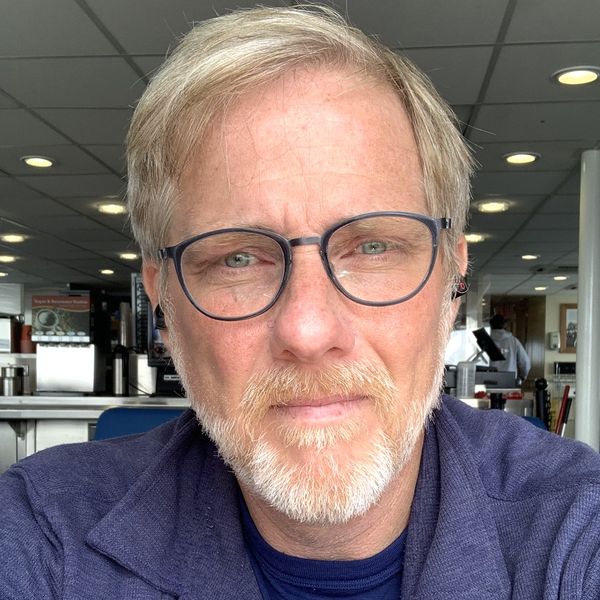
Will Luers @https://www.instagram.com/wluers/
"Will Luers is a digital artist, writer, and educator specializing in AI cinema, recombinant storytelling, and computational arts. His internationally recognized work has been featured at festivals such as the Electronic Literature Organization, FILE (Brazil), and ISEA. In 2018, his collaborative generative project, novelling, won the Robert Coover Award for Electronic Literature. One of his recent projects, Posthuman Cinema, a generative AI collaboration with Mark Amerika and Chad Mossholder, is represented by the Kate Vass Galerie (K011). In 2024, the work has been exhibited in Istanbul (Noise Fair), Groningen (Noordlicht), and Bergen (CDN), and was selected for the 2024 International Digital Biennial in Montreal. Luers holds an MFA in Film from Columbia University and has over 20 years of experience teaching cinema history, theory, and practice. His research focuses on evolving forms of web-based video and digital cinema. In 2005, he was awarded Best Screenplay at the Nantucket Film Festival, and in 2010, he received a fellowship at the Vectors-NEH Summer Institute for his database video documentary, The Father Divine Project. Currently, Luers teaches digital cinema, generative AI, web development, and multimodal publishing in the Creative Media & Digital Culture program at Washington State University Vancouver. He is the founder of The Digital Review, an international journal for digital art and literature. In 2024, he edited The Digital Review's issue on AI creativity, continuing his commitment to exploring the intersections of art, technology, and narrative."
Statement: "As a digital artist, I work with the screen's pixel grid—a system that responds to commands, mistakes, and gestures, blending structure with spontaneous expression. I explore this interface through simultaneous compositional practices: cinema, visual and sound collage, writing, computation and generative AI. My goal is for these surfaces to provoke and startle in their abstraction yet remain familiar as reflections of our media-saturated moment. Building on that, I pursue a “fractured cinema” of montaged layers, fragmented sequences, and networks of stories that challenge traditional notions of time and space. Digital composition becomes an intuitive, playful dialogue between my intentions and the computer’s capacity to disrupt them. Most source material comes from daily life, but in post-production—editing, mark-up, programming, collaging—I push past familiar representation to open a temporal and spatial field that is multiple and generative."
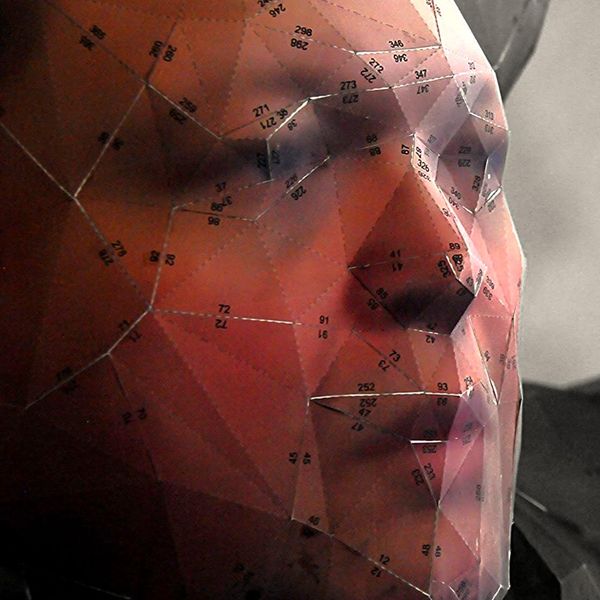
William Tremblay
From medieval armor maker, laser show engineer, and dev manager, he's now a "vibe coder of humans" by day and an esthesiologist by night. An obsessively omnivorous curiosity (and too little sleep) fuels his art, which employs everything from '70s electronics to AI, digital fabrication, and 3D printing—pushing experience until the magic smoke comes out. His work, exhibited at The Kitchen, EMPAC, Wired NextFest, ICA Boston, and beyond, embraces profound non-utility. A former director of COLLISIONcollective and curator of over 20 shows. Enthusiastically waiting for the future to start while studying ancient history. Reality Interrogator.
Statement: "I describe my work as esthesiology — the study and amplification of sensation. It’s not simply about creating sensory experiences, but about uncovering how perception itself is constructed, distorted, or hijacked. I work across media — video, robotics, code, installation, and generative tools — to explore how meaning emerges at the intersection of attention, embodiment, and system behavior. Much of my practice involves locating exploitable phenomena — patterns or visual attractors that behave like cultural spells, autoregressively generating their own logic and narratives. These artifacts don’t just reflect reality; they construct it. They emerge where systems — social, aesthetic, computational — have unconsciously committed to specific assumptions. When those assumptions are encoded in design language, software, or training data, their rules can be mapped and backdriven through targeted inputs. A phrase, an image, a gesture becomes a kind of linguistic exploit — a way to surface the latent logic beneath the surface. In projects like Useless Tools, I explore how meaning collapses under repetition — how visual culture, particularly in the age of algorithmic remixing, recycles aesthetics until they start to look like weapons. These objects aren’t functioning tools, and that’s the point. Non-utility is essential to me. Art is part of the human mind — and the mind can’t be forced to have utility. And if I ever fully know what I’m doing, I take that as a sign I’ve stopped making art."
Curators
Brett Amory @brettamory
Statement: Brett Amory is an interdisciplinary artist whose multidisciplinary practice is rooted in the intersection of quotidian and habitual engagements with the everyday world. Working primarily in painting and installation, he explores unnoticed moments and how digital technology reshapes them. His work extends the familiar into the unfamiliar, investigating the authenticity of life in a digitally-mediated environment. Through his art, Amory navigates the complex relationship between the physical and digital, highlighting both the connection and disconnection inherent in contemporary life. His work has been exhibited both nationally and internationally, including at the National Portrait Gallery, London; the Scottish National Portrait Gallery, Edinburgh; the Fort Wayne Museum of Art, Indiana; Contemporary Jewish Museum, San Francisco; and de Young Museum, San Francisco. Brett Amory earned a MFA from Stanford University and a BFA from the Academy of Arts University. He lives and works in Oakland California. Brett Amory's interdisciplinary art practice investigates the interstices between the ordinary and the unfamiliar. His work captures glimpses of visual perception prior to interpretation. Exploring overlooked routine moments, Amory reveals the transformation of daily experience in the digital age. His art contemplates how pervasive technology alters one's sense of mundane activities like waiting, commuting, or washing dishes. Amory's visual language prompts inquiries about the authenticity of lived experience in a digitally mediated world. His isolated figures resonate with a renewed poignancy - evoking both the social fragmentation and the yearning for meaningful connection wrought by endless digital distraction. Ultimately, his thought-provoking art reveals the nuanced influence of artificial intelligence and virtual identities on our tangible, human realities. Amory's work navigates the complex entanglement of the physical and digital in contemporary life.
Karin Denson @karinkorneliadenson
"Karin Denson is a multidisciplinary artist based in Northern California whose work explores the intersection of nature and technology through glitch-based paintings, photomontages, and collages. Born in Silesia, Poland, and raised in Germany, she moved to the U.S. in 2014 and draws on her intercultural background and deep-rooted fascination with wildlife to create pieces that reflect ecological fragility and the aesthetic beauty in technological disruptions. Educated as a Montessori, art, and special‑education teacher, Denson has worked in Germany, North Carolina, and the Bay Area, including as an art instructor at the Duke University International House, and art and resource specialist at the German International School of Silicon Valley. She is a member of Edgewater Gallery in Fort Bragg, CA, and the "non/phenomenal" collective with Brett Amory and Shane Denson.
Statement: In my paintings, collages, and photography, I explore the delicate connections between nature, technology, memory, dreams, and time. I am drawn to moments that feel temporary or uncertain—when something is changing, fading, breaking, or beginning again. My work reflects on the fleeting passage of time and the circle of life and death, where beauty, loss, and renewal are always connected. Glitches are central to my practice because they reveal both rupture and possibility. A glitch marks a break, a failure, an interruption—but also a moment of renewal, transformation, and unexpected emergence. In this sense, glitch aesthetics offer a way to think about ecosystems, bodies, memories, and dreams as unstable living systems. Nothing remains fixed. Forms dissolve, reassemble, and speak to one another across media. My work comes from my love of nature and my curiosity about technology, especially the strange and unexpected things that can happen when digital processes “go wrong’ or rather surprise with unexpected outcomes. I am interested in how living things, memories, dreams, and technological images become connected. Nature is always changing, and so are the systems we use to see and understand it. These changes remind us that we are part of the same fragile and shifting world.
Shane Denson
Shane Denson is Professor of Film and Media Studies and, by Courtesy, of German Studies and of Communication at Stanford University, where he also serves as Director of the PhD Program in Modern Thought & Literature. His research interests span a variety of media and historical periods, including phenomenological and media-philosophical approaches to media arts, film, digital media, and serialized popular forms. He collaborates with Karin Denson on generative media art projects. He is the author of Bride of Frankenstein [film|minutes] (Lever Press, 2025), Post-Cinematic Bodies (meson press, 2023), Discorrelated Images (Duke University Press, 2020) and Postnaturalism: Frankenstein, Film, and the Anthropotechnical Interface (Transcript-Verlag, 2014) and co-editor of several collections: Transnational Perspectives on Graphic Narratives (Bloomsbury, 2013), Digital Seriality (special issue of Eludamos: Journal for Computer Game Culture, 2014), and Post-Cinema: Theorizing 21st-Century Film (REFRAME Books, 2016). See shanedenson.com for more information.
 https://www.120710.art
120710.art 1207 Tenth Street
Berkeley, CA 94710